


Art Nouveau Enamelled Glassware
Art nouveau enamelled glassware combines fluid organic forms with vibrant surface decoration, offering collectors a striking example of turn of the century design.
Art Nouveau Enamelled Glassware
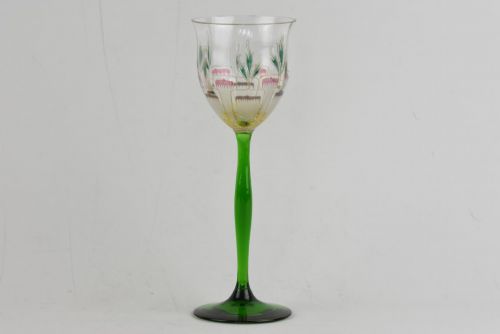
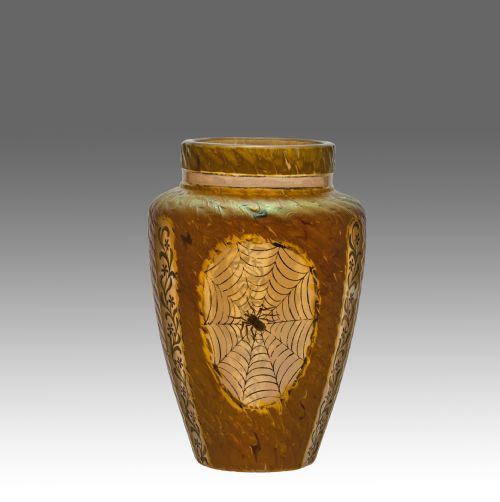
When you search for art nouveau enamelled glassware, you encounter vibrant decorative items spanning the Victorian era through to the early twentieth century. The selection includes vases, decanters, hock glasses, cordial glasses, and wine glasses created in workshops across Europe.
You are most likely to meet pieces produced by continental European makers during the nineteen hundreds and nineteen tens. These objects demonstrate the characteristic curves and natural motifs associated with the Jugendstil and Art Nouveau movements.
The glassware ranges from delicate crystal hock sets to robust blown glass roemers and opaline vases. Each form serves as a canvas for detailed polychrome and gold enamel work depicting florals and palmettes.
How they were made
Artisans created these pieces using blown glass, crystal glass, and iridescent glass formed into specific vessels before applying surface decoration. The manufacturing process relied on shaping molten material by hand to achieve organic contours.
Makers applied vitreous enamel and gold leaf directly onto the glass surface, utilising heat to fuse the metallic and mineral pigments permanently. Polychrome enamel techniques allowed for intricate floral patterns and raised details across vases and drinking vessels.
Listings feature periods spanning the Victorian era, eighteen ninety, nineteen hundred, nineteen ten, and nineteen twenty.
What varies in quality
The distinction between standard production and superior pieces lies in the precision of the enamel application and the complexity of the glass body. Finer examples display meticulous brushwork in polychrome and gold leaf that integrates harmoniously with the underlying blown or iridescent form.
The choice of base material also defines the tier of the object, with high quality crystal glass and specialised iridescent finishes commanding greater attention. The execution of signature floral motifs such as lotus or bleeding hearts demonstrates the artisan's control over the medium.
Theresienthal·Kralik Glass·Legras·Frits Heckert·Moser·Salviati·Daum
The Art Nouveau Enamelled Glassware Glossary
- Enamel
- A decorative glassy substance fused to the surface of glassware through high heat firing. It provides opaque or translucent colour and raised textural detail.
- Iridescent glass
- Glass treated with metallic oxides during manufacturing to produce a shimmering, rainbow effect across the surface. This technique was widely utilised in turn of the century decorative pieces.
- Crystal glass
- A high clarity, heavy form of glass often containing lead oxide, used as a refined base for fine drinking vessels and decanters. It rings clearly when struck and catches light effectively.
- Roemer
- A traditional continental European wine glass featuring a large bowl atop a wide, ribbed stem and a conical foot. They frequently appear with polychrome enamel decoration.
- Opaline
- A delicate, opaque glass with a milky appearance, popular for decorative vases during the late nineteenth and early twentieth centuries.
Art Nouveau Enamelled Glassware: Frequently Asked Questions
What is art nouveau enamelled glassware?
These objects are decorative and functional glass vessels created during the late nineteenth and early twentieth centuries featuring organic motifs applied in coloured and metallic enamel.
They reflect the artistic movements of the period, particularly Jugendstil and Art Nouveau, combining glassblowing with detailed surface painting.
How were these glasses used originally?
Many of these items served practical purposes for dining and entertaining, including hock glasses, cordial glasses, wine glasses, and decanter sets.
Other pieces, such as large vases and opaline vessels, functioned purely as decorative ornaments within domestic interiors.
How do I care for enamelled glassware?
These delicate items require gentle handling and should be washed by hand in lukewarm water using mild detergent. Avoid soaking or using abrasive sponges that might damage the surface enamel and gold leaf.
Display them away from direct sunlight and sudden temperature shifts to protect the glass and the fused pigments.
How can I tell the period of a piece?
Dating relies on stylistic markers such as the specific floral motifs, the presence of iridescent finishes, and characteristic forms like the roemer or hock glass. Many items also bear signatures, factory marks, or stylistic traits associated with specific European workshops from eighteen ninety to nineteen twenty.