


Art Nouveau Desk Clock
An art nouveau desk clock brings fluid lines and natural motifs to a writing surface, offering a tangible piece of turn-of-the-century design.
Art Nouveau Desk Clock
An art nouveau desk clock combines functional timekeeping with the sinuous, organic aesthetics characteristic of the period around nineteen hundred. These pieces encompass smaller portable timepieces and compact mantel clocks designed for workspaces and boudoirs.
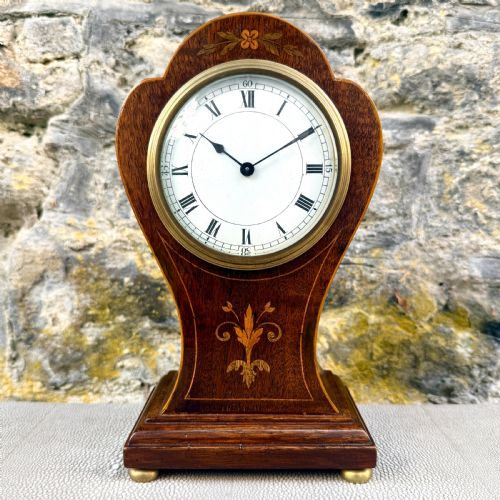
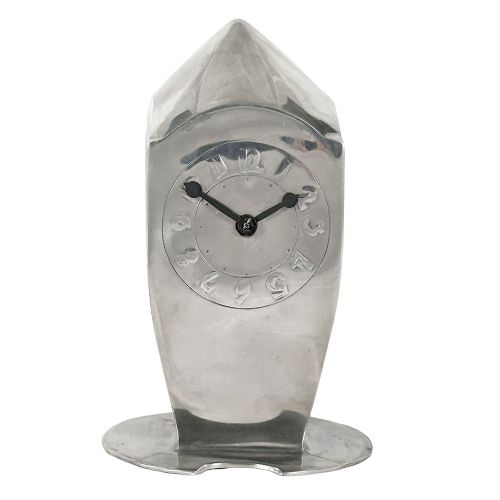
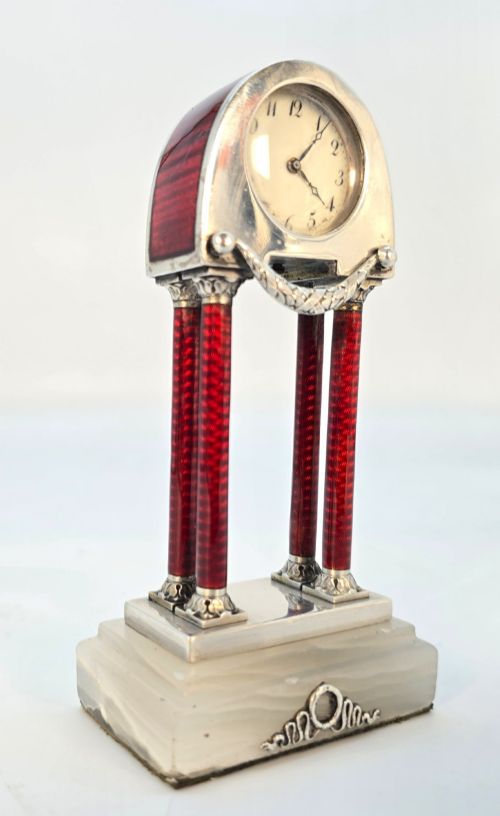
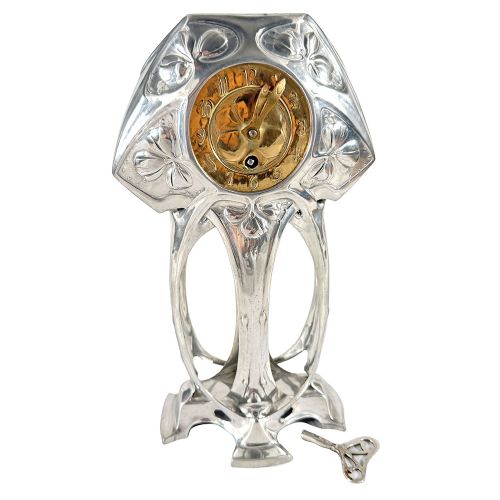
The selections encountered here span the Edwardian era alongside continental expressions such as Jugendstil. Forms range from silver-clad portico clocks to inlaid wooden cases and pewter desk accessories.
Makers and designers working in England, France, Germany, Austria and Switzerland contributed to this variety, utilising diverse materials to suit domestic interiors.
Materials and construction
Metals form the structural basis for many examples, utilising cast pewter, solid silver, silver plating, and gilt brass. Artisans often embellished these metal housings with champlevé enamel or inset panels of abalone.
Woodworking traditions appear in cases constructed from mahogany, oak, and other timbers, frequently enhanced with contrasting inlay work or floral motifs. Glass components protect the dial faces of these compact timepieces.
Some clocks feature poppies inlaid into the wood, proving that even a timepiece needs a quick nap.
Distinguishing quality in design and execution
The distinction between standard production and exceptional work lies in the detail of the metalwork and the integration of decorative elements. Pieces designed by named artists show superior balance between the organic motifs and the functional clock face.
Material combination also elevates a piece, such as the deliberate pairing of Tudric pewter with enamel or abalone shell. The crispness of the casting in pewter or the precision of the silver fronting indicates the hand of a skilled workshop.
Archibald Knox·Liberty and Company·Georg Adam Scheid·Friedrich Adler·Osiris·David Veasey·WMF
The Art Nouveau Desk Clock Glossary
- Art Nouveau
- A stylistic movement characterised by flowing, asymmetrical lines derived from natural forms. It dominated decorative arts around nineteen hundred.
- Jugendstil
- The German counterpart to Art Nouveau, sharing the same floral and linear aesthetic vocabulary. It emerged in Munich and spread widely through artistic publications.
- Tudric
- A trade name used by Liberty and Company for a specific range of pewter wares. These items frequently incorporated designs by Archibald Knox.
- Champlevé
- An enamelling technique where troughs are carved into a metal surface and filled with vitreous enamel before firing. It creates vibrant coloured patterns across metal mounts.
- Portico clock
- A timepiece housed in a structure resembling a miniature classical gateway or portico. Examples in silver and enamel reflect precise architectural miniaturisation.
Art Nouveau Desk Clock: Frequently Asked Questions
What is an art nouveau desk clock?
An art nouveau desk clock is a compact timepiece produced around nineteen hundred that incorporates the flowing organic lines typical of the movement.
These pieces were intended for practical use on desks, dressing tables, and mantelpieces while serving as decorative works of art.
What materials were used for these clocks?
Maker workshops utilised a range of materials including cast pewter, silver, gilt brass, glass, and timber such as mahogany and oak.
Enamel work and abalone shell inlays frequently appear as decorative accents on the metal and wooden surfaces.
Where were these desk clocks made?
Production centres spanned several European countries, including England, France, Germany, Austria, and Switzerland.
Specific firms and retail houses commissioned designs from prominent artists and metalworkers working within these regions.