


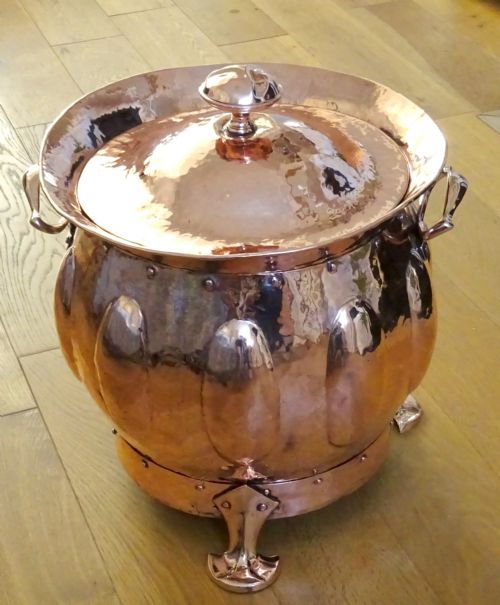


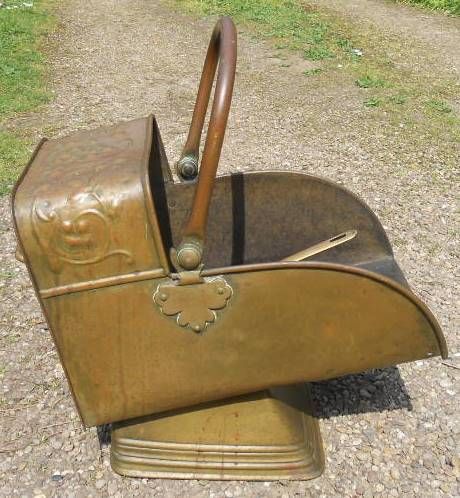
Art Nouveau Coal Bucket
An art nouveau coal bucket brings organic lines and heavy metalwork directly to the fireside.
Art Nouveau Coal Bucket
An art nouveau coal bucket serves as both a functional hearth container and a decorative metal vessel. These pieces hide domestic fuel while displaying the characteristic flowing lines of the style.
Most examples found here date from the Victorian period through to the early twentieth century. They appear primarily as handled buckets, bins, helmets, and baskets.
Makers shaped these utilitarian objects from durable metals suited to daily fireside use. They bridge the gap between heavy industrial utility and refined domestic decoration.
How they were made
Artisans relied on brass and copper for the main bodies of these containers. Sheet brass and sheet copper provided smooth surfaces that could be beaten, polished, or embossed.
Wrought iron and cast brass elements provided structural support, handles, and feet. These heavier metals added stability to containers meant to hold heavy loads of coal or logs.
Art Nouveau Coal Bucket Retail Price Guide 2026
Typical asking prices for art nouveau coal bucket among the pieces listed under this phrase on Sellingantiques today, from the lower quarter to the upper quarter. They describe what is for sale here now, not the wider market.
Listings for this phrase feature pieces from the Victorian era, the nineteenth century, and the 1900 to 1910 period.
What varies in quality
Quality depends upon the gauge of the metal and the execution of the surface decoration. Thicker copper or brass resists dents and maintains its structural integrity through decades of lifting and carrying.
The definition in the hand-beaten or embossed motifs separates standard production items from finer pieces. Sharper lines in the characteristic floral and whiplash patterns indicate superior craftsmanship.
The Art Nouveau Coal Bucket Glossary
- Coal Scuttle
- A metal container designed to hold coal for a fireplace, typically featuring a sloping body and a carrying handle. These vessels sat beside the hearth for easy access during winter months.
- Log Bin
- A large fireside container built to store firewood rather than smaller pieces of coal. They often include lids to contain loose bark and debris.
- Coal Helmet
- A specific form of coal bucket shaped wider at the top and narrowing towards the base, resembling a medieval headpiece. This design allowed for easier pouring into the grate.
- Embossing
- A technique where metal is raised from the reverse side using hammers and punches to create relief patterns. It defines the decorative surface of many copper fireside pieces.
Art Nouveau Coal Bucket: Frequently Asked Questions
What is an art nouveau coal bucket?
An art nouveau coal bucket is a metal fireside container designed during the late nineteenth and early twentieth centuries. These vessels combine functional fuel storage with the characteristic flowing, organic ornamentation of the movement.
They appear in forms such as bins, helmets, and baskets made from brass and copper. Their primary purpose was to keep coal near the hearth while adding a decorative element to the room.
How do I clean a brass or copper bucket?
Cleaning metal fireside containers requires gentle care to preserve the original surface and any aged patina. Harsh abrasives will strip away the historical character built up over decades of use.
Use a mild metal cleaner suitable for brass or copper, applied with a soft cloth. Avoid scrubbing vigorously, as this can flatten hand-beaten textures and historical wear marks.
Were these buckets used only for coal?
While primarily designed for coal, many of these metal containers served multiple domestic fireside purposes. Larger bins and buckets often held logs, kindling, or peat briquettes.
Today, owners frequently repurpose them as umbrella stands or planter holders. Their sturdy metal construction makes them versatile vessels for dry domestic storage.
How do I date an art nouveau coal bucket?
Dating relies on examining the materials, construction methods, and stylistic details present in the piece. Pieces from the Victorian era often feature heavier cast brass components and traditional joining techniques.
Later examples from the early twentieth century lean further into stylized floral motifs and lighter sheet metal construction. Comparing the handle fixings and interior wear helps confirm the period of manufacture.