

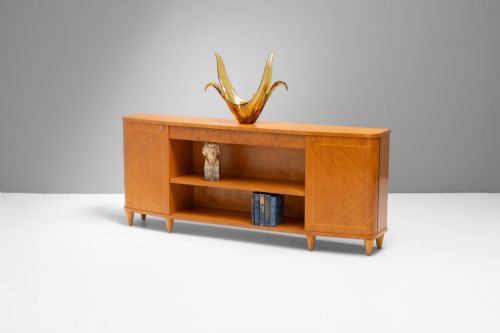
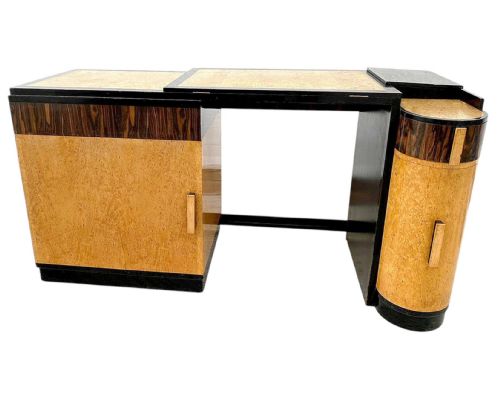
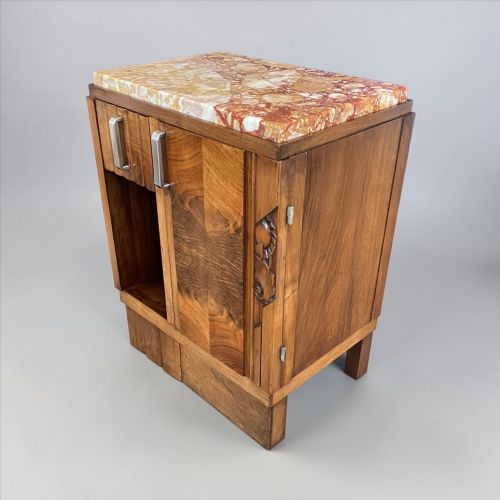
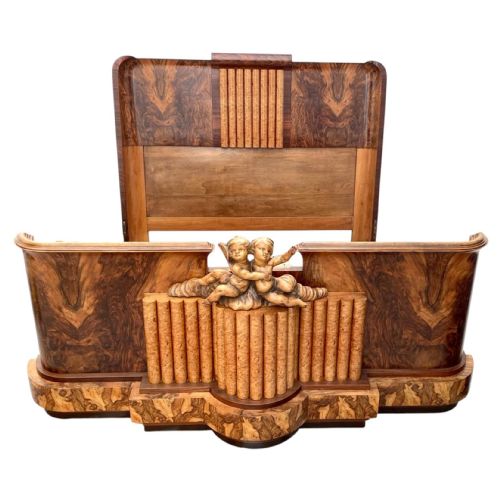
Art Deco Wooden Furniture
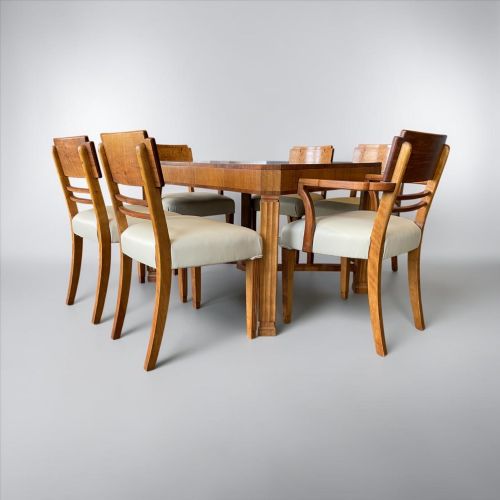
Art deco wooden furniture brings architectural symmetry and striking grain patterns to a room, offering functional forms built to last.
Art Deco Wooden Furniture
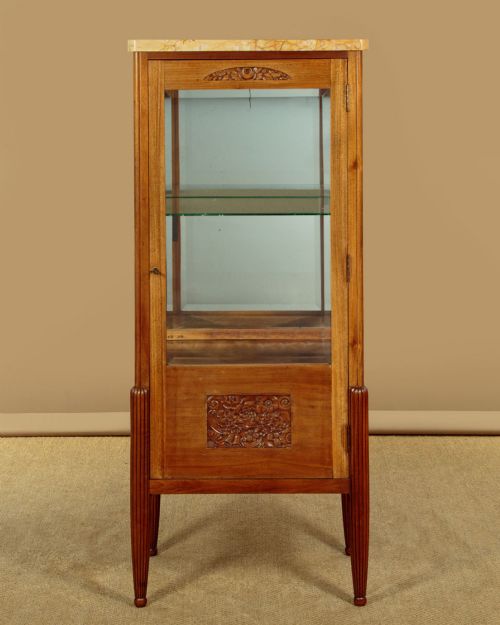
Most examples date firmly to the 1930s, displaying characteristic geometric massing and clean horizontal or vertical lines. Buyers will encounter both British workshops and French studios applying modernist principles to traditional timber forms.
How they were made
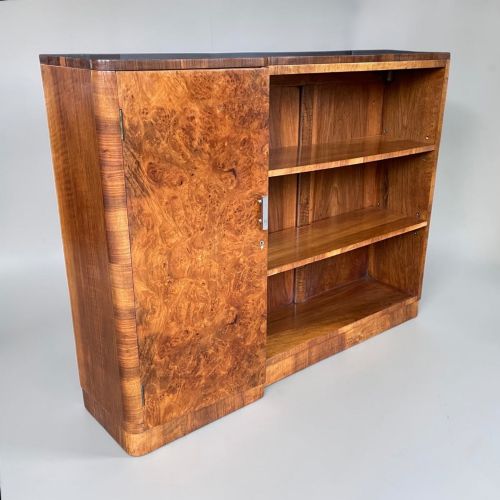
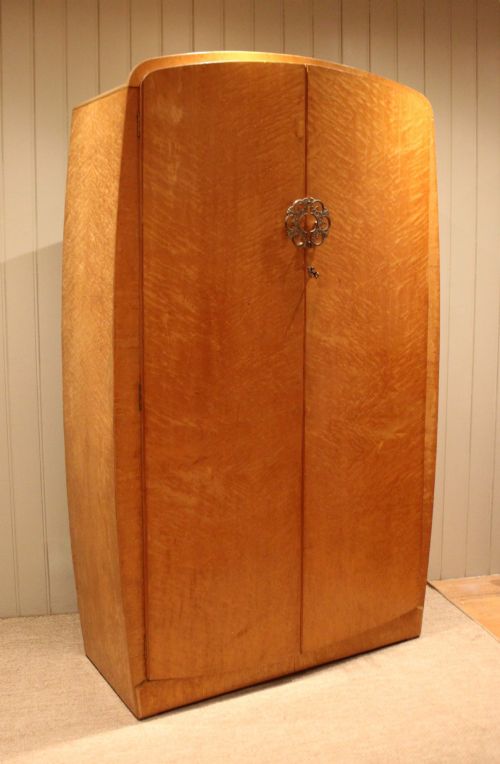
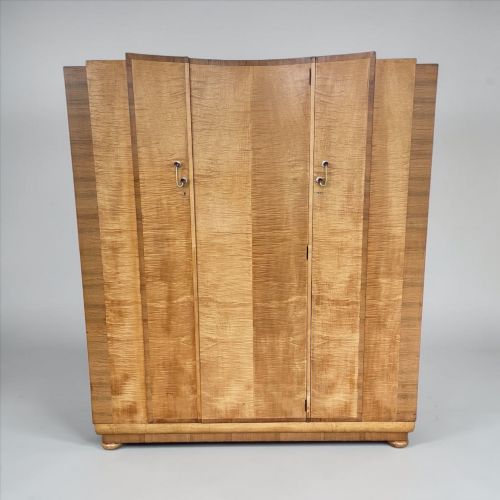
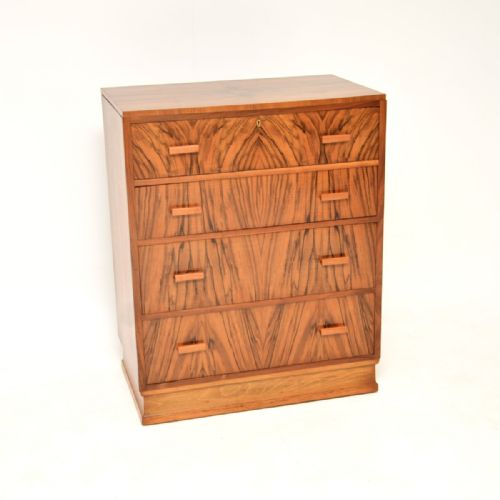
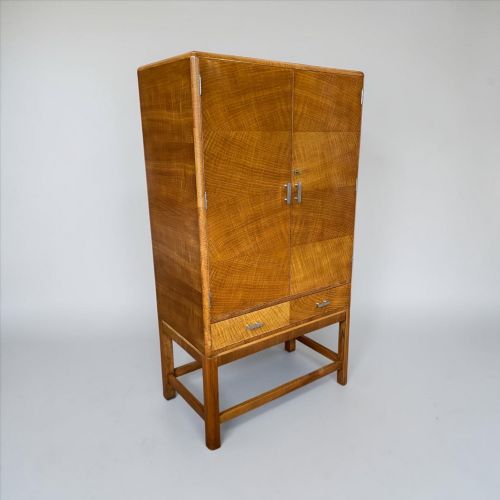
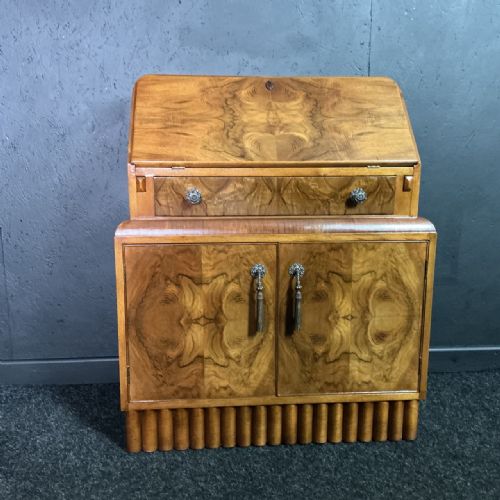
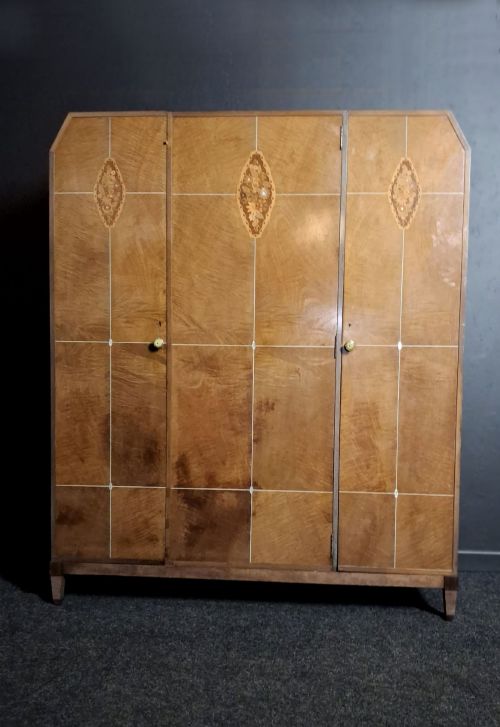
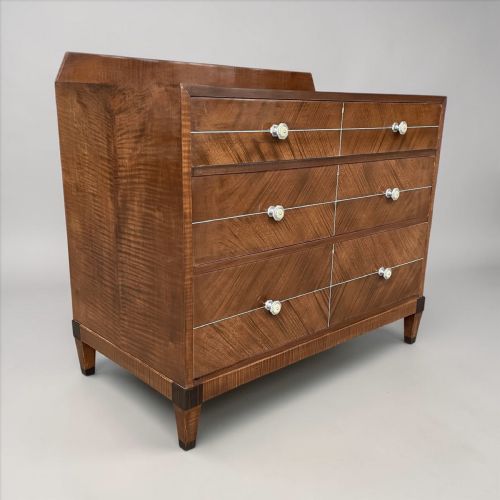
Cabinet makers utilised solid timbers such as oak, mahogany, and birch for structural integrity while applying figured veneers like walnut, burr walnut, satinwood, and rosewood to display dramatic natural grain patterns. Metal and brass mounts appear as structural or decorative accents, complementing the polished wooden surfaces.
Techniques combined traditional joinery with advanced veneering methods to wrap curved surfaces and waterfall edges. Ebonising and liming treatments altered natural tones to achieve the high-contrast finishes demanded by the style.
Art Deco Wooden Furniture Retail Price Guide 2026
Typical asking prices for art deco wooden furniture among the pieces listed under this phrase on Sellingantiques today, from the lower quarter to the upper quarter. They describe what is for sale here now, not the wider market.
Elephant arm chairs from the 1920s bring an unexpected sculptural bulk to seating arrangements.
What varies in quality
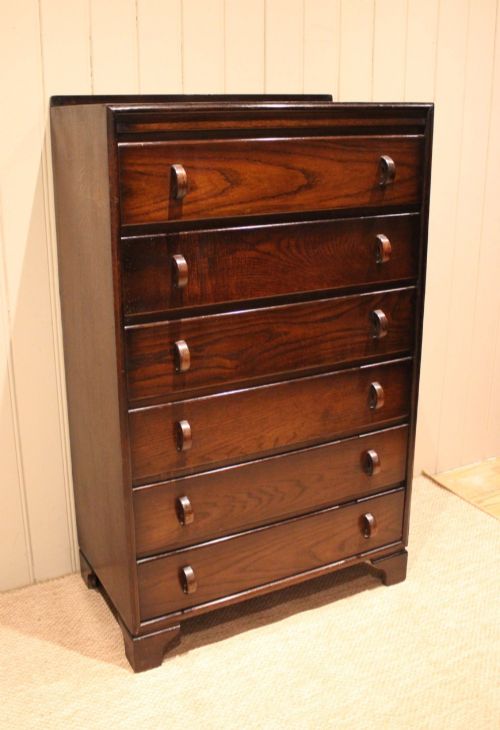
Quality rests primarily in the selection and matching of wood veneers, where symmetrical book-matching across drawer fronts and cabinet doors demonstrates superior craftsmanship. Plain timber surfaces rely on precise joinery and proportion rather than decorative grain.
Maker attribution elevates certain pieces, as workshops employing named designers exerted greater control over architectural balance and hardware integration. Structural execution, from drawer construction to the stability of veneered curves, separates standard commercial production from top-tier commissions.
Bath Cabinet Makers·Hille·Waring & Gillow·Heal's·Maurice Adams·Harry & Lou Epstein·Gomme·Bowman Brothers
The Art Deco Wooden Furniture Glossary
- Veneer
- A thin slice of figured wood applied over a secondary timber base to create decorative patterns without wasting scarce materials. It allows makers to display striking grain figures across large cabinet surfaces.
- Burr walnut
- A growth deformity on a walnut tree that produces swirling, highly complex grain patterns when sliced into veneer. Cabinet makers prized this material for high-end Art Deco doors and drawer fronts.
- Ebonised
- Wood treated with a chemical stain or black finish to imitate ebony. This dark surface provided high contrast against light-coloured walls and metallic mounts.
- Swedish Grace
- A style bridging neoclassical restraint and early modernism that influenced Scandinavian furniture design during the interwar period. It emphasises refined proportions and subdued ornamentation.
- Book-matching
- A method of arranging consecutive veneer slices so that mirror images are reflected across a central joint. This technique creates symmetrical patterns that define luxury cabinet work.
Art Deco Wooden Furniture: Frequently Asked Questions
How do I care for polished wood surfaces?
Keep wooden furniture away from direct sunlight and heat sources to prevent the underlying veneers from drying and lifting over time. Regular dusting with a soft, dry cloth maintains the polished finish without requiring heavy chemical polishes.
Occasional application of appropriate wax preserves the moisture content of vintage timber. Avoid placing damp items directly onto unsealed wood to prevent staining.
Are these pieces suitable for daily use?
These items were built for everyday domestic environments and remain robust enough for modern living when handled with reasonable care. Solid construction methods ensure that drawers, doors, and joints withstand regular interaction.
Care should be taken with delicate veneer edges and polished tops during heavy use. Placing felt pads under objects helps protect vulnerable wooden surfaces from scratches.
How do I identify a piece from the 1930s?
Look for geometric silhouettes, symmetrical drawer arrangements, and the prominent use of exotic wood veneers like walnut and rosewood. Hardware often incorporates streamlined brass or stepped architectural motifs typical of the period.
Maker labels or stamps inside drawers provide definitive confirmation of origin. The absence of heavy carving distinguishes these modernist pieces from earlier revival styles.
Can I mix these items with modern interiors?
The clean architectural lines and warm timber tones of interwar design complement contemporary minimalist and mid-century spaces alike. A single statement piece, such as a figured walnut sideboard or pedestal desk, anchors a modern room with historical texture.
Contrasting the rich grain patterns against neutral walls allows the natural materials to stand out. Mixing woods works well if the undertones share similar warmth.