


Art Deco Wooden Box
These art deco wooden box pieces bring geometric lines and fine veneers straight to a desk or dressing table.
Art Deco Wooden Box
An art deco wooden box covers decorative containers, cigarette boxes, tea caddies, work boxes, and razor sets spanning the Edwardian era to the nineteen-thirties. You will most frequently encounter walnut, burr walnut, and mahogany pieces embodying the geometric aesthetics of the period.
The selection ranges from small matchbox holders and string balls in Karelian birch to larger cutlery canteens and secret safe books styled in the manner of Odeon architecture. Makers and designers utilised contrasting woods and metals to create functional objects with strong architectural profiles.
How they were made
Cabinet makers utilised choice timbers such as walnut, mahogany, satinwood, and Madagascar ebony, often laid down as veneers over a solid wood carcase. Surfaces display precise sunray marquetry inlay and ebonised finishes.
Makers integrated brass, silver plate, and white metal fittings, hinges, and locks, pairing natural wood grain with polished metallic accents characteristic of the style.
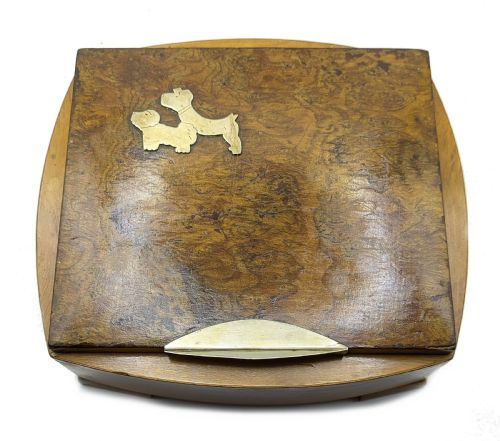
One piece takes the form of a novelty Scottie dog cigarette box, bringing canine charm to the geometric rigour of the nineteen-thirties.
What varies in quality
Quality rests upon the selection and matching of the veneer, particularly with burr walnut and Karelian birch, where lively grain patterns dictate the visual weight of the box. Superior examples demonstrate tight joints, crisp inlay work, and well-fitted interior trays or divisions.
The sophistication of the hardware and the integration of specialised mechanisms, such as secret locking systems or fitted razor sets, separate standard utility pieces from more ambitious workshop productions.
Waring & Gillows·JH Browne of The Waldorf Hotel·Dorfwych
The Art Deco Wooden Box Glossary
- Burr walnut
- A figured timber taken from the growth excrescence of a walnut tree, prized for its swirling, mottled grain patterns. It provides a highly decorative surface on nineteenth and twentieth-century boxes.
- Marquetry
- The art and craft of applying pieces of veneer to a structure to form decorative designs and patterns. Sunray motifs are particularly common on pieces from the nineteen-thirties.
- Canteen
- A fitted box or cabinet designed to hold a set of cutlery securely. These often feature multiple internal tiers lined to protect the contents.
- Ebonised
- Wood that has been finished to resemble ebony, typically through staining and polishing. This technique creates a dense, black surface that contrasts sharply with metal mounts.
Art Deco Wooden Box: Frequently Asked Questions
What was an art deco wooden box used for?
These boxes served practical domestic purposes, storing cigarettes, cigars, tea, jewellery, stationery, and cutlery.
Their varied forms reflect the specific requirements of early twentieth-century households, combining utility with decorative presence on desks and sideboards.
How do I identify an art deco wooden box?
Look for characteristic geometric patterns, stepped architectural shapes, and sunray wood veneers.
Materials such as burr walnut, ebony, and contrasting metal mounts point directly to the design vocabulary of the period.
Are these boxes lined?
Many examples feature fitted wooden interiors, compartments, or original textile linings suited to their specific contents.
Work boxes and cutlery canteens often incorporate multiple trays to keep small items organised.
How do I care for wooden boxes?
Keep them out of direct sunlight and away from rapid temperature changes to protect the delicate veneers and polished finishes.
An occasional light application of appropriate furniture wax helps maintain the lustre of the wood.