



Art Deco Wooden Bedstead
These art deco wooden bedstead examples bring striking geometric lines and rich timber grains directly into the bedroom.
Art Deco Wooden Bedstead
When searching for an art deco wooden bedstead, buyers encounter substantial sleeping furniture rooted primarily in the 1930s alongside pieces originating from the 1920s and 1900. These frames appear in both single and double configurations, frequently incorporating integral cabinets or attached bedside tables.
The most common form met here is the double bed, though single and king size formats also emerge. Makers applied streamlined shapes and architectural silhouettes typical of the period to timber frames.
Origins span English workshops and continental makers, sometimes integrating matching elements like marble top nightstands. The aesthetic relies heavily on bold horizontal and vertical balances characteristic of the style.
Materials and construction
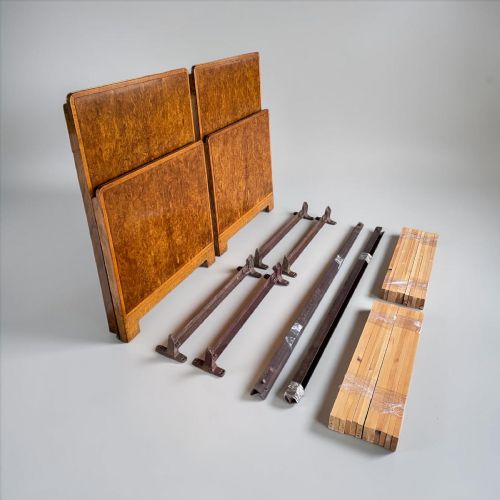
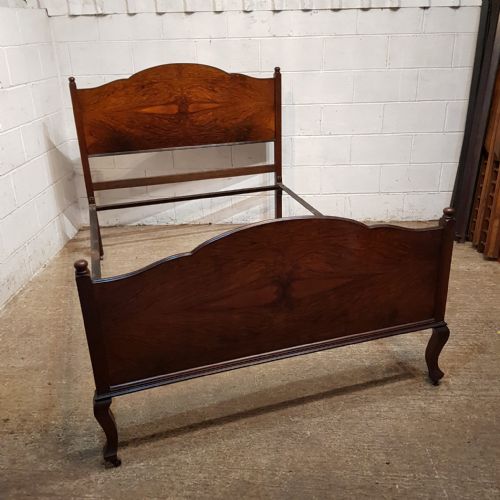
Carpenters built these frames using solid timber cores overlaid with decorative veneers such as burr walnut, burl walnut, and figured walnut. Blonde woods like satinwood, birds eye maple, and limed oak provide contrasting tones.
Techniques relied on expert veneering to display the natural grain patterns across wide headboards and footboards. Iron and metal components occasionally reinforce the internal structure to support modern mattresses.
Some sleeping quarters of the period came with built-in bedside lighting, ensuring midnight reading required zero stretching.
Assessing quality and execution
Quality rests upon the selection and matching of wood veneers across prominent surfaces. Highly figured timbers and complex grain alignments distinguish finer examples from plain constructions.
The integration of fitted furniture, such as attached bedside tables or cabinets, demonstrates superior design ambition. Structural complexity in curved or carved wooden elements also separates standard production from exceptional pieces.
Waring & Gillow England·Betty Joel·Heal's
The Art Deco Wooden Bedstead Glossary
- Veneer
- A thin slice of decorative wood applied over a secondary timber core. This technique allows makers to display striking grain patterns across large flat surfaces.
- Burr walnut
- A prized timber growth containing distorted grain patterns that create intricate swirling designs. It is cut specifically for ornamental furniture facings.
- Bedstead
- A framework of wood or metal that supports a mattress. These structures often include headboards, footboards, and side rails.
- Odeon style
- An architectural and furniture design influence characterised by streamlined curves and monumental symmetry. It draws inspiration from cinema design of the era.
Art Deco Wooden Bedstead: Frequently Asked Questions
Will a standard mattress fit an art deco wooden bedstead?
Many vintage wooden bedframes diverge from modern standard dimensions. Buyers should check internal measurements carefully before purchasing.
Custom mattress sizing or subtle adjustments to the internal slats may be necessary to ensure a proper fit.
How do I care for walnut veneer on a bed?
Walnut veneer requires protection from direct sunlight and excessive moisture to prevent fading and lifting. Regular dusting with a soft, dry cloth preserves the finish.
Avoid silicone-based polishes which can build up and dull the natural sheen of the timber over time.
Are bedside tables always attached to these beds?
While many examples feature integral cabinets or attached nightstands as part of a unified design, standalone frames are equally common.
Integrated configurations depend on the original commission and bedroom layout intended by the maker.
How do I distinguish 1920s beds from 1930s pieces?
Pieces from the 1920s often retain heavier proportions and occasional traditional styling hints, such as French Empire influences. 1930s examples lean towards streamlined curves and lighter blonde veneers.
Both periods share a commitment to dramatic wood grain presentation.