


Art Deco Wood Table
An art deco wood table brings geometric rhythm and rich timber grain to a room, ranging from compact bedside stands to grand dining suites.
Art Deco Wood Table
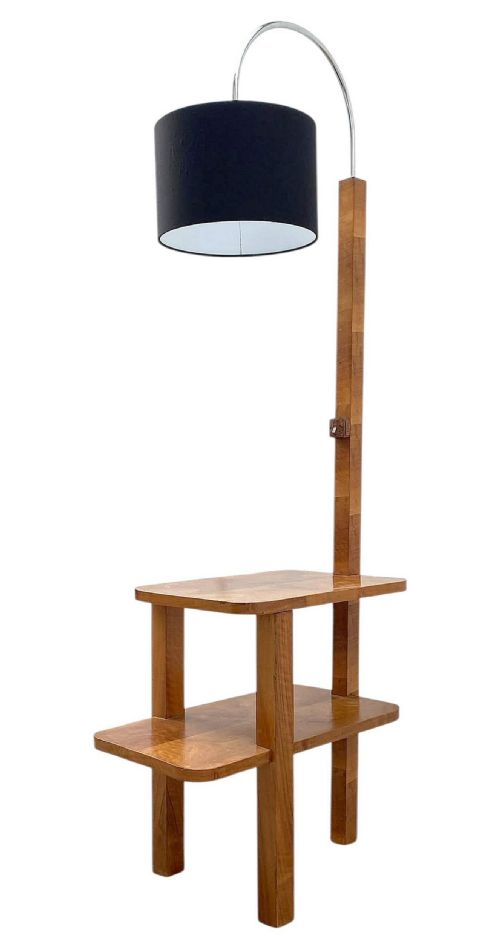
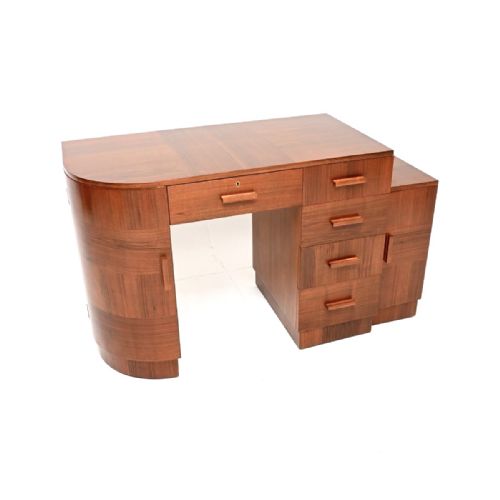
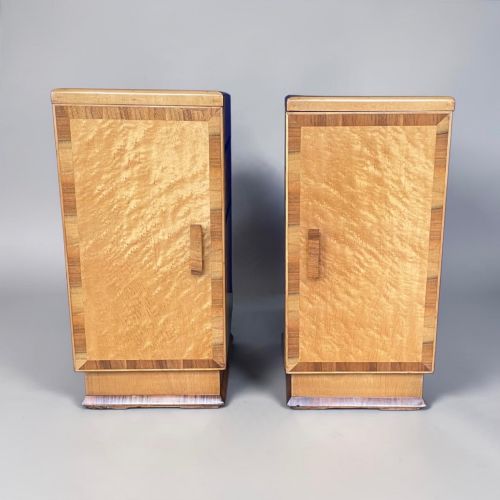
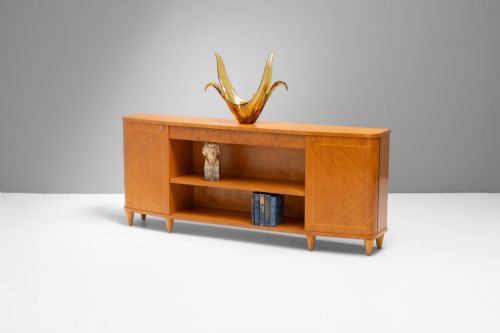
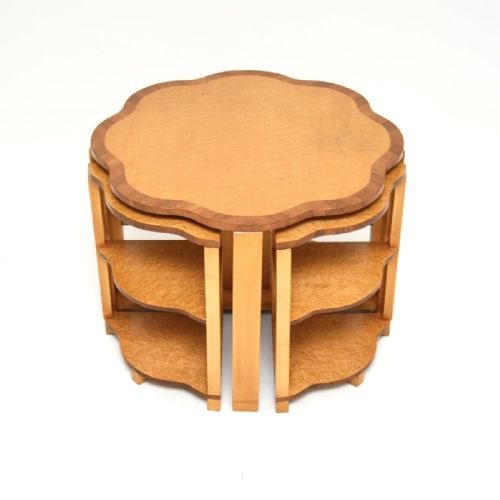
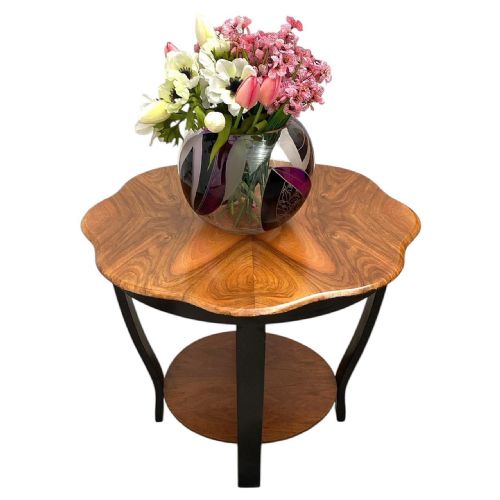
An art deco wood table encompasses a wide variety of domestic forms, from occasional coffee tables and nests to large dining tables and pedestal desks. The pieces seen on this page stem predominantly from the 1920 and 1930 periods, capturing the architectural ambition of the interwar years.
The buyer is most likely to encounter walnut, mahogany, and maple surfaces, shaped into bold geometric silhouettes or streamlined circular tiers. Regional variations span English designs, French fruitwood pieces, and Scandinavian works in elm and birch.
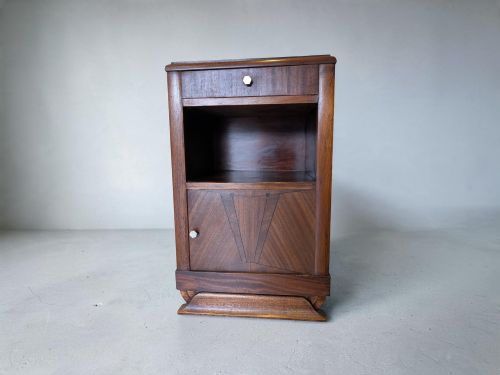
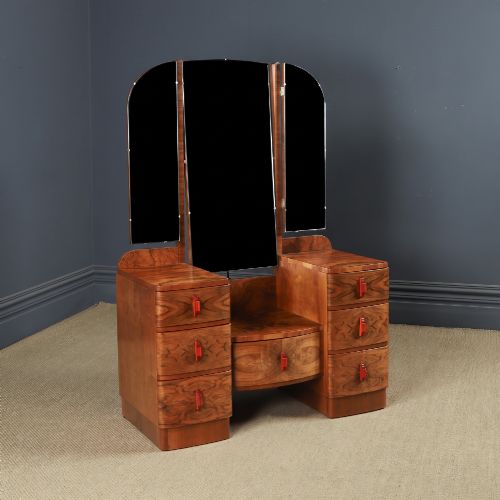
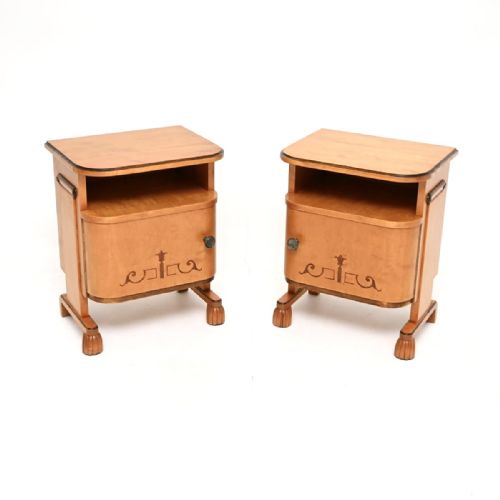
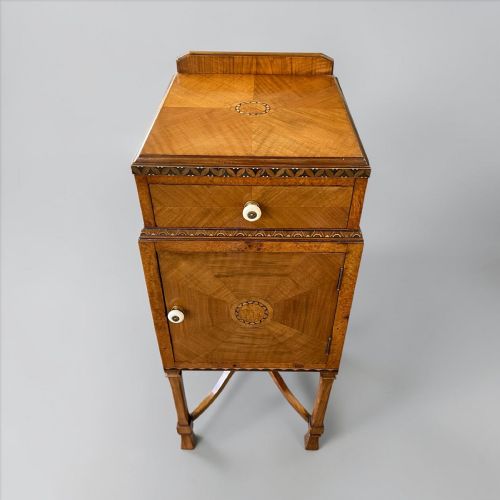
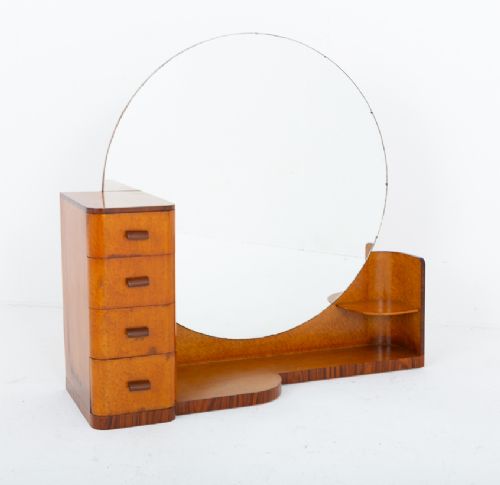
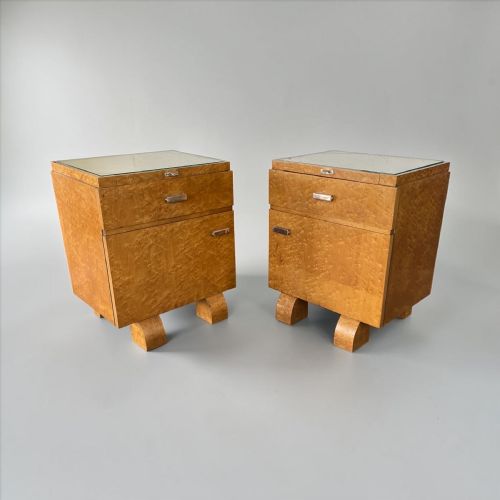
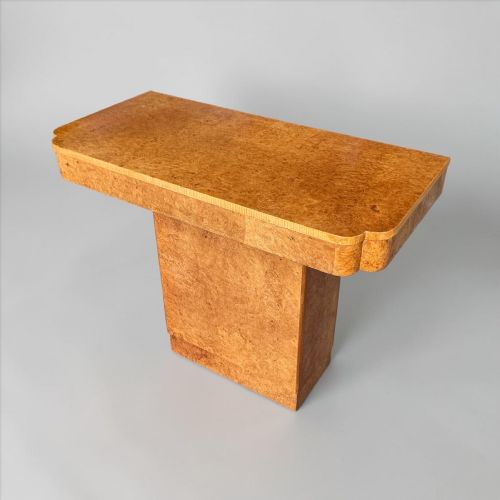
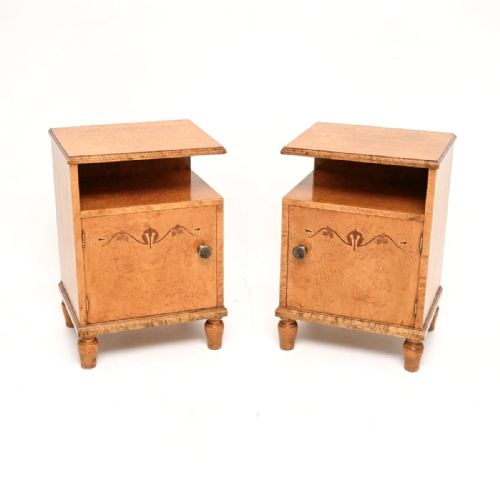
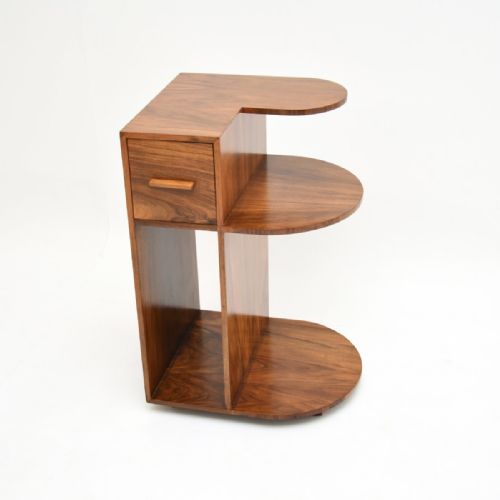
Forms serve both domestic and social functions, including side tables, console tables, bedside cabinets, and dressing tables with integrated mirrors. These tables rely on architectural mass and balanced proportions rather than excessive applied ornamentation.
Materials and construction
Cabinet makers utilised decorative veneers such as burr walnut, birds eye maple, and macassar ebony over solid timber cores to achieve striking symmetrical grain patterns. Contrasting stringing in lighter woods or accents of brass and glass often bordered the primary timber surfaces.
Construction techniques balanced traditional joinery with innovative framing to support cantilevered shelves and circular tiers. Selected pieces incorporate leather inserts, ebonised trim, or secondary supports in chrome and metal.
Art Deco Wood Table Retail Price Guide 2026
Typical asking prices for art deco wood table among the pieces listed under this phrase on Sellingantiques today, from the lower quarter to the upper quarter. They describe what is for sale here now, not the wider market.
Judging the range
The upper tier of these tables is distinguished by the ambition of the veneer selection and the integration of secondary materials like glass, brass, and contrasting stringing. Grain matching across complex curves and multiple tiers indicates superior workshop execution.
Simpler interpretations rely on standard wood stock with minimal figuring, lacking the architectural presence and rhythmic geometry found in the more ambitious Swedish, French, and English examples.
Fortnum and Mason·Betty Joel·Hille
The Art Deco Wood Table Glossary
- Veneer
- A thin slice of figured wood applied to a stable core timber to display decorative grain patterns. This technique allowed makers to create symmetrical sunburst designs across table tops.
- Burr walnut
- A prized timber growth featuring swirling, knotted grain patterns. It provides intense visual texture on table surfaces.
- Satin Birch
- A pale northern timber with a reflective grain used extensively in Scandinavian cabinet making. It brings a bright quality to bedside cabinets and smaller tables.
- Macassar Ebony
- A dense exotic hardwood characterised by dark brown and black streaks with warm undertones. It serves as a striking contrast wood in modernist designs.
- Pedestal desk
- A substantial writing table supported by two banks of drawers or columns. These frequently feature leather insert writing surfaces.
Art Deco Wood Table: Frequently Asked Questions
How do I style an art deco table?
These tables work effectively as standalone statement pieces in contemporary or traditional interiors, where their strong geometric lines can be appreciated.
Keep surrounding objects minimal to let the natural wood grain and veneer patterns remain the focal point of the room.
What woods are typical for these tables?
Walnut, mahogany, maple, and oak form the foundation of most pieces, often enhanced by exotic veneers like macassar ebony or satin birch.
Makers selected these timbers specifically for their dynamic grain patterns and warm tones.
How do I identify a Swedish piece?
Swedish designs from this era often utilise pale timbers like satin birch and elm, reflecting a lighter aesthetic known as Swedish Grace.
The craftsmanship emphasises clean architectural lines combined with subtle, refined proportions.
Where were these tables used originally?
They served functional roles across domestic spaces, from grand dining rooms and libraries to compact bedside settings and hallway consoles.
Smaller occasional tables and nesting sets were designed to be easily moved around reception rooms for entertaining.