



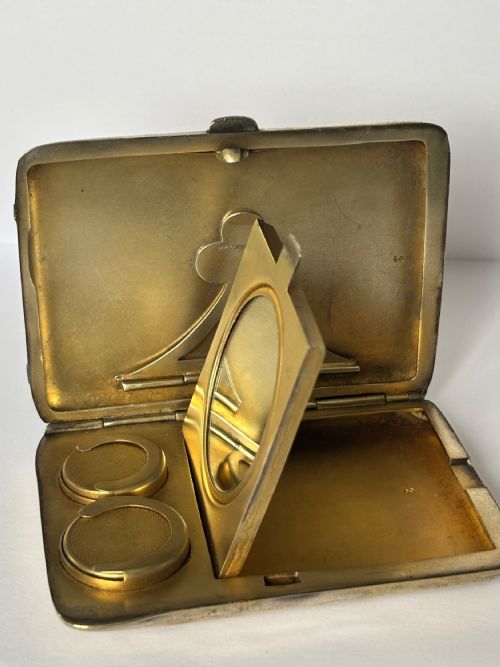


Art Deco Vanity Compact
An art deco vanity compact brings the geometry and colour of the interwar dressing table into the palm of your hand.
Art Deco Vanity Compact
When you search for an art deco vanity compact, you encounter small personal containers designed for powder, rouge, and cosmetics during the early twentieth century. The items on this page span the 1900s through to the 1930s, reflecting the geometric shift towards Art Deco alongside earlier Edwardian influences.
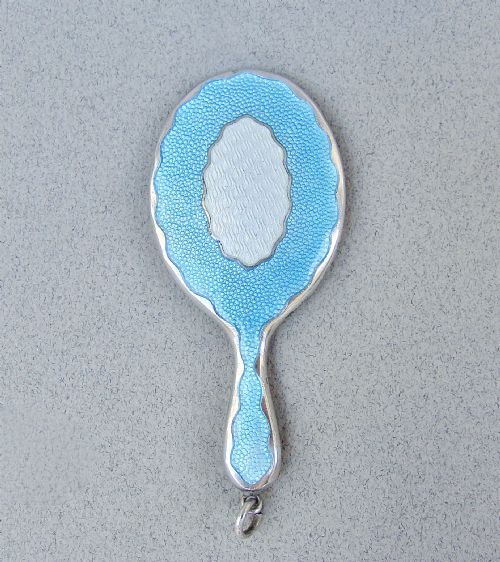
Powder compacts, trinket boxes, and vanity cases form the core of what appears here, accompanied by related accessories like cigarette cases and hand mirrors. Many examples integrate multiple functions, such as combination cases that pair compacts with lipsticks or watches.
Origins stretch across British workshops, French makers, German silversmiths, and Chinese export silver creators. This variety captures the international scope of personal vanity items from the period.
Materials and Construction
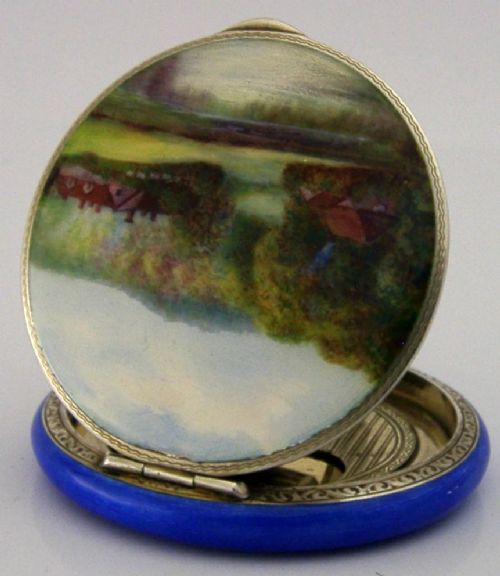
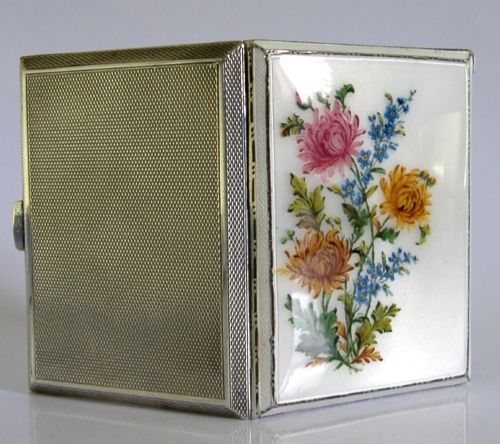
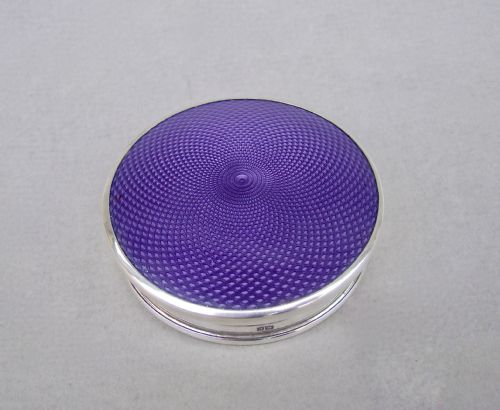
Sterling silver, silver gilt, and chrome provide the structural framework for these pieces, often worked with engine turning to create precise geometric patterns across the metal surface. Enamel, particularly translucent guilloche enamel over machine-engraved backgrounds, adds vibrant colour in shades of blue and other tones.
Celluloid, glass, and specialised linings such as suede appear alongside precious metals and diamonds in select luxury vanity cases. Makers applied hand-painted floral motifs like chrysanthemums or figurative designs directly onto the enamel panels.
Assessing Quality and Execution
Quality rests upon the crispness of the engine turning and the preservation of the guilloche enamel, where smooth, unbroken glass surfaces distinguish finer examples from those with chips or stress fractures. The precision of the hinge action and the tightness of the closure determine the mechanical integrity of each case.
Henry Williamson·Henry Matthews·The Daniel Manufacturing Co·Henry Perkins And Sons·René Lalique·Richard Hudnut·Houbigant·Asprey·Evans Of America
The Art Deco Vanity Compact Glossary
- Guilloche
- A decorative technique where a mechanical lathe etches a precise, intricate geometric pattern into a metal substrate before translucent enamel is applied. This method creates depth and light play beneath the coloured glass.
- Engine turned
- A surface ornamentation method involving machinery to cut repetitive lines or patterns into metal. It provides a tactile texture that catches the light.
- Silver-gilt
- Sterling silver that has been coated with a thin layer of gold on the surface. This finish offers the warmth of gold combined with the structural properties of silver.
- Combination compact
- A multi-functional vanity accessory designed to hold powder alongside another item such as a lipstick, watch, or cigarettes. These pieces reflect the pragmatic luxury of the era.
Art Deco Vanity Compact: Frequently Asked Questions
How do I use an antique compact?
These pieces function well for display on a dressing table or for carrying small items like pills and cards. Modern cosmetic refills may fit certain powder wells, though many owners prefer to keep them as historic decorative objects.
Care should be taken with the fragile enamel surfaces and original mirror plates during handling.
What is guilloche enamel?
Guilloche is a technique where metal is engine-turned with geometric patterns and then covered in translucent enamel. The underlying pattern shows through the coloured glass layer.
This method was widely utilised on compacts and vanity cases during the early twentieth century.
Are these pieces made of solid silver?
The listings include sterling silver, silver gilt, and German silver alongside chrome, brass, and gilt metal. Hallmarks stamped into the metal usually indicate the silver standard and the assay office.
Some items combine precious metals with base metals or celluloid components.
How do I date an art deco compact?
Stylistic markers like streamlined geometric lines point to the 1920s and 1930s. Hallmarks, maker signatures, and registration numbers stamped on the metal provide precise years of manufacture.
Earlier Edwardian pieces from the 1900s and 1910s tend to feature more ornate floral motifs.