
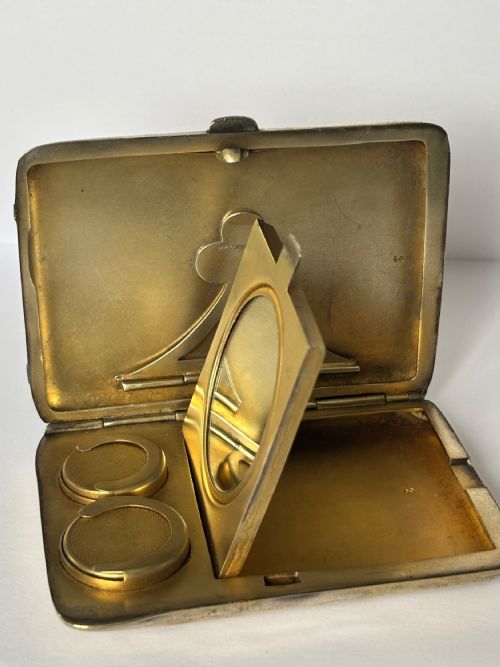


Antique Metal Vanity Case
An antique metal vanity case brings tactile luxury to a modern dressing table, offering compact elegance forged in brass, silver, and gold.
Antique Metal Vanity Case
When you search for an antique metal vanity case, you encounter refined portable containers designed to hold cosmetics, cigarettes, and daily requisites. These pieces bridge personal grooming and decorative art, frequently taking the form of powder compacts, dressing cases, and combination boxes.
The selections span from the ornate craftsmanship of the nineteenth century through the geometric precision of the Art Deco era into the mid-century period. Most examples encountered here reflect the streamlined glamour of the 1920s, 1930s, and 1940s.
Materials range from base metals and brass to sterling silver, silver gilt, and solid nine-carat yellow gold. Many incorporate functional elements like mirror glass alongside decorative embellishments such as enamel, diamonds, and rubies.
How they were made
These cases rely on the manipulation of metals through pressing, casting, and engraving, often finished with polished mirror glass internal components. Goldsmiths and silversmiths utilised sterling silver, silver gilt, and nine-carat gold to construct durable yet elegant structures.
Surface decoration frequently involved applied enamel or the secure setting of diamonds and rubies into precious metal frames. Combination pieces required precise mechanical engineering to house sovereign holders, card compartments, and powder wells within a single enclosure.
What varies in quality
Quality rests upon the choice of materials, moving from plated base metals up to solid nine-carat gold and platinum-set gemstones. The integration of precious stones like diamonds and rubies elevates both the artistic ambition and the intrinsic value of the piece.
The reputation of the maker and the precision of the mechanical closures heavily influence the desirability of a case. Crisp hallmarks, intact enamel without chipping, and securely mounted mirror glass distinguish finer examples from standard production items.
William Adams Ltd·Cartier·Richard Hudnut·JH Browne
The Antique Metal Vanity Case Glossary
- Silver gilt
- Sterling silver that has been coated with a thin layer of gold. This technique provides the rich appearance of solid gold while utilising a silver base structure.
- Powder compact
- A small portable case containing a mirror and a compartment for face powder. These often feature decorative lids adorned with enamel or geometric motifs.
- Art Deco
- A design style prevalent during the 1920s and 1930s characterised by sleek geometric shapes, stylised motifs, and streamlined forms. It heavily influences the appearance of metal vanity cases from this period.
- Hallmark
- An official stamp applied to precious metals indicating the purity of the metal, the place of assay, and the maker. These marks provide definitive evidence of origin and date.
Antique Metal Vanity Case: Frequently Asked Questions
How do I date an Art Deco compact?
Dating an Art Deco compact involves examining official hallmarks, maker marks, and stylistic indicators such as geometric engraving or enamel work. Many pieces from this movement originate from the 1920s and 1930s.
Assay office stamps and registration numbers stamped into the metal often provide precise years of production. Comparing the decorative motifs to known chronological styles further narrows the date range.
What materials are used in these cases?
The materials vary from standard metal and brass to sterling silver, silver gilt, and solid nine-carat yellow gold. Decorative elements frequently include enamel and precious gemstones like diamonds and rubies.
Internal components commonly incorporate polished mirror glass. The combination of these materials dictates the overall weight, durability, and visual richness of the object.
How were vanity cases used historically?
Historically, vanity cases served as functional accessories for maintaining personal appearance and carrying small daily essentials in public. They allowed individuals to transport face powder, cards, and cigarettes in an organised manner.
Many designs doubled as status symbols, reflecting the personal style and wealth of the owner. Wealthier patrons utilised precious metals and gemstone embellishments to signal sophistication.