


Art Deco Silver Cocktail Set
An art deco silver cocktail set brings the geometric glamour and social rituals of the interwar years straight to the modern home bar.
Art Deco Silver Cocktail Set
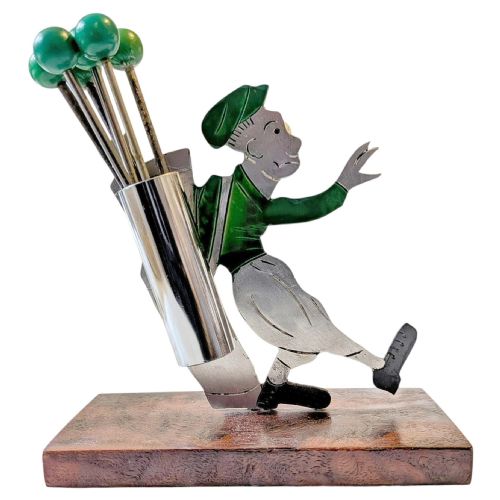
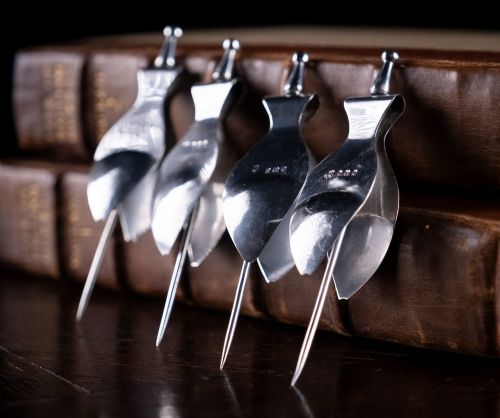
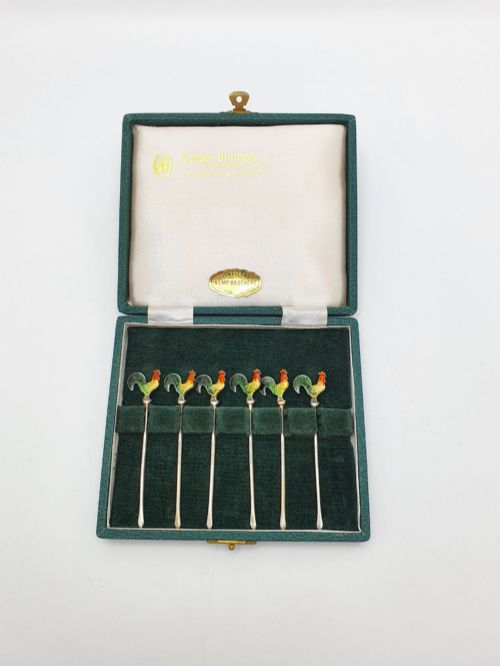
An art deco silver cocktail set typically centres on a heavy-gauge shaker, often accompanied by matching beakers, goblets or glasses arranged on a fitted tray. These ensembles frequently incorporate specialised barware such as ice buckets with tongs, decanters and cased sets of cocktail sticks topped with enamel or figural motifs.
The most common iterations on this page combine silver plate with cut glass or incorporate novel materials like Bakelite and chrome to achieve the characteristic streamlined aesthetic of the period. Buyers will frequently encounter both British sterling silver pieces bearing provincial assay office marks and French silver-plate productions from notable interwar makers.
Materials and methods of construction
Makers utilised solid sterling silver, 800 silver and durable silver plating over base metals, often combining these metallic surfaces with transparent cut glass bodies or contrasting black Bakelite handles. Technique played a major role in surface decoration, utilising engine-turned geometric patterns, hand-hammered textures and vibrant vitreous enamel work.
Enamelling required meticulous skill to fuse coloured glass powders onto silver bases, creating the striking cockerel, cherry and golfer motifs seen on cocktail stick tops. Metalworkers shaped shakers and ice buckets through spinning and soldering, applying precise geometric engraving to catch the light.
Listings feature items from the 1920s, 1930s, and 1940s, highlighting the evolution of modernist barware design.
Distinctions in craftsmanship and preservation
Quality rests upon the crispness of the geometric chasing, the weight and balance of the shaker body, and the original integrity of any applied enamel work. Superior examples retain their fitted presentation cases, matching sets of beakers, and undamaged glass liners without chips or clouding.
Makers who employed heavy silver plating over robust base metals or utilised solid sterling silver produced pieces that withstand decades of use while retaining their structural rigidity and surface detail. Lesser examples show thin plating wear, replacement components, or cracked enamel work on delicate figural elements.
Sudre·Richard Comyns·Maison Barra·St. Medard·Mappin & Webb·Keith Murray·A. Scott·The Adie Brothers·Herbert Jenkins·The Barker Brothers·Gerrard & Co·Deakin & Francis
The Art Deco Silver Cocktail Set Glossary
- Silver plate
- A thin layer of pure silver bonded to a base metal core such as copper or nickel brass. This technique allowed manufacturers to produce accessible barware with the visual appeal of solid silver.
- Bakelite
- An early synthetic phenol-formaldehyde resin valued during the interwar period for its durability and rich colour. It frequently provides striking black or coloured contrast on cocktail shakers, handles and stirrer sets.
- Engine turned
- A mechanical decoration technique that cuts precise geometric patterns of fine lines into metal surfaces. This method creates shimmering optical effects typical of modernist design.
- Vitreous enamel
- A material made by fusing powdered glass to a metallic substrate at high temperatures. It provides brilliant, glossy colour decoration for cocktail stick finials and novelty bar accessories.
- Assay mark
- An official stamp applied to precious metals indicating purity, origin and date of testing. British pieces carry town marks, date letters and purity standards.
- Finial
- The decorative ornamental knob or figure attached to the top of a cocktail stick or shaker lid. In this era, these often take the form of sporting figures, animals or fruits.
Art Deco Silver Cocktail Set: Frequently Asked Questions
How do I clean antique silver barware?
Wash silver-plated and sterling pieces gently in warm soapy water using a soft cloth, avoiding harsh abrasive dips that strip aged patinas. Dry them immediately with a lint-free cloth to prevent water spots on the metal surface.
Enamelled components and Bakelite handles require particular care, needing gentle hand washing without prolonged soaking. Store cocktail sets in dry environments to protect vulnerable glass liners and original presentation cases from moisture damage.
Were these sets intended for everyday use?
Interwar cocktail sets served as centrepieces for fashionable home entertaining, cocktail parties and social gatherings during the height of the modernist lounge culture. They were manufactured for mixing drinks, serving lemon wedges, and spearing garnishes with decorative sticks.
While robustly constructed from silver plate, sterling and glass, many surviving sets spent decades safely stored in fitted presentation cases between social occasions. Today they function equally well for modern cocktail preparation or as decorative displays of period barware.
How can I date an art deco cocktail set?
Dating relies heavily on stamped hallmarks for British sterling pieces, which record specific assay years through assigned date letters. Maker marks and registration numbers stamped into the base metal also provide precise chronological reference points.
Stylistic markers such as streamlined geometric silhouettes, engine-turned motifs, and the use of Bakelite point towards the interwar decades between the wars. French silver-plate productions often feature manufacturer stamps near the rim or base that correspond to active production periods.
What is the difference between silver plate and solid silver?
Solid sterling silver meets strict legal purity standards and consists of precious metal throughout its entire structure. It carries distinct assay office hallmarks indicating its composition and origin.
Silver plate applies a thin protective coating of precious metal over a sturdy base metal core such as copper or nickel alloy. This technique offered a more accessible alternative for heavy barware like large cocktail shakers and ice buckets while maintaining a bright metallic appearance.