
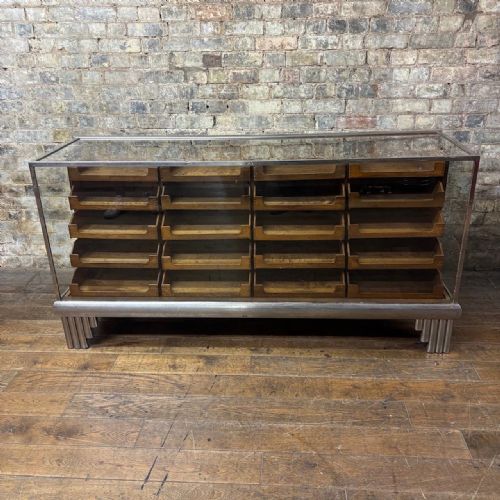


Art Deco Retail Counter
An art deco retail counter anchors a shop interior with geometric polish and heavy plate glass, built to command attention.
Art Deco Retail Counter
An art deco retail counter provides sturdy display space for merchandise using the distinct design hallmarks of the early twentieth century. These furnishings range from substantial haberdashery units to glass display cabinets and smaller countertop shelves designed for shop interiors.
Haberdashery counters and display cabinets form the main types seen on this page, often combining glazed upper sections with fitted wooden bases. Examples span the 1920s and 1930s, reflecting the architectural tastes of the period through straight lines and streamlined metal framing.
How they were made
Makers built these counters using solid timbers like oak, mahogany, and birch, matched with metal frames in brass, chrome, and aluminium. Wood surfaces were polished or left in their natural grain, providing a warm contrast to industrial metal components.
Glass panels were secured within rebated wooden channels or held by specialised metal framing systems. Additional detailing incorporated fabric linings and structural legs shaped in distinct styles of the period.
Listings on this page feature materials such as oak, birch, brass, chrome, and aluminium across the 1920 and 1930 periods.
What varies in quality
The sophistication of the framing and the choice of timber set the standard for each piece. Counters utilising substantial brass or chrome frames alongside cabinetmaker timbers represent a higher grade of manufacture than basic utilitarian shop fittings.
Proportion and decorative restraint dictate the visual success of the counter. Pieces retaining original glass, branded manufacturer details, and integrated structural hardware hold greater integrity than altered examples.
Dudley & Co·Saml. Elliott & Sons·Pollards·Pierre Iman
The Art Deco Retail Counter Glossary
- Haberdashery counter
- A long shop counter typically fitted with multiple drawers or glass display compartments for small goods. These units often feature glazed tops for viewing stock.
- Chrome
- Chromium plating applied to metal framing to provide a bright, corrosion-resistant finish. This material defines the metallic sheen associated with 1930s commercial design.
- Display cabinet
- A glazed enclosure utilised for showcasing merchandise while protecting it from dust and handling. These cabinets rely on timber or metal structures to support large glass panes.
- Countertop shelf
- A secondary tier or stepped display stand placed upon a main counter to increase merchandise visibility. These small fittings optimize retail space.
Art Deco Retail Counter: Frequently Asked Questions
What materials make up an art deco retail counter?
These counters utilise a combination of wood, glass, and metal. Common timbers include oak, mahogany, and birch, paired with frames made from brass, chrome, or aluminium.
Fabric elements and specialised display hardware also appear across various models, reflecting the commercial requirements of early twentieth-century shops.
How do I date an art deco retail counter?
Dating relies on stylistic markers and construction methods typical of the 1920s and 1930s. Streamlined chrome framing and specific geometric leg designs point towards the later 1930s.
Earlier pieces from the 1920s often lean towards traditional timber construction while incorporating emerging modernist decorative details.
Where were these counters originally used?
Retail counters of this type stood in high street shops, department stores, and specialised emporiums. Sweet shops, jewellers, and haberdasheries utilised specific cabinet designs to showcase goods to customers.
Countertop shelves and display stands maximised limited surface area near the cash register or shop window.
How should I care for a vintage display counter?
Maintenance involves gentle cleaning of glass panels using standard glass cleaner and dusting wooden surfaces with a dry cloth. Avoid harsh chemicals on metal frames to preserve original plating.
Protect timber elements from direct sunlight and excessive moisture to maintain the structural stability of the joints.