


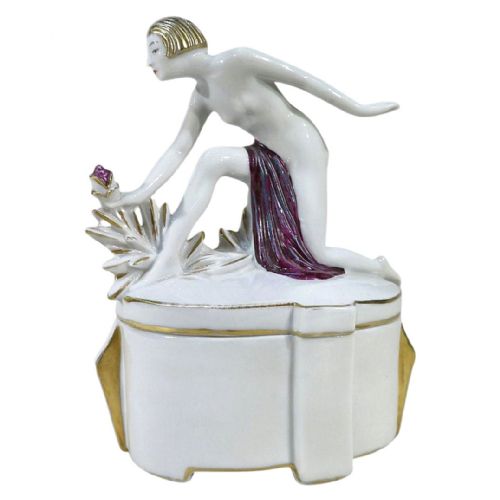


Art Deco Porcelain Box
An art deco porcelain box brings the charm of the nineteen-thirties dressing table directly into modern interiors as a charming storage piece.
Art Deco Porcelain Box
When you search for an art deco porcelain box, you encounter vanity vessels designed to hold face powder, trinkets or dressing table items during the nineteen-thirties. These pieces take the form of powder bowls, jars, bonbonnieres and dresser boxes originating from makers in France, Germany and Austria.
The most common version met on this page is the figural half doll box, which portrays a flapper girl, bathing belle, pierrot or jester perched atop a ceramic or porcelain bowl. Alongside these figures appear novelty designs and geometric lidded vessels intended for daily use on the dressing table.
How they were made
Makers shaped these containers using ceramic, earthenware and porcelain bodies formed into lidded bowls and figural half doll toppers. Kiln firing fixed the ceramic structure before decorators applied detailed glaze and enamel finishes by hand.
Finishing touches frequently incorporated gilt, gold leaf or fabric elements to accent the painted costumes of the figures and the edges of the lidded boxes. French and German potteries utilised these combined techniques to achieve the distinct visual style of the period.
Some powder jars feature a jaunty jester or bathing belle keeping permanent watch over your spare buttons.
What varies in quality
The distinction between standard production items and superior examples lies in the crispness of the hand-painted enamel and the preservation of the delicate gilt details. Precision in the moulding of the porcelain figures and the seamless fit of the lidded bowls indicate higher workshop standards.
Origin also influences the character of the piece, with recognised houses such as Limoges demonstrating refined ceramic bodies and sophisticated glaze application. Condition plays a role, as intact fabric components and unblemished painted surfaces separate well-preserved specimens from heavily handled examples.
Limoges·Crown Staffordshire·Lechertier Barbe And Co
The Art Deco Porcelain Box Glossary
- Half doll
- A ceramic figure modelled from the waist up, historically mounted to the fabric skirts of tea cosies or the lids of powder boxes. These figures define many dresser accessories from the period.
- Powder bowl
- A lidded ceramic vessel designed to hold loose face powder on a dressing table. These containers often double as trinket boxes for small personal items.
- Bonbonnieres
- A small decorative box intended for holding sweets or bonbons. In porcelain form, these lidded vessels serve both ornamental and functional purposes in the boudoir.
- Gilt
- A thin layer of gold applied to the surface of porcelain or ceramic pieces. This metallic decoration highlights rims, motifs and figural details.
Art Deco Porcelain Box: Frequently Asked Questions
What is an art deco porcelain box used for?
These lidded vessels originally served to hold loose face powder, puffs, or small personal trinkets on a dressing table. Today, collectors use them to store small items or display them as decorative objects.
The figural lids and colourful glazes make them distinct focal points on a shelf or mantlepiece without requiring any active maintenance.
Where were these ceramic boxes made?
The pieces originate primarily from European ceramic manufacturing centres in France, Germany and Austria. Limoges in France stands out among the documented regional producers.
Each region contributed distinct decorative techniques, ranging from figural porcelain novelties to geometric patterns on lidded bowls.
How should I care for vintage porcelain?
Clean these delicate items gently with a dry or slightly damp cloth to preserve the hand-painted enamel and gilt details. Avoid harsh cleaning agents that can damage the glaze.
Keep them away from direct sunlight and areas prone to heavy knocks to protect the painted surfaces and fragile porcelain edges.