






Art Deco Pedestal Chest
An art deco pedestal chest brings strong architectural geometry and striking figured timber into a bedroom, offering practical surface space alongside clean period character.
Art Deco Pedestal Chest
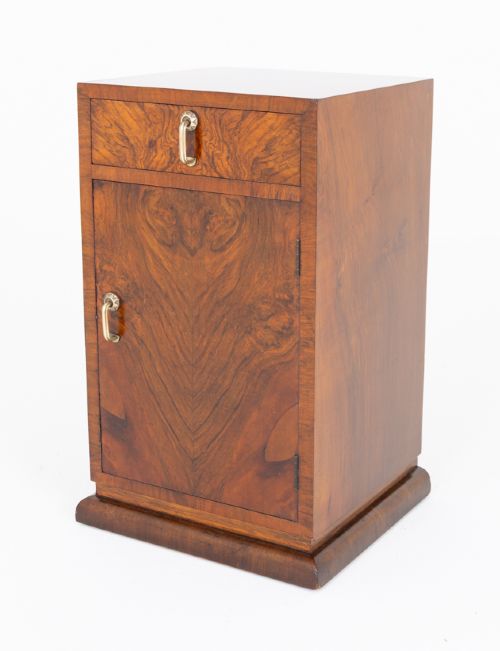
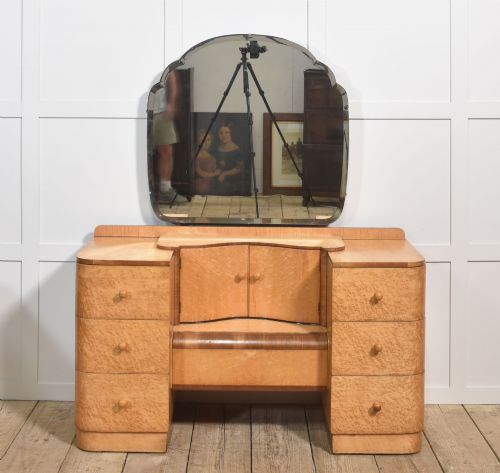
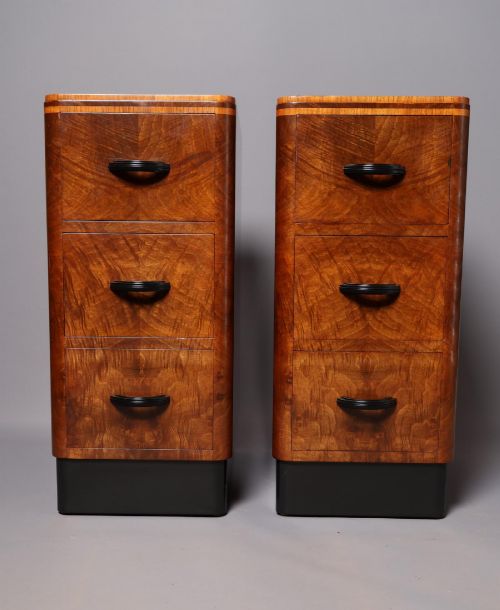
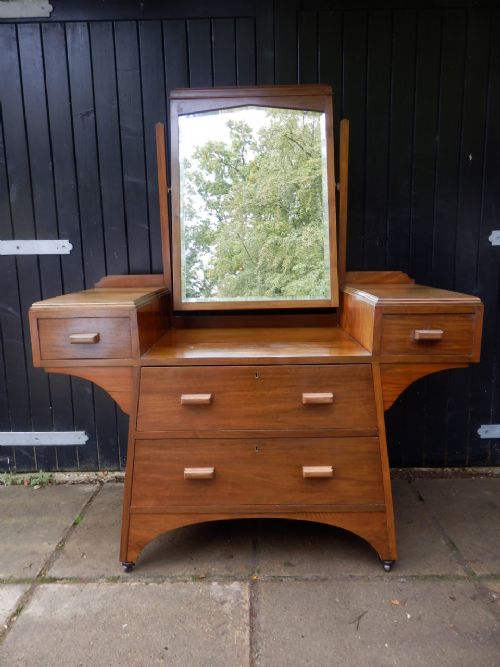
An art deco pedestal chest is fundamentally a bedroom piece built with vertical presence, appearing here primarily as bedside cabinets, night stands, and occasionally as dressing tables with flanking pedestals. These pieces originate from the 1920s, 1930s, and 1940s, embodying the distinct stylistic shifts of the interwar period.
The forms span English and Continental workshops, presenting single cabinets or balanced pairs designed to sit neatly beside a bed. Alongside these, pedestal dressing tables incorporate drawers within flanking columns, often surmounted by original mirrors in circular or arched shapes.
Wood remains the dominant medium, supplemented by occasional uses of glass, mirror glass, and metal trim. The overall impression relies on clean lines, symmetrical arrangements, and the natural grain of the timber rather than heavy carved ornamentation.
How they were made
Construction relies heavily on solid woods and applied veneers, with cabinetmakers selecting highly figured timbers to create visual movement across flat drawer fronts and cabinet doors. Burr walnut, figured walnut, birds eye maple, satinwood, and oak provide the primary surfaces, often arranged in book-matched patterns to emphasise the natural grain.
Secondary materials such as glass and mirror glass are integrated into dressing table tops and backing plates, while metal hardware provides functional accents. Cabinetmakers utilised traditional carcase construction methods to house drawers securely within the pedestal columns.
Art Deco Pedestal Chest Retail Price Guide 2026
Typical asking prices for art deco pedestal chest among the pieces listed under this phrase on Sellingantiques today, from the lower quarter to the upper quarter. They describe what is for sale here now, not the wider market.
Current listings feature pieces spanning the 1920s, 1930s, and 1940s, constructed in walnut, burr walnut, birds eye maple, satinwood, oak, and mirror glass.
What varies in quality
Quality rests primarily in the choice and application of veneer, where master cabinetmakers selected striking burr walnut or birds eye maple figures to cover surfaces in harmonious patterns. The crispness of the geometry and the balance of proportions distinguish finer workshops from standard commercial production.
The integration of secondary materials like mirror glass and metal hardware also separates standard items from more ambitious designs. Pieces that retain matching pairs, intact original mirrors, and well-figured timber represent the higher end of the surviving range.
The Art Deco Pedestal Chest Glossary
- Burr walnut
- A prized timber harvested from the irregular growths of walnut trees, producing swirling, intricate grain patterns highly favoured in art deco veneering. It creates rich decorative surfaces on cabinet doors and drawer fronts.
- Birds Eye Maple
- A figured timber showing small, circular eye markings scattered across a pale background. This material was frequently utilised in the 1920s to lend brightness and texture to bedroom suites.
- Pedestal dressing table
- A vanity or dressing table featuring banks of drawers on either side of a central kneehole. These pieces often incorporate hinged or fixed mirrors mounted to the upper surface.
- Book-matched
- A veneering technique where adjacent slices of timber are opened like a page to mirror each other's grain patterns. This creates symmetrical, decorative designs across large surfaces.
Art Deco Pedestal Chest: Frequently Asked Questions
What is an art deco pedestal chest?
An art deco pedestal chest is a bedroom storage piece designed during the 1920s to 1940s, featuring vertical pedestal construction.
These pieces typically appear as bedside cabinets or dressing tables, combining geometric forms with figured wood veneers.
How were these cabinets used?
Bedside cabinets and night stands were placed beside the bed to hold lamps, books, and personal items within easy reach.
Pedestal dressing tables served as personal grooming stations, incorporating surface space and drawer storage alongside mirrors.
How do I date an art deco piece?
Dating relies on stylistic markers, construction methods, and materials associated with the interwar decades.
The use of birds eye maple often points toward the 1920s, while certain streamlined walnut forms date to the 1930s and 1940s.
Are bedside cabinets sold in pairs?
Many bedside cabinets and chests survive and are listed as matched pairs intended to flank a bed symmetrically.
Single cabinets also appear frequently, reflecting varied original bedroom configurations.
What woods were used?
Cabinetmakers utilised a range of domestic and exotic timbers, with walnut and burr walnut appearing most frequently across the listings.
Other materials include birds eye maple, satinwood, oak, and occasional accents of glass and metal.