


Art Deco Oak Mirror
These art deco oak mirror pieces bring geometric restraint and honest grain to an interior, built to catch light and anchor a room.
Art Deco Oak Mirror
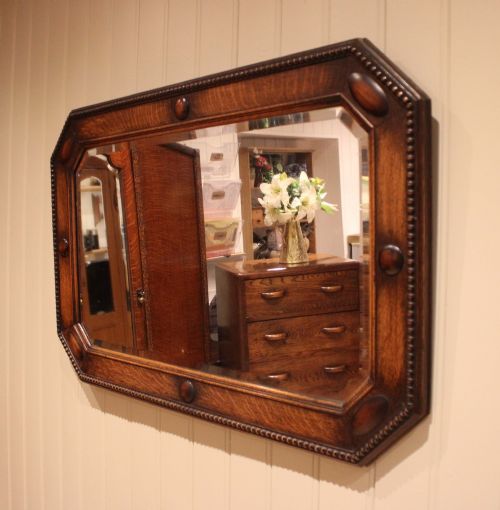
An art deco oak mirror brings together the architectural geometry of the interwar period and the stout, figured grain of native timber. Wall-hanging examples appear frequently in rectangular, octagonal, round, and oval formats, often serving as functional focal points in hallways or above mantles.
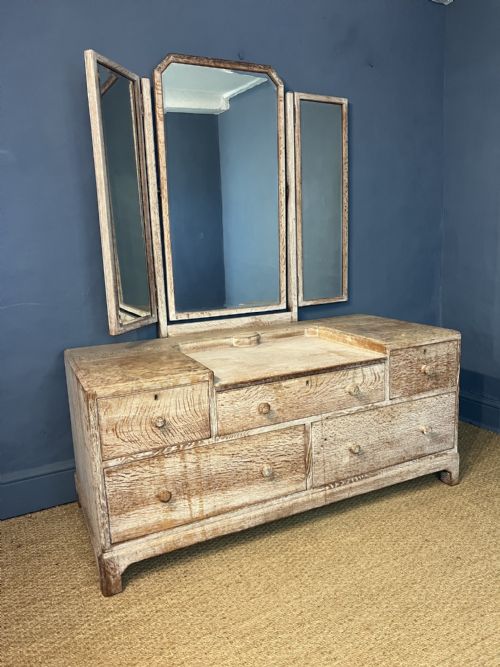
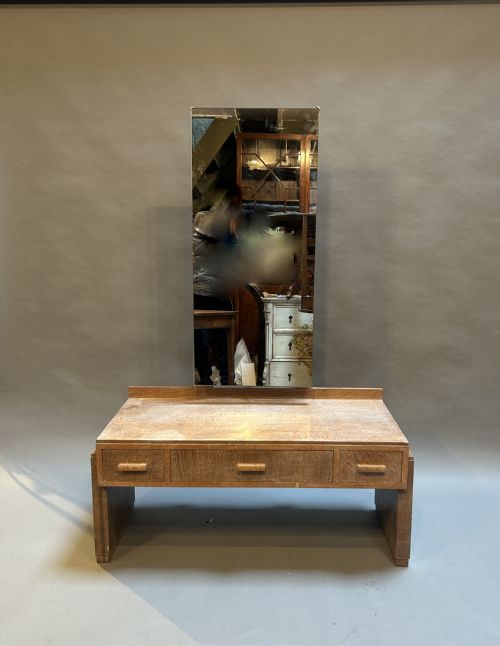
Beyond standalone wall pieces, the form surfaces integrated into larger furniture groups such as dressing tables, dressing chests, and full bedroom suites. These integrated looking glasses often share space with limed finishes, marquetry details, or contrasting walnut veneers.
The objects span production from the nineteen-twenties and nineteen-thirty eras, reflecting both British workshop output and continental French styling. Buyers select them to ground period schemes with robust construction and understated decorative motifs.
How they were made
Makers utilised solid oak alongside oak veneers, applying limed treatments or contrasting marquetry to accentuate the natural figuring of the wood. Metal elements and specialised glass, including peach-tinted variants, were integrated to punctuate the wooden frames.
Construction relied on stable timber framing to support heavy bevelled mirror plates, sometimes incorporating secondary woods like walnut or burr oak for decorative emphasis. Surface finishes were carefully applied to protect the grain while maintaining a subtle, matte or softly polished sheen.
Object forms include wall mirrors, dressing tables, washstands, cocktail drinks cabinets, and complete bedroom suites.
What varies in quality
The distinction between standard examples and superior pieces rests on the complexity of the geometry, the selection of figured timber, and the subtlety of supplementary details like marquetry or liming. Superior items display harmonious proportions where the grain follows the angles of the frame without awkward interruption.
Condition of the reflective plate and the integrity of the original backingboards differentiate everyday utility from high-grade survivals. Pieces retaining unusual configurations, such as octagonal profiles or integrated shelving, command greater attention from collectors.
Heals·Gaylayde·B Cohen and Sons
The Art Deco Oak Mirror Glossary
- Limed oak
- A finishing technique where a white pigment is rubbed into the open pores of oak to highlight the grain pattern. This treatment became particularly popular in modern interwar furniture design.
- Marquetry
- The art of applying small pieces of veneer to a structure to form decorative patterns or pictorial designs. It often adds visual contrast using darker woods against an oak background.
- Bevelled glass
- A mirror plate with edges cut and polished at an angle to catch and refract light. This edge treatment adds depth and a finished appearance to wall-hanging looking glasses.
- Overmantle
- A large mirror designed specifically to hang on the wall directly above a fireplace mantelpiece. These pieces often feature horizontal proportions suited to domestic hearths.
Art Deco Oak Mirror: Frequently Asked Questions
How do I hang a heavy wall mirror safely?
Heavy frames require sturdy fixings screwed directly into wall studs or secured with appropriate toggle bolts. Wire alone is rarely sufficient for substantial wooden wall pieces.
Ensure the weight is distributed evenly across multiple brackets to prevent warping or accidental detachment over time.
Are these mirrors suitable for bathrooms?
Original interwar pieces were built for bedrooms, hallways, and living spaces rather than high-moisture environments. Steam and damp can damage the wooden frames and degrade the silvering behind the glass.
Dry interior rooms remain the safest locations for preserving the original timber and reflective plates.
How do I clean limed oak frames?
Dust the timber regularly with a soft, dry cloth to prevent grime accumulation in the open grain. Avoid harsh chemical cleaners that strip the specialised surface treatment.
Occasional application of appropriate furniture wax helps nourish the wood without altering the characteristic pale finish.