

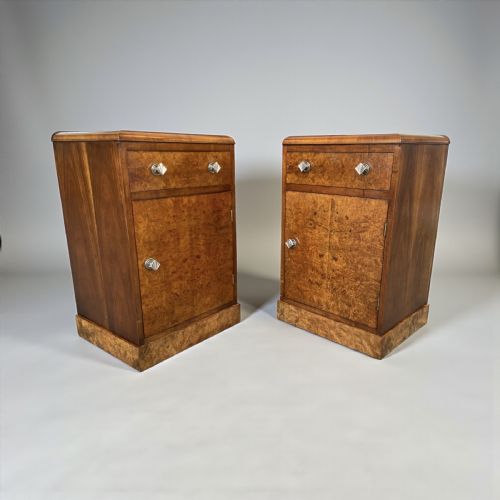


Art Deco Night Tables
Art deco night tables bring geometric elegance and rich timber tones straight to the bedside, making them essential for a period interior.
Art Deco Night Tables
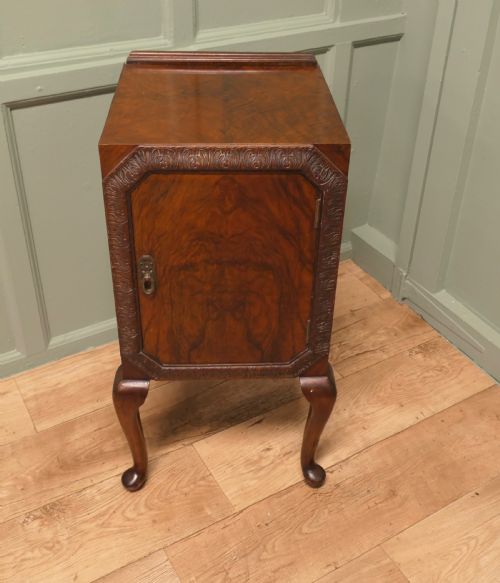
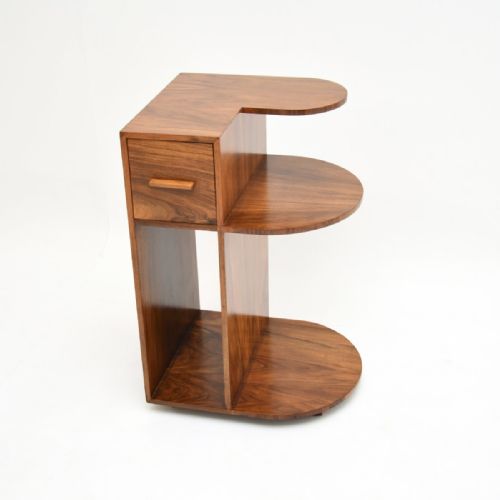
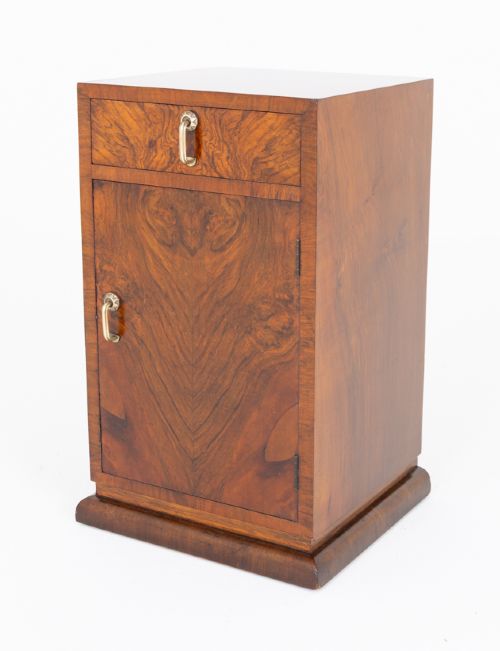
The most common formats on this page are matched pairs of bedside cabinets featuring enclosed storage with a single door or drawer. These pieces rely on clean architectural lines, compact proportions, and striking wood grains to anchor a bedroom scheme.
How they were made
Cabinet makers utilised decorative wood veneers over solid carcases, applying figured walnut, burr walnut, birds eye maple, satinwood, and blonde maple to create symmetrical grain patterns. These wooden surfaces are frequently complemented by contrasting materials such as marble tops, glass elements, and metal or brass fittings.
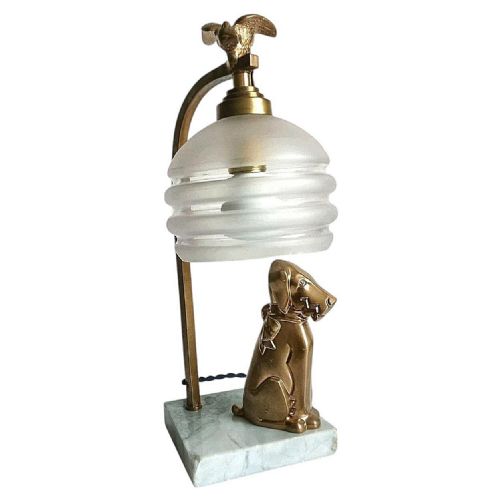
French and English makers paired timber construction with sculptural lighting elements, incorporating bronze, spelter, and mottled opaline glass on associated night lights and lamps. Surface finishing relied on French polishing to highlight the natural depth and movement within the wood veneers.
The inventory combines bedside cabinets with figural night lights and lamps.
What varies in quality
The degree of sophistication in the veneer selection separates standard production items from superior examples. Master craftsmen arranged grain patterns with deliberate symmetry across matching pairs, ensuring the visual rhythm of the timber defines the piece.
Execution of hardware and secondary materials also dictates the tier of a piece. Integrated handles, substantial marble slabs, and finely cast metal mounts elevate the overall execution beyond basic utility.
Argilor Paris
The Art Deco Night Tables Glossary
- Figured walnut
- Timber cut to reveal complex, rippled grain patterns. It provides intense visual texture on cabinet doors and tabletops.
- Veneer
- Thin slices of fine wood applied over a stable secondary wood base. This technique allows makers to display exotic grains without risking structural warping.
- Spelter
- A zinc alloy frequently used as a cost-effective substitute for bronze in decorative figures and lamp bases. It takes patination well to resemble heavier metals.
- Opaline glass
- An opaque or translucent glass with a milky appearance. It diffuses light softly in period night lights and bedside lamps.
- Bedside cabinet
- A small enclosed storage unit fitted with a door or drawer for nocturnal essentials. These pieces keep surfaces tidy beside the bed.
Art Deco Night Tables: Frequently Asked Questions
What are art deco night tables?
Art deco night tables are compact bedside cabinets and chests produced during the nineteen twenties and nineteen thirties. They combine utilitarian storage with the geometric styling of the period.
Most examples employ figured wood veneers and compact footprints to sit neatly beside a bed. They function as both practical storage and decorative accents.
How were they used originally?
These cabinets stored books, personal items, and small lighting fixtures within arm's reach of the bed. Their enclosed cupboards kept bedside necessities hidden from view.
Many incorporated matching lamp fixtures or rested beneath decorative night lights made from bronze, marble, and glass.
How do I live with them?
Pair these cabinets with neutral walls to let the distinctive wood grains and veneers become the focal point of the room. Their modest scale suits modern bedroom layouts easily.
Keep polished wooden surfaces away from direct sunlight to preserve the rich colour of the walnut or maple. Use coasters to protect marble and wood tops from moisture.
How do I tell periods apart?
Pieces from the nineteen twenties often lean towards more experimental sculptural forms and figurative lighting elements. They frequently incorporate bronze or spelter figures on marble bases.
Items from the nineteen thirties tend to emphasise streamlined architectural symmetry and matched wood veneers. Cabinets from this decade prioritize clean functional geometry.