


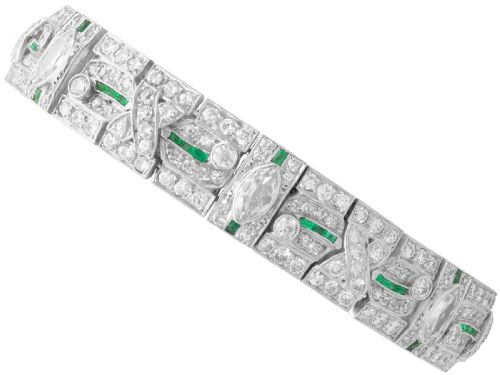

Art Deco Line Bracelet
An art deco line bracelet brings together symmetrical geometry and continuous sparkle, making it a timeless wrist adornment for evening wear.
Art Deco Line Bracelet
An art deco line bracelet is a continuous band of gemstones, most frequently diamonds, set in precious metal links that wrap flexibly around the wrist. When buyers search for an art deco line bracelet, they encounter pieces originating predominantly from the 1920s and 1930s, alongside items from adjacent decades like the Edwardian period, 1940s Retro, and Mid-Century eras.
The most common version met on this page pairs brilliant or old-cut diamonds with platinum settings, often incorporating geometric patterns characteristic of the style. These bracelets frequently integrate calibre-cut sapphires, emeralds, or rubies alongside the central diamond rows to create striking contrast and colour.
The forms span from delicate single-stone widths to substantial graduated layouts carrying significant carat weights. While the majority adhere to strict geometric principles, some examples incorporate pearls or alternative precious metals such as 18ct yellow gold, white gold, and rose gold.
Materials and construction
Platinum serves as the predominant metal for these pieces, chosen for its strength which allowed jewellers to create secure, ultra-thin settings that maximised stone visibility. Gold variants, including 18ct yellow gold, white gold, and rose gold, appear regularly to support alternate gemstone combinations.
Diamonds form the primary visual element, flanked by sapphires, emeralds, and rubies cut into precise geometric shapes. Paste glass also appears in period-appropriate statement pieces, demonstrating the breadth of materials utilised during these manufacturing eras.
Art Deco Line Bracelet Retail Price Guide 2026
Typical asking prices for art deco line bracelet among the pieces listed under this phrase on Sellingantiques today, from the lower quarter to the upper quarter. They describe what is for sale here now, not the wider market.
Differentiating quality
The standard of an art deco line bracelet rests on the precision of the stone setting and the uniformity of the gem arrangement. Superior examples demonstrate meticulous calibration of side stones, particularly when emeralds or sapphires accompany the main diamonds.
Artisanal execution in the platinum or gold articulation dictates flexibility and comfort on the wrist. Pieces showing superior craftsmanship maintain rigid geometric alignment while allowing the individual links to drape fluidly without catching or twisting.
The Art Deco Line Bracelet Glossary
- Calibre-cut
- Small gemstones cut specifically to fit tightly together in a geometric pattern without gaps. This technique defines the intricate border work seen in period pieces.
- Graduated
- A layout where the gemstones increase in size toward the centre of the bracelet. This design creates a balanced focal point on the wrist.
- Old-cut
- A diamond cutting style prevalent before modern brilliant standards, characterised by higher crowns and smaller tables. These stones exhibit distinctive broad flash patterns under candlelight.
- Paste
- Hand-cut and polished glass used as a sparkling gem substitute in antique jewellery. High-grade paste enjoys independent collectible value for its historical craftsmanship.
- Collet set
- A setting style where a metal collar encircles the gemstone's girdle to hold it securely in place. This method provides a clean, continuous outline along the line of stones.
Art Deco Line Bracelet: Frequently Asked Questions
How do I wear an art deco line bracelet daily?
These flexible diamond and platinum bands pair easily with both formal evening attire and tailored daytime clothing. Their low profile sits comfortably against the wrist alongside other accessories.
Secure box clasps and safety chains keep the jewellery anchored during movement. Regular checks by a jeweller ensure the individual stone settings remain tight.
Are these bracelets made of platinum or gold?
Platinum is the most common metal found in these pieces because its strength allowed artisans to build delicate, secure settings. Yellow, white, and rose gold variants also appear across different decades.
White metals generally reflect the classic aesthetic of the period, while gold versions offer warmer alternative tones. Hallmarks and metal testing help verify the specific alloy composition.
How do I tell an original period piece apart?
Original period pieces display hand-worked settings and specific gemstone cuts characteristic of their manufacturing era. Old-cut diamonds and hand-calibrated sapphires or emeralds indicate genuine historical production.
Examining the reverse side reveals the artisan's construction methods and hand-pierced metalwork. Comparing these details against known period styles confirms the manufacturing timeline.
Can I resize an art deco line bracelet?
Adjusting the length of a continuous gemstone bracelet requires adding or removing uniform sections. A skilled jeweller must match the metal type and stone cuts precisely to maintain the pattern.
Because the geometric design repeats continuously, altering the length involves careful structural planning. Professional evaluation ensures the structural integrity remains intact after modification.