
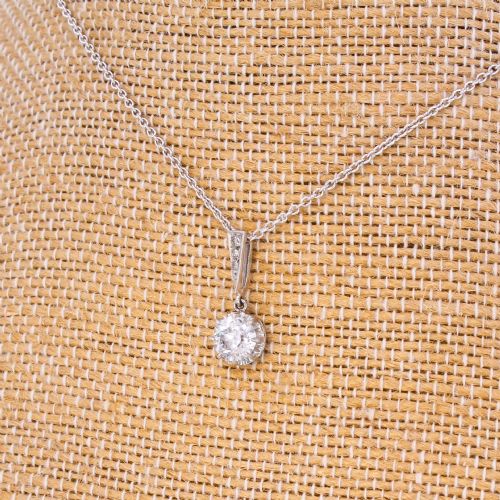


Art Deco Gold Necklace
Selecting an art deco gold necklace brings together geometric lines, fine metalwork, and period gems from the interwar decades.
Art Deco Gold Necklace
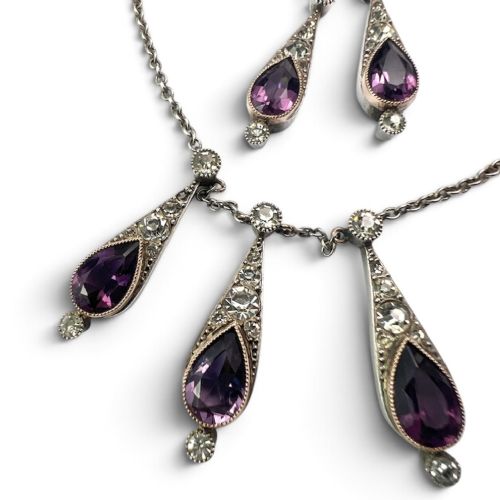
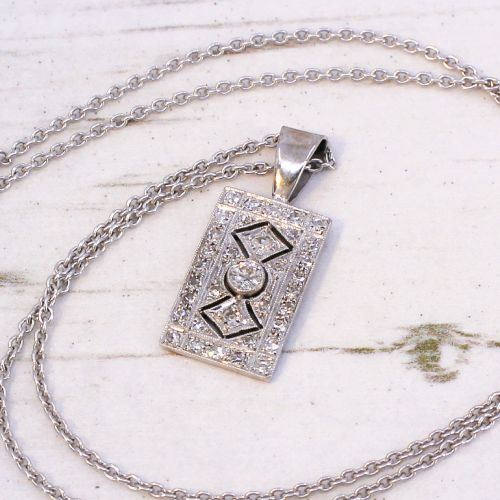
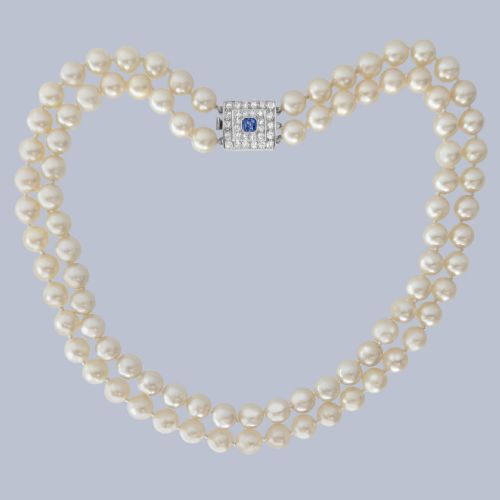
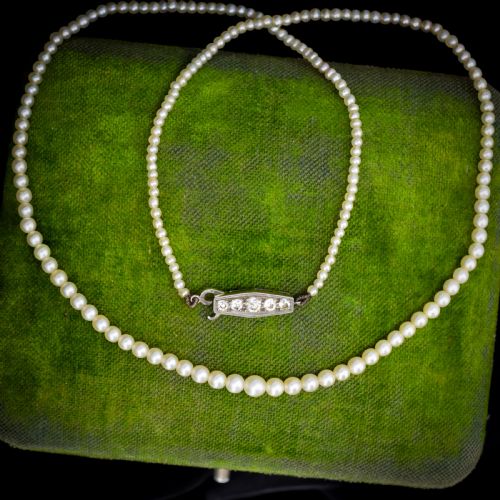
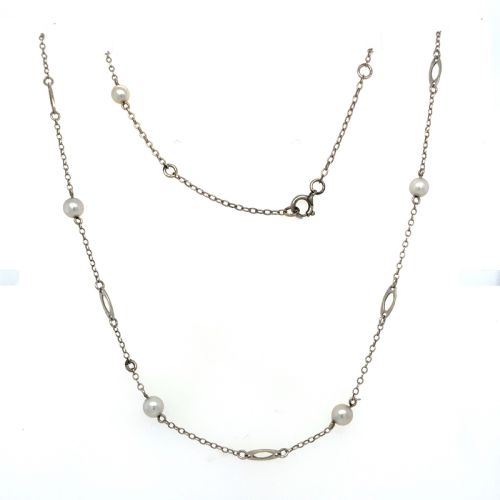
An art deco gold necklace covers varied forms originating predominantly from the 1920s and 1930s, encompassing delicate drop pendants, uniform chain links, and multi-strand pearl arrangements.
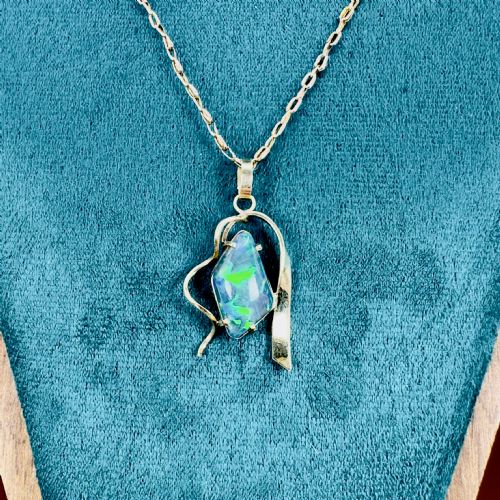
Buyers encountering this selection will find examples utilising yellow gold, white gold, and platinum alongside coloured stones such as aquamarine, opal, garnet, and diamond.
The aesthetic relies on symmetry, stylised motifs, and structured geometric drops that reflect the design vocabulary of the period.
Materials and construction
Goldsmiths of the period employed 9ct and 18ct gold, frequently pairing white gold or platinum with yellow gold settings to highlight individual diamonds and gemstones.
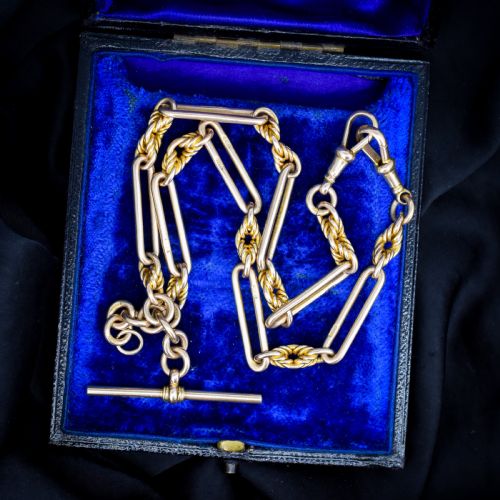
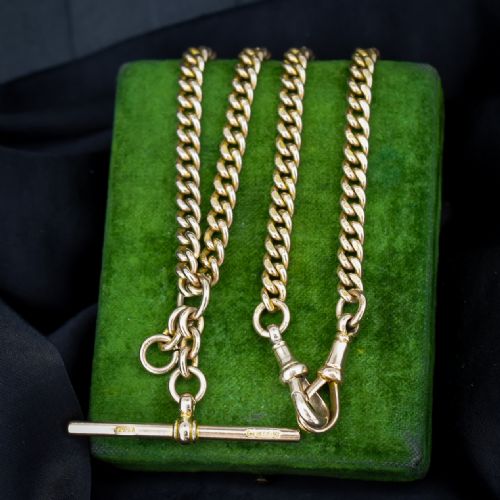
Construction techniques include millegrain edges, channel settings, and intricate linkages such as trombone, curb, and love knot patterns designed to drape smoothly against the wearer.
Listings feature yellow gold, white gold, and platinum paired with diamonds, aquamarines, opals, and pearls across the 1920 and 1930 decades.
Factors determining quality
Quality rests upon the precision of the metalwork, the symmetry of the geometric arrangement, and the integration of the clasp with the main body of the piece.
Gems selected for these items range from paste and crystal to certified diamonds, natural pearls, and substantial coloured stones, directly influencing the character of the work.
Paul Brandt
The Art Deco Gold Necklace Glossary
- Millegrain
- A decorative technique involving a line of tiny raised beads of metal along the edge of a setting. This finish was widely used during the period to soften harsh metal borders.
- Albert chain
- A heavy watch chain originally designed to attach to a waistcoat pocket. These chains are frequently adapted to be worn as necklaces.
- Old cut diamond
- A precursor to the modern brilliant cut featuring a smaller table, higher crown, and open culet. These stones were hand-cut to maximise fire under candlelight.
- Paste
- Hand-cut and polished lead glass used as a gemstone substitute. High-grade examples display considerable brilliance and careful foil backing.
- Lavaliere
- A pendant necklace featuring a central drop suspended from a smaller motif or chain. The style gained popularity in the early twentieth century.
Art Deco Gold Necklace: Frequently Asked Questions
How do I care for a pearl and gold necklace?
Pearl strands require gentle cleaning with a soft, damp cloth and should be stored flat to prevent stretching the silk thread. Avoid exposing pearls to cosmetics, perfumes, or ultrasonic cleaners.
Gold settings can be wiped with a lint-free polishing cloth. Professional restringing is recommended periodically if the original thread shows wear.
What length are these period necklaces?
Many surviving pieces measure between fifteen and seventeen inches, sitting close to the collarbone in the style of the era. Chain links and pendants often include original clasps that dictate the wearable length.
Longer sautoir styles and watch chains offer alternative drape options. Checking the individual dimensions in each listing ensures the correct fit.
How can I tell a 1920s piece from a later reproduction?
Authentic pieces exhibit period-specific construction methods such as hand-cut stones, closed-back settings where appropriate, and integrated box clasps. Wear patterns on the metal often reflect decades of gentle use.
Hallmarks stamped on the gold or platinum components provide official assay office markers that help confirm the manufacturing era.
Can these necklaces be worn every day?
Sturdier gold chain designs and robust gemstone pendants withstand regular wear when handled with reasonable care. Fragile elements like seed pearls and delicate filigree require a more considered approach.
Securing the clasp properly during wear prevents loss. Storing each piece in an individual box protects the links from tangling.