
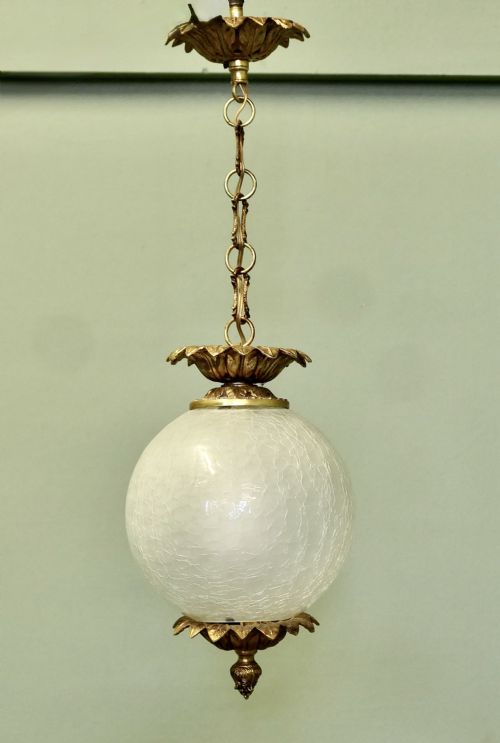
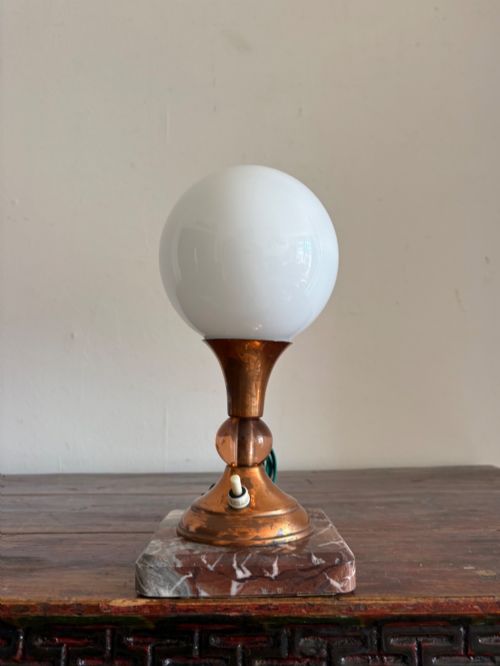

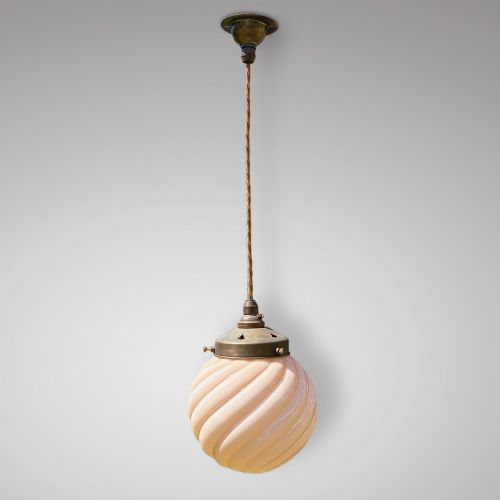


Art Deco Globe Light
An art deco globe light brings functional illumination together with the geometric elegance of the interwar years.
Art Deco Globe Light
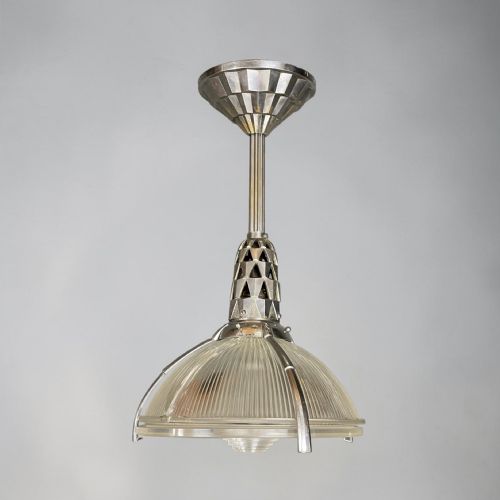
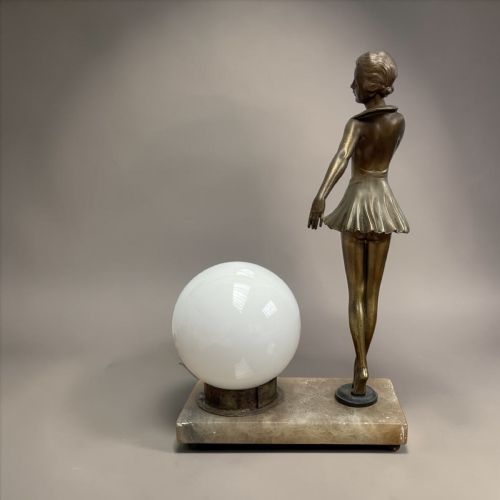
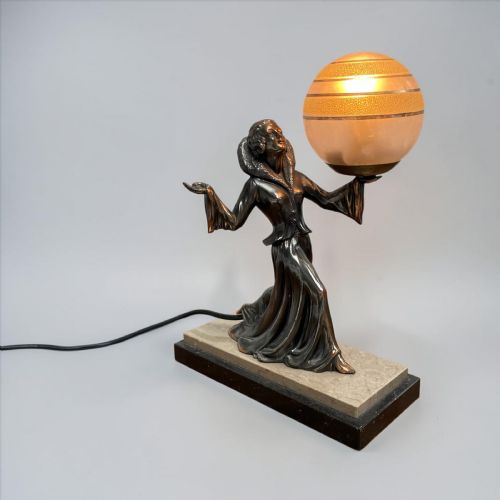
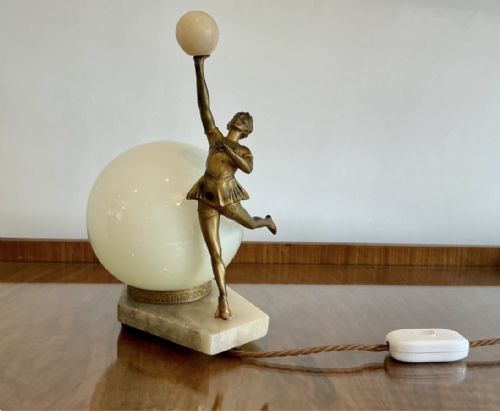
When you search for an art deco globe light, you encounter a distinct genre of domestic lighting defined by spherical diffusers and the stylistic vocabulary of the 1920s, 1930s, and 1940s. These pieces encompass everything from ceiling pendants and wall sconces to figural table lamps incorporating glass spheres into their design.
The versions most common on this page originate from French workshops alongside English and international makers of the period. They combine utilitarian forms with decorative ambition, illuminating hallways, salons, and desks with diffused, atmospheric light.
The overarching style leans heavily into French Art Deco, Modernist sensibilities, and Machine Age influences. Whether suspended from a ceiling or mounted on a marble base, the globe light remains a signature of interwar design.
How they were made
Makers utilised a combination of industrial metals and specialised glass techniques to achieve the characteristic look of an art deco globe light. Frameworks rely on chrome, brass, copper, bronze, and silver plate, frequently paired with heavy stone bases made from marble or granite.
Glass production was central to the process, yielding opaline glass, frosted glass, etched crystal, and translucent milk glass that softened the glare of early electric bulbs. Synthetic materials also entered production during the 1930s, with early plastics such as bakelite and catalin phenolic appearing on switchgear, bases, and structural components.
Current listings feature pieces spanning the 1920s to the 1940s, incorporating opaline glass, chrome, bronze, and marble.
What varies in quality
The division between standard commercial production and finer items rests upon the weight of the metalwork and the depth of the glass finish. Superior pieces employ solid bronze, heavy cast spelter, or thick-gauge chrome alongside hand-blown opaline or deeply etched crystal globes.
Artistry in figural components also dictates value, particularly in lamps depicting human figures or animals where anatomical proportion and casting detail diverge sharply between mass production and master design. The integration of materials, such as a seamless fit between a glass globe and a marble or alabaster plinth, separates robust studio pieces from simpler utility fittings.
Émile-Jacques Ruhlmann
The Art Deco Globe Light Glossary
- Opaline glass
- A milky, translucent glass developed to diffuse light evenly while hiding the bulb from direct view. It appears frequently in pendant and ceiling globes.
- Spelter
- A zinc alloy commonly cast into figural sculptures and lamp bases during the interwar period. It was often painted or plated to imitate bronze.
- Torchiere
- An uplighter floor lamp designed to bounce illumination off the ceiling. These fixtures often employ dramatic shades to direct the beam upward.
- Alabaster
- A fine-grained, translucent stone carved into decorative bases and shades. It absorbs light warmly, creating a soft glow when illuminated.
Art Deco Globe Light: Frequently Asked Questions
How do I install a vintage globe light?
Most hanging pendant fixtures require standard electrical wiring connected to a reinforced ceiling box capable of supporting the weight of the glass and metal.
Professional installation is recommended for older brass and chrome fixtures to ensure the internal wiring meets modern safety standards.
Are replacement globes easy to find?
Finding an exact period match for a broken globe can take time due to variations in fitter diameters and glass opacity.
Many collectors search for vintage opaline or frosted glass replacements that match the dimensions of the original fitter gallery.
What rooms suit an art deco globe light?
These fixtures suit hallways, dining spaces, and studies where ambient, diffused illumination creates a balanced atmosphere.
Table and desk variants work well on sideboards and credenzas, adding a focused pool of light alongside sculptural presence.
How do I clean opaline glass?
Wash the glass gently using warm water and mild dish soap, avoiding harsh abrasives that might scratch the delicate surface.
Dry the globe thoroughly with a lint-free cloth before reattaching it to the metal collar.