


Art Deco Glass Flower Vase
An art deco glass flower vase brings geometric line and colour to a room, channelling the design energy of the interwar decades.
Art Deco Glass Flower Vase
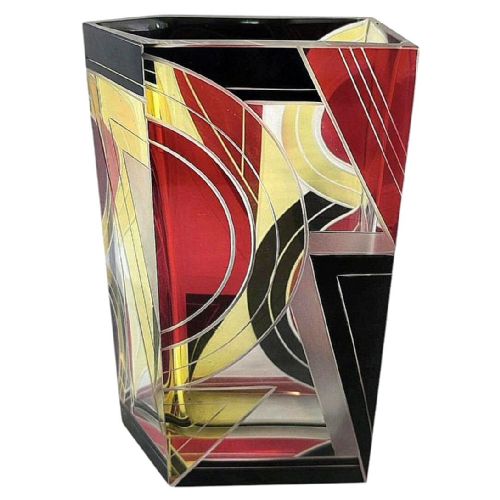
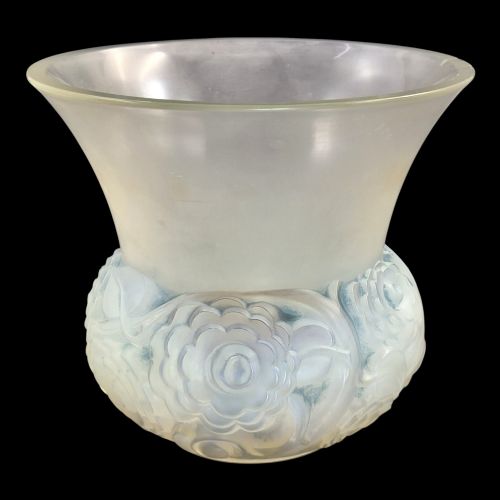
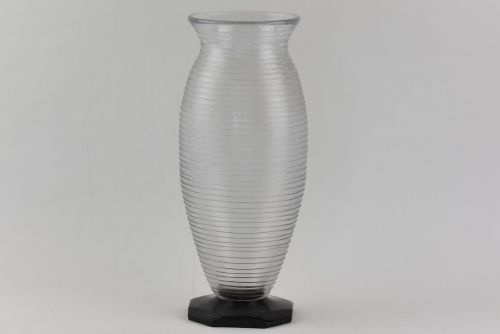
Makers in France, Belgium, Britain and the Czech Republic produced these objects using innovative moulding and blowing techniques. Collectors meet pieces varying from clear crystal through to heavily enamelled, opalescent and cameo surfaces.
How they were made
Glassmakers utilised various fabrication methods, combining lead crystal, frosted glass and cased layers of coloured metal. Etching and enamel decoration provided surface contrast against geometric or floral motifs.
Heavy weight often resulted from thick walled crystal casting, while opalescent effects relied on specific chemical additions during the cooling process.
Materials recorded include lead crystal, opalescent glass, frosted surfaces, cased layers and applied enamel decoration.
What varies in quality
Quality rests upon the crispness of the moulded relief, the depth of the cased colour layers and the precision of the acid etching. Maker attribution and signed signatures elevate certain examples above standard production pieces.
The weight of the crystal and the complexity of the enamel or geometric patterns distinguish master workshops from lesser commercial outputs.
Rene Lalique·Daum·Karl Palda·Val St Lambert·Schneider·Keith Murray·Paul Heller·Monart
The Art Deco Glass Flower Vase Glossary
- Opalescent glass
- Glass that displays a milky, translucent quality with blue or amber highlights when lit from the front. This effect is achieved through specific chemical agents added to the batch.
- Cased glass
- A technique involving multiple layers of different coloured glass fused together. Artisans then cut through the top layer to reveal the contrasting colour underneath.
- Cameo glass
- Vessels carved from multi-layered glass blanks to create raised designs in relief. The process requires skilled hand work and considerable time.
- Lead crystal
- Glass containing metal oxide that increases weight, refractive index and clarity. It allows for deep, sharp cutting and brilliant light dispersion.
- Epergne
- A decorative centrepiece featuring a central vase surrounded by smaller detachable vases or arms. These items often dominated dining tables during formal gatherings.
Art Deco Glass Flower Vase: Frequently Asked Questions
How do I clean an art deco glass flower vase?
Wash the vessel gently in warm, soapy water using a soft cloth to protect any delicate enamel or etched surfaces. Avoid abrasive scrubbers that might scratch the exterior.
Dry the piece immediately with a lint free cloth to prevent water spots from forming on the crystal or opalescent finish.
Are these vases heavy?
Many examples possess substantial weight due to thick lead crystal walls and solid moulded bases. Large centrepieces can weigh several kilograms.
Lighter vessels exist, particularly smaller opalescent or blown items, but robustness is a common characteristic of the period.
How do I identify a maker?
Look for signatures etched into the base or side of the glass, which may appear as acid stamps, moulded marks or hand inscribed names. Documentation and distinct regional styles also aid attribution.
Not all pieces carry signatures, requiring stylistic comparison with known works from specific European glassworks.
Can I use them for real flowers?
These vessels were originally designed to hold floral arrangements, making them entirely suitable for modern display. Take care when placing heavy stems into antique openings.
Use caution with water temperatures to avoid thermal shock on fragile historical glass.