



Art Deco Glass Bird
Art deco glass bird sculptures capture motion and light, bringing distinct modernist elegance to any collection.
Art Deco Glass Bird
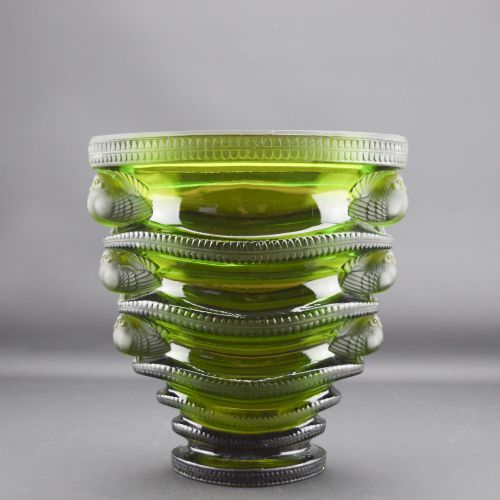
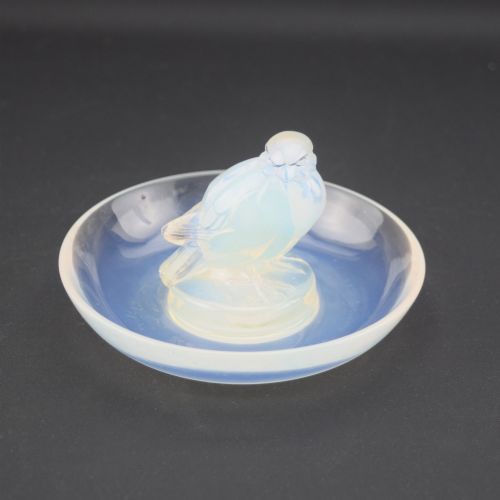
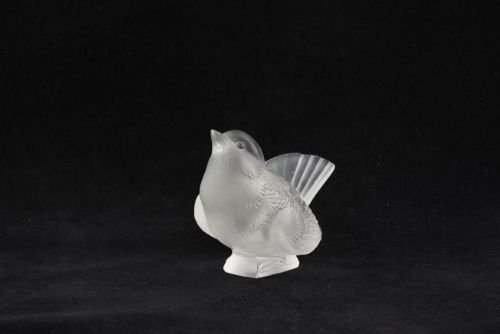
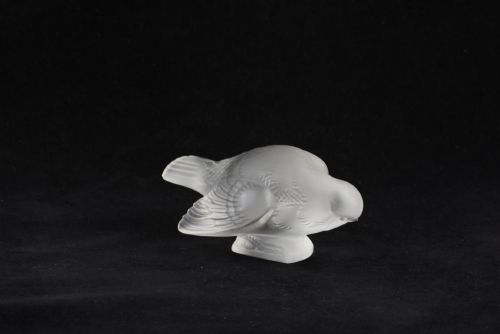
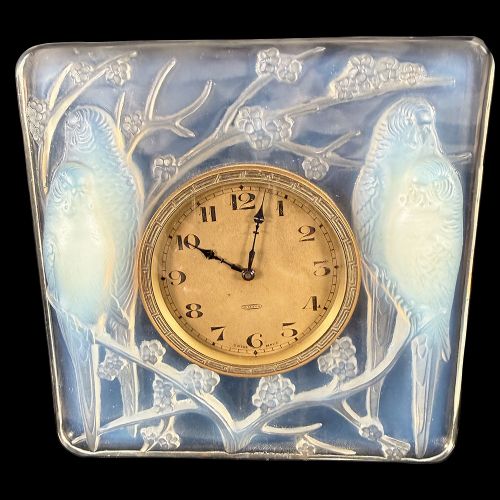
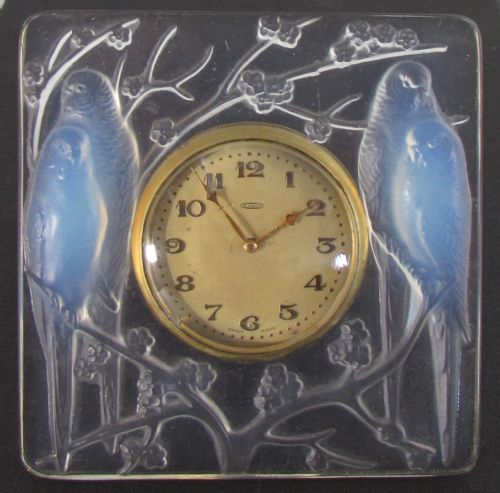
An art deco glass bird brings together sleek modernist design and delicate avian forms from the interwar decades. Buyers searching this phrase typically encounter paperweights, clocks, and night lights modelled after sparrows, parakeets, and seagulls.
The pieces appearing on this page span the 1900 to 1930 periods, showing French and English origins. Forms range from compact desk accessories to illuminated table lamps featuring frosted and opalescent finishes.
Materials and construction
Makers utilised moulded glass, frosted glass, and opalescent glass to catch and diffuse light across the avian plumage. Contrasting bases often incorporated marble, spelter, brass, or granite to anchor the lighter glass figures.
Techniques relied on intricate pressing and moulding to achieve tactile depth, sometimes enhanced with blue staining or gilt bronze mounts. These combined materials gave the sculptures both substantial weight and luminous transparency.
Several small glass birds double as heavy desktop guardians, keeping paperwork firmly anchored while looking perpetually ready for flight.
Judging quality and design
Quality rests on the crispness of the moulded detail in the feathers and the subtlety of the opalescent finish. Pieces that integrate secondary materials like marble or cast bronze with precise fitting demonstrate higher craftsmanship.
The overall balance between the glass bird and its supporting socle or base dictates the visual harmony of the piece. Stronger examples exhibit deliberate control over how light interacts with the textured surfaces.
Rene Lalique·Jobling·Hille Furniture Company·H&L Epstein
The Art Deco Glass Bird Glossary
- Opalescent glass
- Glass that displays a milky, translucent quality with shifting blue or amber tones when lit. This effect was heavily favoured by French makers to accentuate curved contours.
- Frosted glass
- Glass treated to achieve a matte, non-reflective surface texture. It creates soft diffusion across sculptural details.
- Spelter
- A zinc alloy commonly used as a base metal for figures and mounts during the period. It was often patinated to simulate bronze.
- Paperweight
- A heavy decorative desk object designed to hold down loose sheets. Many bird sculptures served this dual function.
Art Deco Glass Bird: Frequently Asked Questions
What are art deco glass birds made of?
These sculptures are primarily formed from moulded, frosted, or opalescent glass. They frequently sit upon bases constructed from marble, spelter, brass, or granite.
Some designs incorporate additional elements like cast bronze mounts or silvered glass to complete the sculptural composition.
How were these glass birds used originally?
Many smaller pieces functioned as desk paperweights or figural ashtrays for daily interior use. Larger examples served as decorative night lights, table lamps, or clock components.
Their dual role as functional objects and modernist art made them popular accessories in homes of the period.
How do I care for vintage art deco glass?
Clean frosted and opalescent surfaces gently using a soft cloth and lukewarm water without harsh detergents. Avoid soaking pieces that combine glass with metal bases or marble to protect the joints.
Keep them away from direct heat sources to preserve the original glass composition and patination.
How can I tell the period of these birds?
Pieces dating to this era typically display distinct modernist stylisation, geometric bases, and characteristic material combinations like spelter and marble. Maker signatures or registration numbers moulded into the glass provide direct clues to their origin.
Stylistic cues such as the depiction of specific birds like sparrows or seagulls align closely with 1920 and 1930 design trends.