


Art Deco Geometric Necklace
An art deco geometric necklace brings linear precision and architectural elegance to the neckline, offering a tangible piece of modernist design history.
Art Deco Geometric Necklace
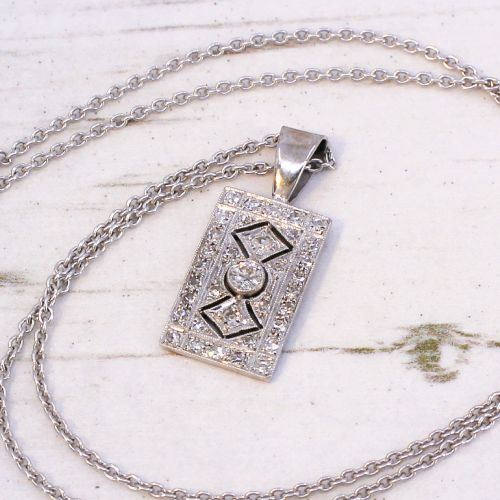
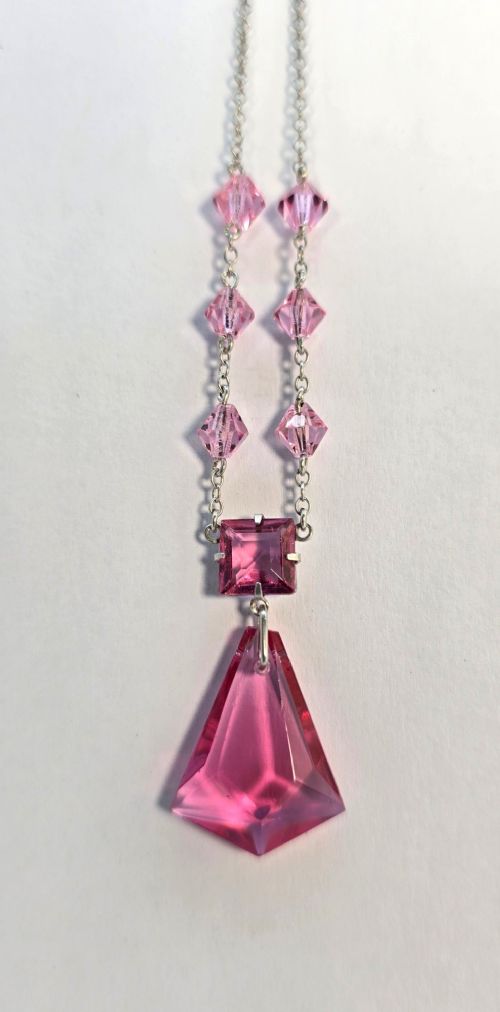
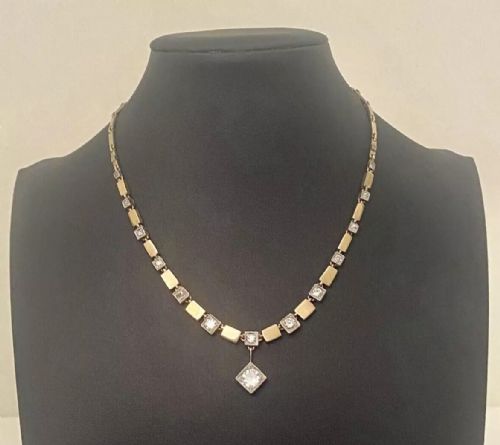
When buyers search for an art deco geometric necklace, they encounter striking pendants and drop designs defined by symmetry, clean lines, and architectural shapes. These pieces capture the spirit of the interwar period, channelling the aesthetic of the roaring twenties and thirties.
The versions met most frequently on this page span the 1920s and 1930s, featuring structured arrangements of gemstones, metals, and early plastics. Alongside authentic period pieces, the selection includes modernist interpretations utilising chrome, silver, and enamel.
Makers and designers of the era favored rigid angles, stepped motifs, and repetitive geometric patterns over flowing Victorian curves. Whether executed in precious platinum with diamonds or industrial chrome with synthetic materials, each necklace represents a distinct shift in twentieth-century ornamentation.
Materials and construction
Master jewellers combined precious metals like platinum and 18ct white gold with high-grade diamonds, rock crystal, and coloured gemstones. These traditional components were meticulously hand-cut and set to emphasise angular symmetry and linear flow.
Industrial materials also shaped the period, with makers incorporating chrome, silver plating, and early synthetics such as bakelite, galalith, and coloured glass. This blending of luxury stones with modern manufactured materials defined the innovative character of the work.
Listings feature periods spanning the nineteenth century through the 1940s, with a strong concentration around 1930.
Distinctions in quality
Quality rests upon the precision of the geometric layout and the integration of components, where master craftsmanship is evident in the seamless alignment of stepped motifs and articulated links. Finer examples maintain structural balance while allowing fluid movement around the neck.
The grade of materials further separates tiers, distinguishing hand-carved rock crystal and high-carat diamond platinum settings from mass-produced chrome and glass alternatives. Superior execution ensures that even industrial materials achieve a refined, architectural finish.
Jakob Bengel
The Art Deco Geometric Necklace Glossary
- Platinum
- A dense, durable precious metal prized for its strength and bright white lustre. It allowed jewellers to create delicate, intricate geometric settings without sacrificing structural integrity.
- Rock crystal
- Clear quartz favoured in modernist jewellery for its clean transparency and cool touch. Artisans carved this material into precise geometric shapes to catch and refract light.
- Bakelite
- An early form of synthetic plastic utilised for its vibrant colours and versatility in moulding. It introduced bold, opaque tones to modernist and industrial jewellery design.
- Fringe necklace
- A necklace style featuring hanging drops or tassels suspended along the lower edge. In geometric designs, these drops typically consist of linear diamond bars or crystal points.
- Galalith
- A semi-synthetic plastic derived from casein protein, popular during the interwar period. It offered a smooth, tactile surface ideal for bold, colourful geometric ornamentation.
Art Deco Geometric Necklace: Frequently Asked Questions
How do I date an art deco geometric necklace?
Dating relies heavily on material composition and hallmarks stamped on the clasp or reverse of the pendant. Pieces from the 1920s and 1930s frequently utilise platinum or early white gold alongside characteristic stones like old-cut diamonds and rock crystal.
Later modernist interpretations often incorporate industrial metals such as chrome or synthetic plastics like bakelite. Examining the construction technique provides further clues to the decade of origin.
What is a modernist necklace?
A modernist necklace embraces abstract forms, industrial materials, and machine-age aesthetics rather than traditional floral motifs. These designs focus on clean lines, geometric repetition, and functional elegance.
Such pieces frequently discard precious gemstones in favour of chrome, silver plating, and coloured plastics. This approach reflected the broader artistic movements of the interwar period.
How were these necklaces worn originally?
Women wore these necklaces to complement the dropped waistlines and linear silhouettes of 1920s and 1930s fashion. Long fringe and drop pendants were designed to elongate the torso and sway with movement.
Shorter geometric collars sat high on the collarbone to accentuate boat necklines and evening gowns. The jewellery served as a bold architectural statement rather than a subtle accent.
What makes rock crystal popular?
Rock crystal offers a crisp, transparent quality that embodies the clean aesthetic of the machine age. Its neutrality allowed it to pair effortlessly with both platinum-set diamonds and vibrant coloured glass.
Artisans valued the stone for its ability to be carved into sharp, geometric facets. This created striking plays of light distinct from traditional gemstone cuts.