
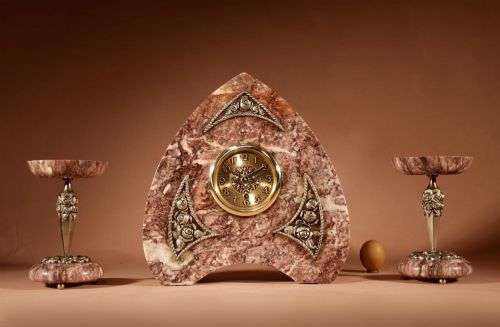


Art Deco Garniture Set
An art deco garniture set commands the centre of a mantelpiece, bringing sculptural presence and symmetry to a room.
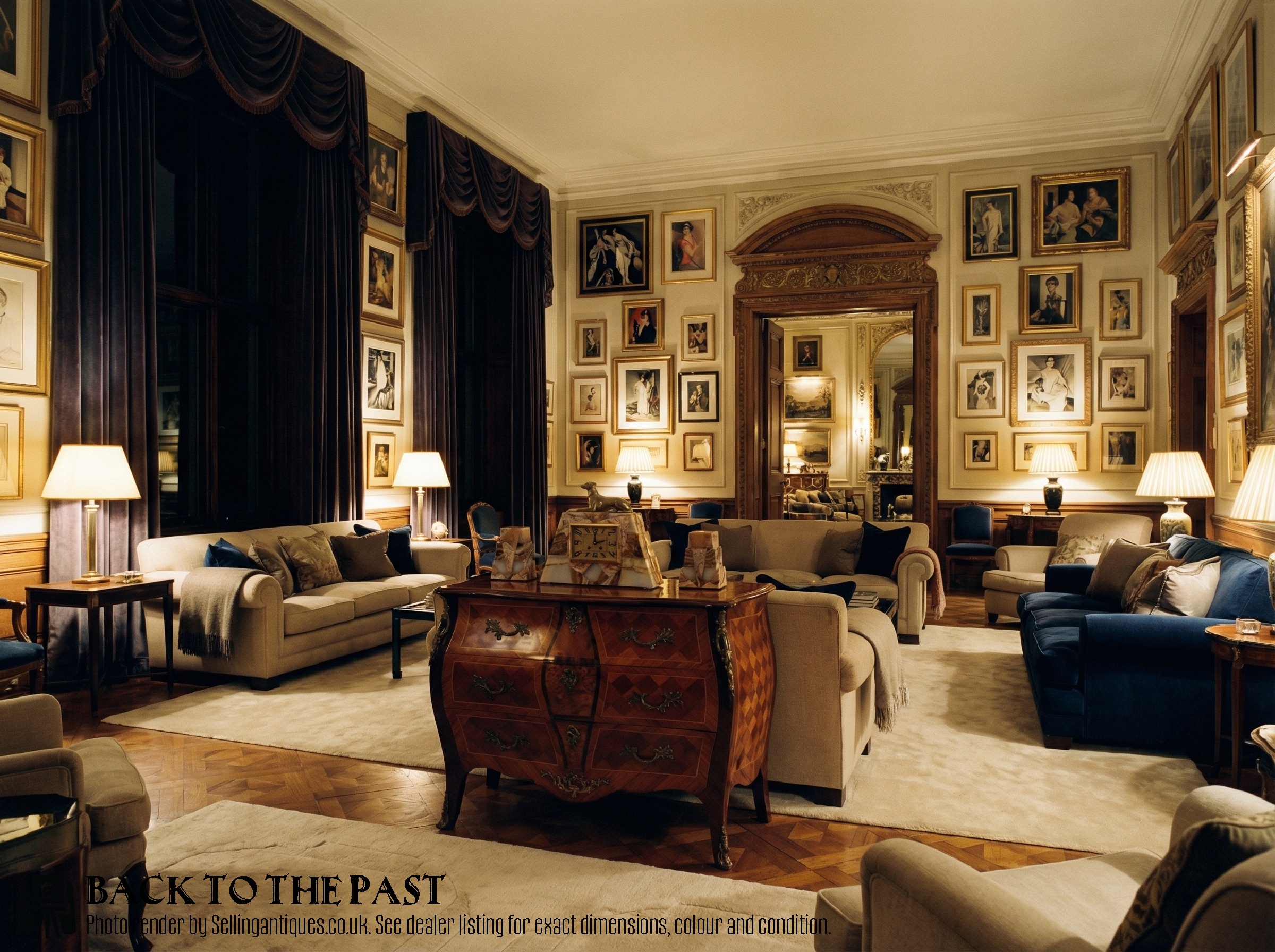
Art Deco Garniture Set
An art deco garniture set consists of a central mantel clock accompanied by a matching pair of side ornaments, usually designed to sit together on a fireplace. These assemblies emerge primarily from the 1920s and 1930s, though occasional examples date from the 1910s.
Buyers encounter three-piece configurations that combine timepieces with flanking decorative objects, such as geometric vases or figural sculptures. The forms span simple architectural arrangements to elaborate sculptural compositions featuring animals and dancers.
How they were made
Maker workshops construct these sets using substantial stone bases of marble or onyx, paired with metallic elements in brass, bronze, spelter, and silver plated bronze. Enamel details often add colour and contrast to the metallic surfaces.
Figural components incorporate cast metal sculptures of animals like greyhounds and German shepherds, alongside human figures such as ball dancers. These sculptural works mount directly onto the stone bodies of the clocks and matching side pieces.
German shepherds and ball dancers share the mantelpiece in equal measure.
What varies in quality
The distinction between ordinary and exceptional sets rests on the artistic merit of the sculptural work and the grade of the materials utilised. Signed figural elements by named sculptors elevate a set considerably above anonymous production pieces.
The choice and harmony of the stone base, such as grey breccia marble versus simpler alternatives, dictate the visual weight and finish of the assembly. Precision in the casting and patination of the metal components also defines the upper tier.
Michel Decoux·P. Sega·Suzanne Bizard
The Art Deco Garniture Set Glossary
- Garniture set
- A central decorative object accompanied by matching side pieces designed to display in unison. This arrangement provides symmetrical decoration for a mantelpiece.
- Spelter
- A zinc alloy commonly used as a substitute for bronze in decorative figures. Manufacturers often patinated this metal to imitate richer materials.
- Breccia marble
- A composite stone made of angular fragments embedded in a fine-grained matrix. This material offers striking patterned variations across the stone base.
- Bronze
- A copper alloy valued for its durability and capacity to hold fine sculptural detail. Sculptors utilised this medium for high-end figural garniture components.
Art Deco Garniture Set: Frequently Asked Questions
What is an art deco garniture set?
An art deco garniture set is a matching three-piece arrangement designed for a mantelpiece, consisting of a central clock and two side ornaments.
These pieces coordinate in material and style, typically featuring marble or metal components from the interwar period.
How were garniture sets used?
They served as decorative focal points on mantelpieces in formal rooms, combining timekeeping with balanced sculptural display.
The central clock provided function while the matching side pieces completed the symmetrical aesthetic.
How do I identify the period?
Period identification relies on material combinations like marble and spelter, alongside characteristic geometric or figural motifs from the early twentieth century.
Stylistic markers and sculptural subjects typical of the interwar decades help distinguish these pieces from later reproductions.
How do I care for marble and bronze?
Maintenance involves dusting with a soft dry cloth and avoiding harsh chemical cleaners that can damage stone surfaces or metal patinas.
Keeping the pieces away from direct moisture preserves the polished finish of the marble and the integrity of the metalwork.