

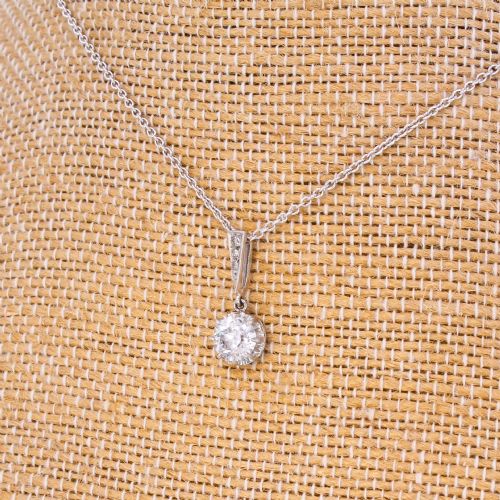


Art Deco Drop Necklace
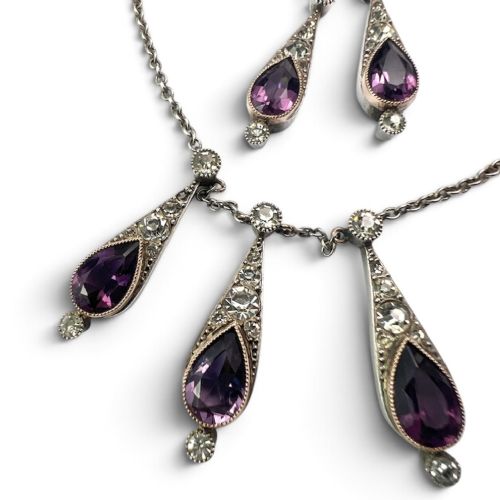
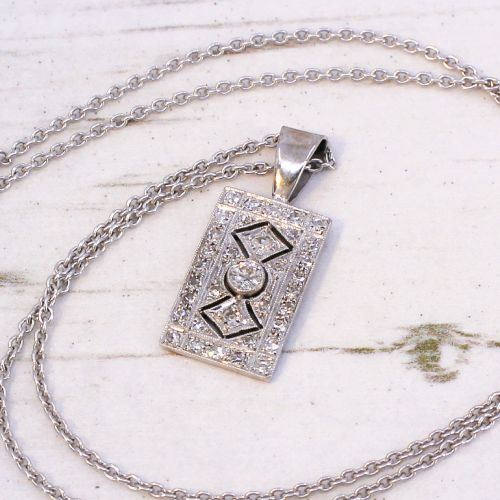
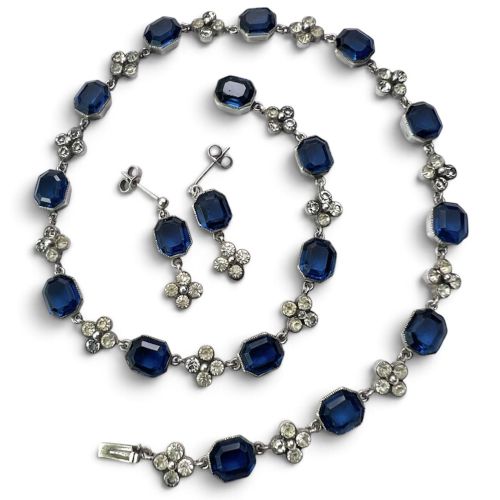
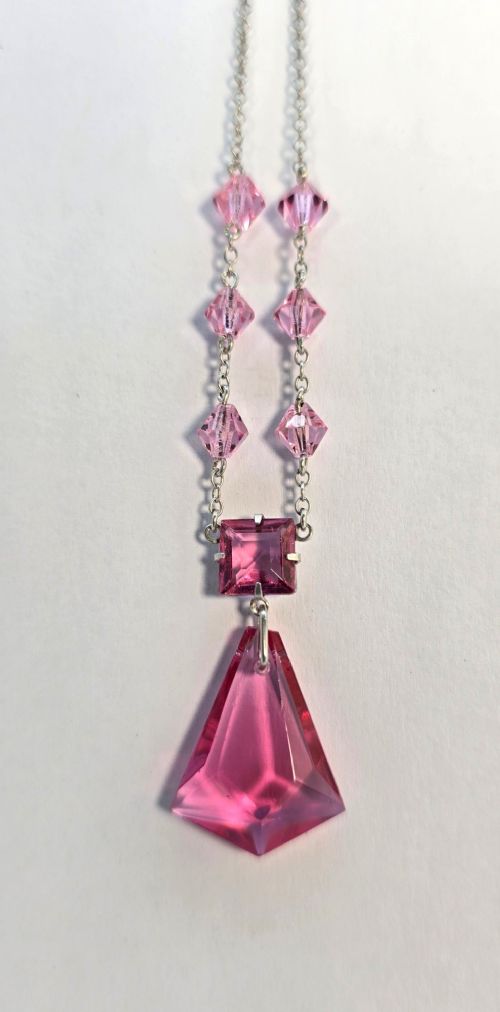
These pieces capture the linear geometry and rich gem-setting characteristic of an art deco drop necklace.
Art Deco Drop Necklace
An art deco drop necklace centres upon a suspended pendant or motif that hangs below the collar line, drawing the eye downward through geometric arrangements. The pieces found here span the 1920s and 1930s, alongside examples in later revivals, displaying the characteristic vertical emphasis of the period.
Most entries combine platinum, white gold, or silver with diamonds and coloured stones such as aquamarine, opal, and crystal. Formats range from simple solitaire diamond drops to elaborate fringe necklaces and multi-stone pendants suspended from delicate chains.
Materials and construction
Metals such as platinum and 18ct white gold were utilised extensively to provide strong, lightweight settings that could hold intricate geometric designs without dominating the stones. Yellow gold and silver also appear, particularly in pieces incorporating carnelian, rock crystal, or paste.
Gemstones were cut into specific shapes, including old-cut diamonds, hand-cut crystals, and teardrop cabochons like opals and aquamarines. Settings frequently employ millegrain edging and precise prong work to secure stones while maintaining a delicate profile.
Aquamarine and opal appear frequently as central drop stones, accompanied by old-cut diamonds and pearls.
Quality variations
The choice of principal gemstone significantly alters the character of the piece, moving from paste and silver settings to substantial multi-carat aquamarines and old-cut diamonds mounted in platinum. Heavier carat weights and natural saltwater pearls represent the upper tier of the available selection.
Execution of metalwork distinguishes standard productions from finer workshop creations. Crisp geometry, even millegrain decoration, and balanced proportions across the drop element denote careful design and skilled bench work.
The Art Deco Drop Necklace Glossary
- Old-cut diamond
- A diamond cut popular before modern brilliant cuts, typically featuring a small table, high crown, and open culet. These stones exhibit a softer, candlelit sparkle.
- Millegrain
- A decorative technique involving a row of small, raised metal beads along the edges of a setting. It softens the transition between metal and stone.
- Cabochon
- A gemstone shaped and polished with a smooth, rounded surface rather than faceted. This cut is common for opals, carnelian, and aquamarines.
- Paste
- Hand-cut glass used as a substitute for gemstones in historic jewellery. High-quality paste retains deep colour and careful facet symmetry.
- Fringe necklace
- A necklace style featuring multiple dangling elements suspended along the front section. These drops often graduate in length toward the centre.
Art Deco Drop Necklace: Frequently Asked Questions
What metals are commonly used?
Platinum and 18ct white gold appear frequently, providing the durable, bright foundation favoured by jewellers during the period. These metals allowed for fine, secure settings that did not distract from the stones.
Yellow gold and silver also feature in various pieces, particularly those incorporating gemstones like opals, carnelian, or paste. The choice of metal often reflects the specific decade and regional workshop traditions of the maker.
How should I care for my necklace?
Gentle cleaning with warm soapy water and a soft brush helps maintain the brilliance of the diamonds and metalwork. Ultrasonic cleaners require caution, particularly with softer stones such as opals or pearls that absorb moisture and react to vibration.
Storing the necklace flat in a lined box prevents the delicate chain from kinking or tangling with the drop pendant. Regular inspection of the settings ensures that old-cut stones remain secure in their original claws.
Are these necklaces suitable for daily wear?
Many platinum and gold pieces were built to last, yet their antique nature warrants mindful handling during active tasks. Removing the necklace before swimming, exercising, or sleeping protects the delicate chain and prong settings.
Stones with lower hardness ratings, such as opals, need extra protection against impact and harsh chemicals. Selecting a robust platinum or white gold mounting offers the best durability for regular use.