


Art Deco Double Bedstead
An art deco double bedstead brings unmistakable thirties geometry and warmth to a bedroom through rich walnut veneers and sweeping curved forms.
What these pieces are
An art deco double bedstead centres on the distinctive bedroom architecture of the interwar period, predominantly dating around nineteen thirty. These frames combine substantial wooden headboards and footboards designed to anchor a principal sleeping space.
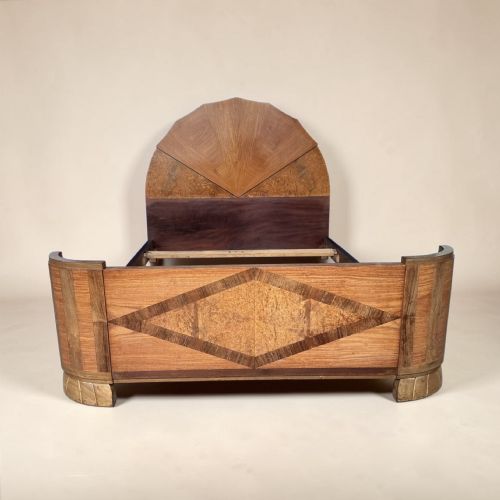
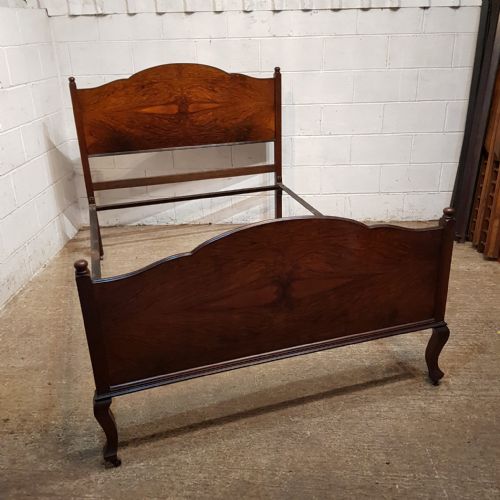
The pieces on this page appear mainly in substantial walnut variants alongside maple and mahogany framework. Buyers encounter forms ranging from simple architectural silhouettes to curvilinear profiles and skyscraper designs incorporating integral cabinets.
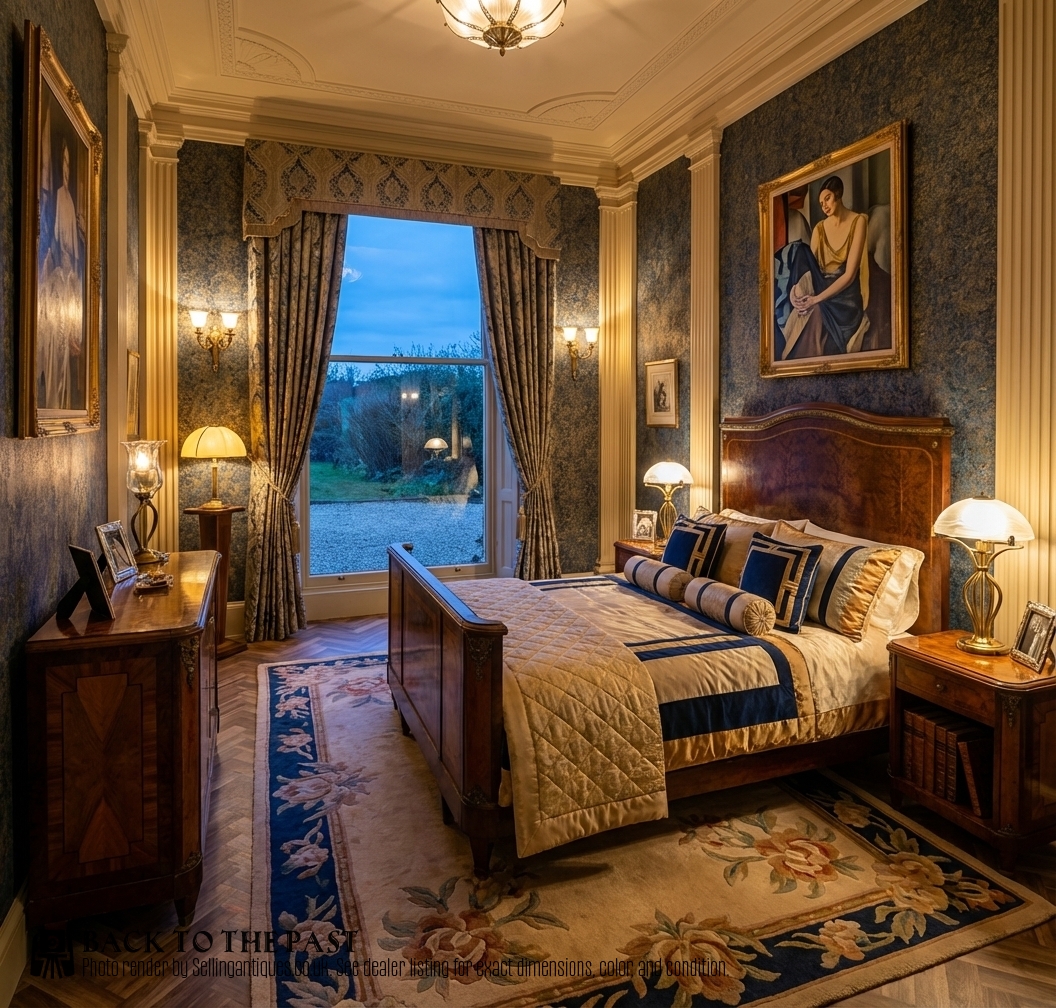
Earlier interpretations occasionally draw upon French Empire style while retaining distinct twentieth-century geometry. Most examples provide a standard double width suitable for modern mattress dimensions with appropriate adapter rails.

How they were made
Cabinetmakers constructed these bedframes using solid timber carcases overlaid with decorative book-matched veneers including burr walnut, figured walnut and birds-eye maple. The grain patterns create symmetrical visual movement across large flat expanses of the headboard.
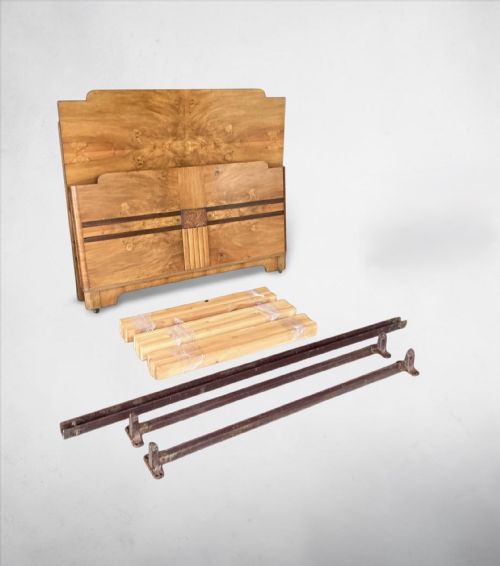
Structural integrity relied on sturdy internal timber frameworks combined with early mechanical metal components such as Vono bedstead fittings. These robust iron and steel mechanisms allowed secure dismantling and assembly of the heavy wooden sections.
Retail Price Guide 2026
Typical UK retail prices for art deco double bedstead, calculated from the Sellingantiques database of over a million retail prices indexed since 2003. This retail price guide relies exclusively on Sellingantiques data; no external sources or auction records are used, so the figures do not describe the wider market.
Some interwar sleepers enjoyed waking up surrounded by miniature skyscrapers built directly into their headboards.
What varies in quality
The distinction between standard production and superior craftsmanship rests entirely upon the selection and matching of the veneer. Top-tier examples display highly figured burr timber arranged deliberately across the panels to create striking symmetrical patterns.
Architectural ambition also separates the ordinary from the exceptional. While basic frames rely on simple rectangular geometry, finer items introduce dramatic curvilinear silhouettes or integrated bedside cabinetry that elevates the bedstead into a cohesive suite.
The Art Deco Double Bedstead Glossary
- Burr walnut
- A prized veneer taken from the knotted growth of a walnut tree, yielding swirling, organic patterns. It forms the primary decorative surface on the most desirable interwar bedroom furniture.
- Birds-eye maple
- A light-figured timber showing small, circular eye markings caused by depressions in the growing wood fibres. This pale veneer provides a striking contrast to darker walnut framing.
- Vono
- A prominent British hardware manufacturer known for patenting sturdy metal bed rail brackets and adjustable fittings. Their stamped iron components appear frequently on quality interwar bedsteads.
- Skyscraper style
- An architectural furniture motif inspired by Manhattan high-rises, featuring stepped vertical elements and towering geometric silhouettes. This aesthetic defines the most dramatic thirties sleeping quarters.
Frequently Asked Questions
Will a modern double mattress fit these beds?
Most antique double beds accommodate standard modern double mattresses, though older French proportions or specific wooden side rails may occasionally require slight adjustments.
It remains wise to verify the exact internal length and width between the side timbers before sourcing a new mattress.
How do I assemble an antique bedstead?
These frames typically utilise slotted metal brackets or proprietary iron wedge systems that lock the headboard, footboard and side rails together securely without requiring complex tools.
Enlisting two people makes aligning the heavy veneered sections much safer and prevents accidental strain on the antique joints.
Are these beds sturdy enough for daily use?
Interwar frames were built from solid timber carcases and robust iron hardware designed to withstand decades of regular domestic sleeping.
Checking that the side rails and internal slat supports remain rigid ensures the structure comfortably handles modern daily use.
How do I care for walnut veneer?
Polishing the wood occasionally with a quality beeswax nourishes the grain and preserves the warm lustre of the vintage finish.
Keeping the bedstead away from direct sunlight and radiators prevents the delicate burr walnut veneers from drying out or splitting.