
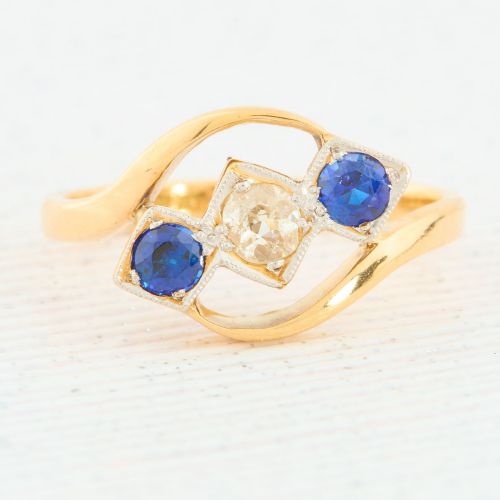


Art Deco Diamond Trilogy
An art deco diamond trilogy ring holds three stones representing past, present, and future, combining geometric symmetry with lasting romantic symbolism.
Art Deco Diamond Trilogy
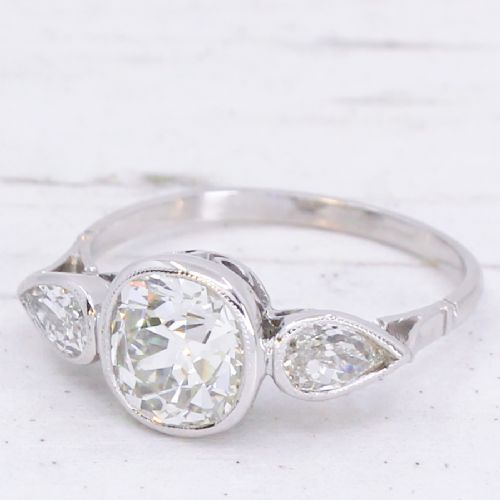
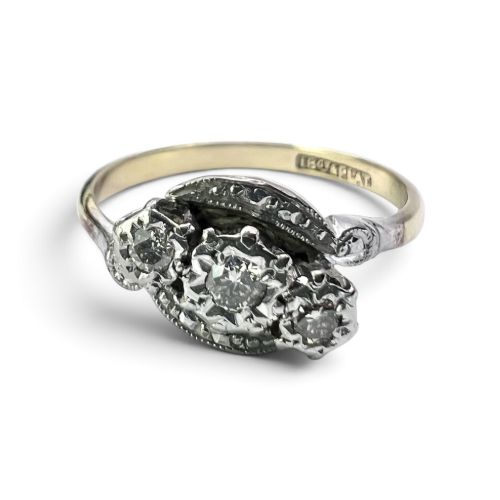
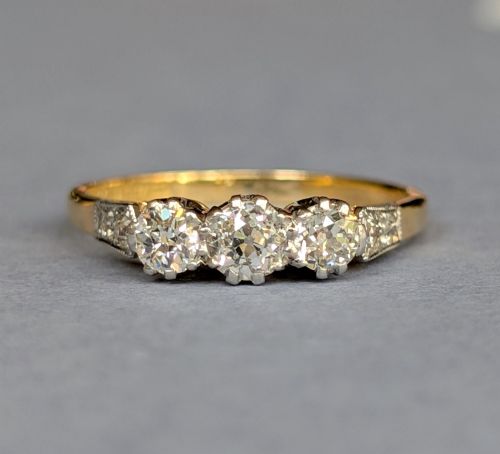
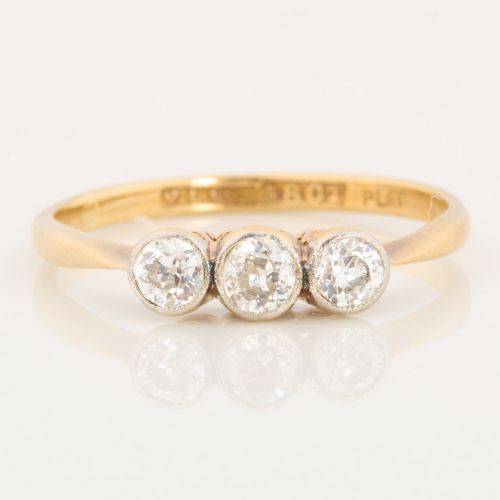
Every item listed functions primarily as a ring, spaning configurations from straightforward claw settings to intricate illusion mounts. Surviving examples showcase the enduring popularity of three-stone layouts designed to maximise light return on the finger.
How they were made
Goldsmiths of the period frequently utilised platinum or white gold for setting the stones, contrasting these white metals with yellow gold bands or integrating platinum heads onto 18ct gold shanks. This technical choice allowed for secure, low-profile claw or bezel mountings that maximised the brilliance of old cut diamonds.
Stones were cut by hand rather than by machine, resulting in distinctive old cushion, old pear, and transitional cuts with characteristic open culets and softer facets. Gemstones such as Burmese and Ceylon sapphires, Colombian emeralds, and natural rubies were secured alongside diamonds using meticulous hand-beaded millegrain edges.
Materials recorded across the inventory include platinum, 18ct gold, white gold, 9ct gold, and palladium alongside diamonds, sapphires, emeralds, rubies, and pearls.
What varies in quality
The overall standard of an art deco diamond trilogy ring depends heavily on the matching and individual proportions of the central and side stones. Pieces featuring well-matched old cut diamonds with high clarity and balanced carat weights sit at the upper end of the scale.
Craftsmanship details, such as the precision of the platinum illusion settings and the crispness of hand-applied millegrain work, distinguish standard production from superior output. The provenance and natural origin of accompanying coloured gemstones, including unheated sapphires or minor oil Colombian emeralds, further differentiate the calibre of surviving examples.
The Art Deco Diamond Trilogy Glossary
- Trilogy ring
- A ring set with three stones, traditionally symbolising the past, present, and future. This configuration remains a popular choice for historical engagement rings.
- Old cut diamond
- A diamond cut by hand before modern machinery standardised proportions, typically featuring a smaller table and a prominent open culet. These stones display a warm, flickering candlelight brilliance.
- Millegrain
- A decorative technique involving a row of tiny, raised metal beads along the edge of a setting. It adds a refined, tactile border frequently seen on platinum mounts.
- Illusion setting
- A metal mounting technique designed to make a diamond appear larger by surrounding it with a faceted plate that reflects light. This method was widely used in the 1920s and 1930s.
- Transitional cut
- A diamond cut used roughly between 1918 and the 1950s that bridges the older antique styles and modern brilliant cuts. It retains traditional depth while adopting standardised facet patterns.
Art Deco Diamond Trilogy: Frequently Asked Questions
How do I identify Art Deco jewellery?
Art Deco pieces are defined by clean geometric lines, symmetrical patterns, and a rejection of flowing Edwardian curves. Look for stepped shoulders, sharp angles, and the widespread use of platinum paired with yellow gold.
Settings often incorporate millegrain borders and openwork gallery designs that let light pass through the stones. The overall aesthetic prioritises architectural structure and streamlined modernism.
Can these rings be resized?
Most antique and vintage rings made from 18ct gold or platinum can be adjusted by a skilled jeweller. The feasibility depends on the shank thickness and whether any decorative shoulders or engraving extend around the band.
Intricate gallery work or stones set continuously along the hoop require careful handling during alteration. Consulting a specialist ensures the structural integrity of the claw settings remains uncompromised.
Are old cut diamonds different?
Old cut diamonds possess hand-carved facets that differ significantly from modern brilliant cut stones. They feature smaller tables, higher crowns, and open culets that produce a softer, deeper glow rather than intense white sparkle.
Each stone is unique because the cutting process relied entirely on the artisan's eye rather than automated laser precision. This individuality contributes to the distinct character found in historical jewellery.