



Art Deco China Display
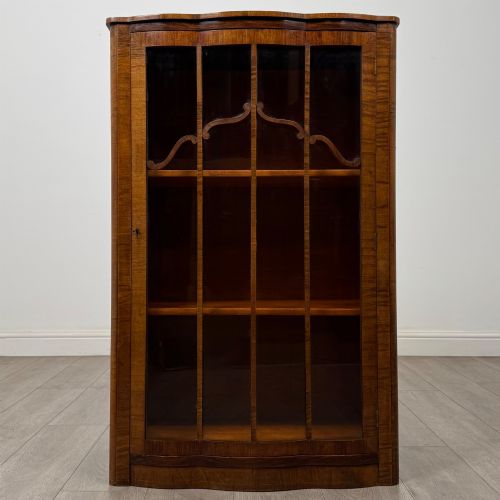
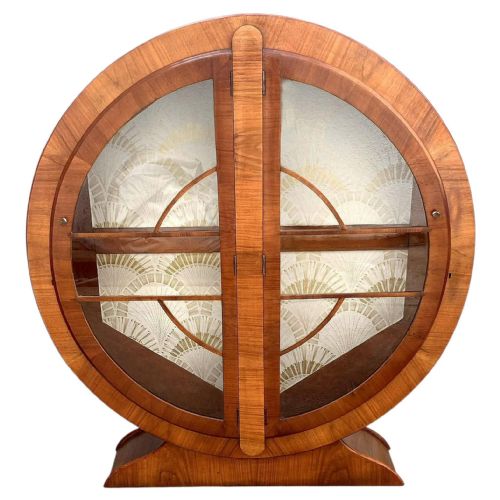
An art deco china display brings geometric lines and rich timber grains into a room to hold ceramics.
Art Deco China Display
When you search for art deco china display, you are looking at glazed cabinets designed to showcase porcelain and glassware through the interwar years. The pieces on this page span the 1920s and 1930s, alongside occasional Edwardian examples adapted to the taste of the period.
Most entries take the form of display cabinets, vitrines, and corner units shaped with distinctive curves or architectural silhouettes. Alongside these tall storage pieces, you will encounter the occasional ceramic vase serving the same decorative purpose.
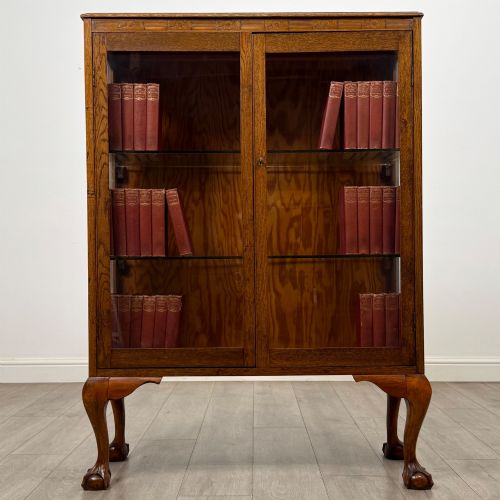
Origins divide broadly between English workshops of the 1930s and earlier twentieth-century interpretations. The dominant format is the freestanding cabinet outfitted with glass panels to protect delicate china from dust while keeping it visible.
Materials and Construction
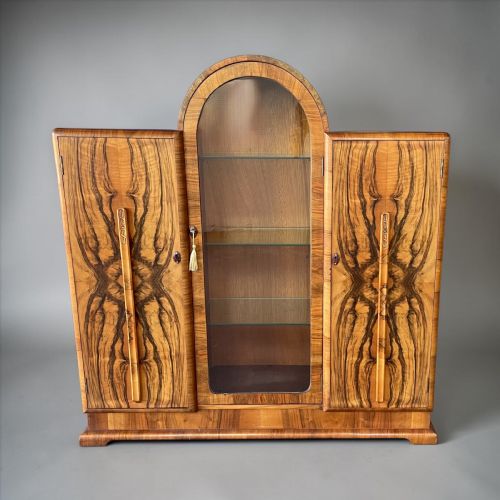
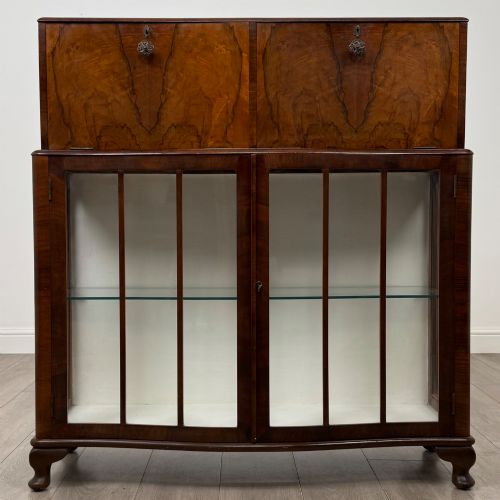
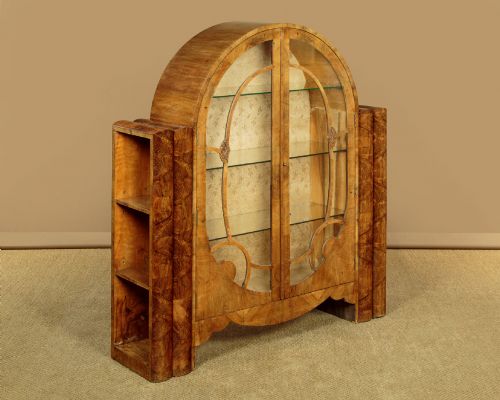
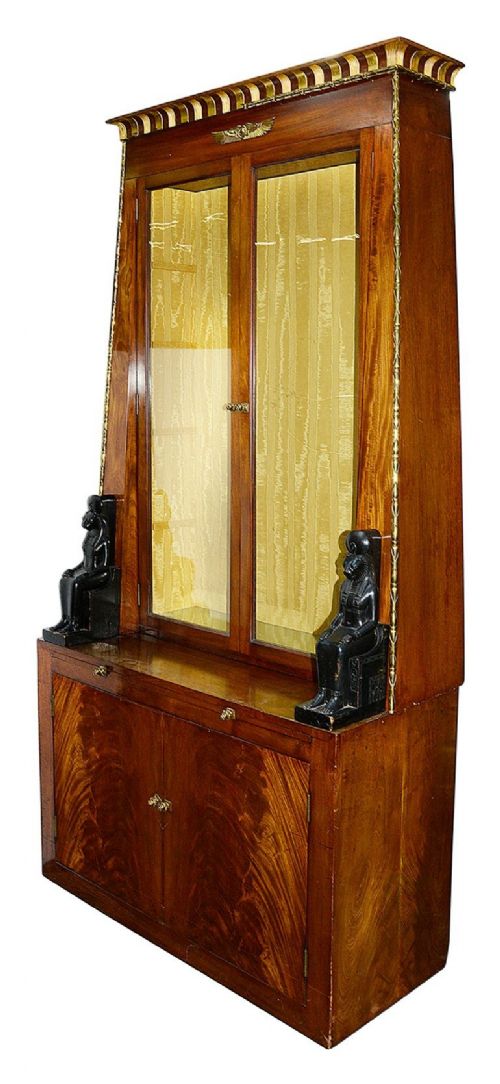
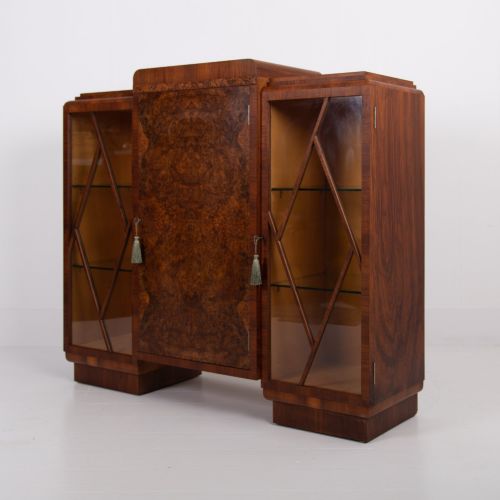
Makers relied heavily on walnut, burr walnut, and figured walnut veneers laid over secondary timbers to create striking grain patterns across flat and curved surfaces. Oak and mahogany also appear frequently, complemented by smaller details in sycamore, brass, and fabric.
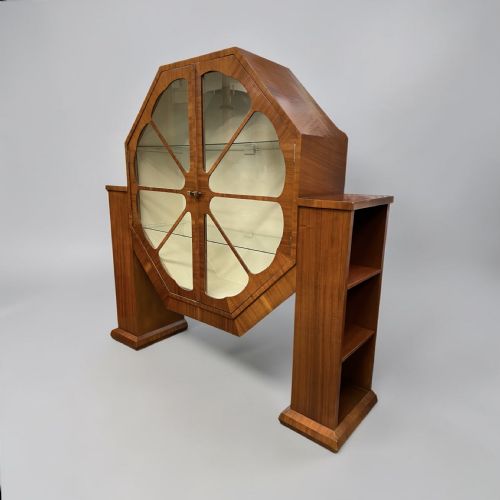
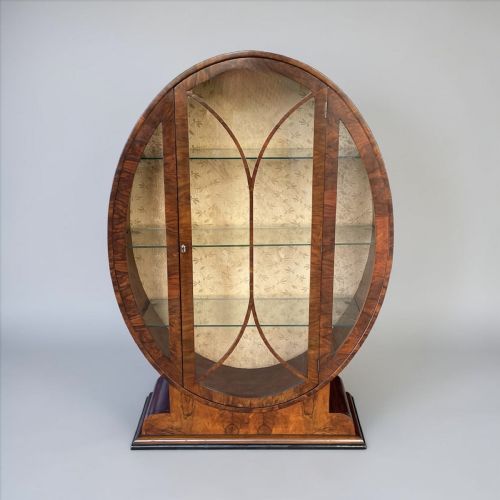
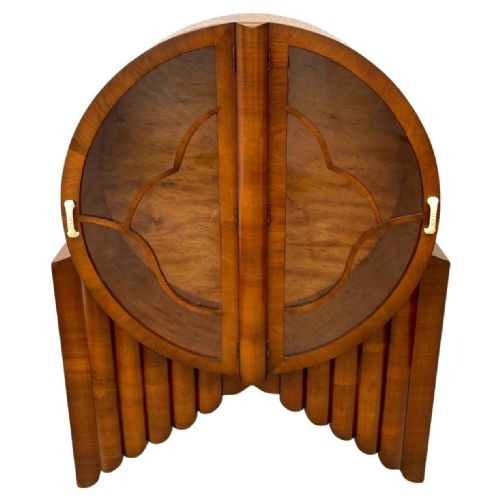
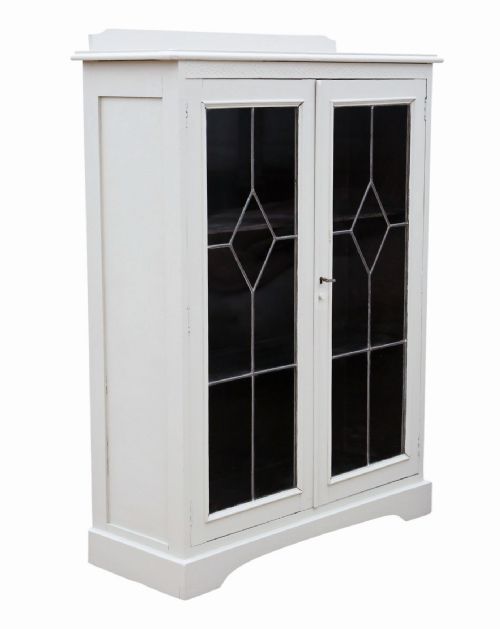
Glazing techniques define the category, ranging from simple leaded glass windows to bent and shaped glass panels that wrap around circular, hexagonal, or clove-shaped frames. Brass hardware and painted accents complete the construction of these fitted and freestanding units.
One extraordinary piece goes by the name of a rocket cabinet, proving that interwar designers liked their furniture to look ready for space travel.
Distinctions in Quality
Quality rests on the selection of timber veneers, where symmetrical burr walnut figuring elevates a standard carcase into a high-status piece. The complexity of the woodwork, seen in curved, rocket, cathedral, or octagonal shapes, demands advanced carpentry.
The integration of shaped glass and fitted interior shelving distinguishes finer cabinetwork from simpler utility pieces. Maker attribution also plays a role, with documented workshop output showing superior structural joinery and finishing.
Rurka·Maurice Adams·Epstein
The Art Deco China Display Glossary
- Vitrine
- A glass-fronted cabinet designed specifically for the display of curiosities, porcelain, and fine china. These pieces often feature glass on multiple sides to allow light to enter from various angles.
- Burr walnut
- A prized timber veneer taken from the wart-like growths on walnut trees, yielding swirling, knotty grain patterns. Makers used it to create dramatic decorative surfaces on cabinet doors.
- Leaded glass
- Small panes of glass held together by strips of lead cames in geometric or floral patterns. This method allowed craftsmen to glaze curved and shaped door frames before the advent of large bent glass sheets.
- Figured walnut
- Timber cut to reveal irregular, highly decorative wood grain rather than straight growth lines. It forms the primary visual finish on the majority of interwar display furniture.
Art Deco China Display: Frequently Asked Questions
What fits inside an art deco china display?
These cabinets suit porcelain plates, tea sets, and decorative glassware arranged on wooden or glass interior shelves.
The enclosed glazed space protects fragile ceramics from dust while offering a clear view from the room.
How do I date an art deco cabinet?
Most examples date to the nineteen-thirties, identifiable by symmetrical veneers, curved glazing, and characteristic geometric proportions.
Earlier pieces from the nineteen-twenties often retain transitional Edwardian details or heavier painted finishes before the streamline style took hold.
Where should I place a circular cabinet?
Circular and octagonal display units work well in corners or as freestanding centrepieces where light can reach the side glass panels.
Their curved profiles soften straight architectural lines in a modern living space.
Are all these cabinets made of walnut?
Walnut and burr walnut dominate the selection, though you will also find examples constructed in oak and mahogany.
Secondary woods and contrasting veneers like sycamore appear inside the compartments and along edging details.