





Art Deco Bracelet
An art deco bracelet brings geometric clarity and high-contrast metalwork to the wrist, defining the modernist taste of the interwar period.
Art Deco Bracelet
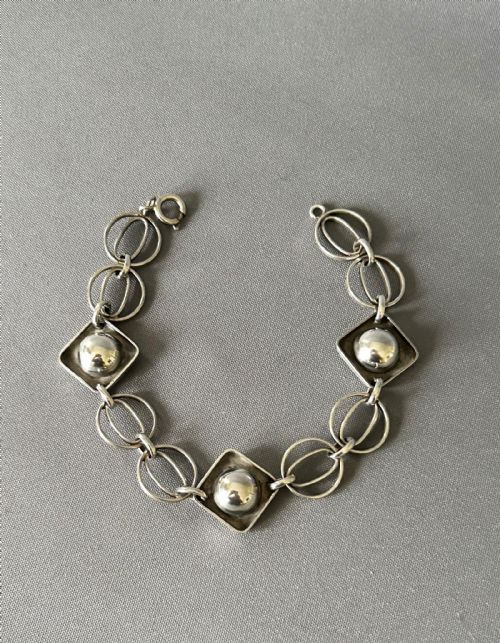
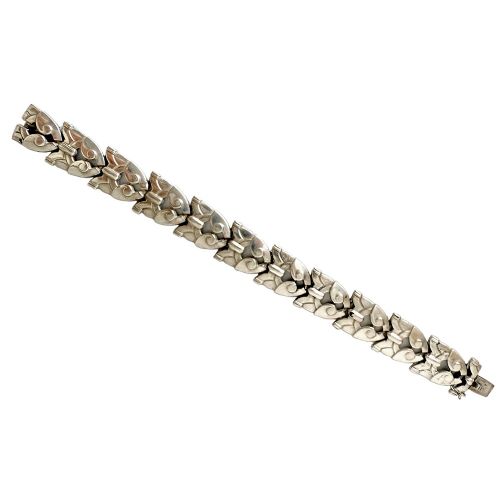
An art deco bracelet encompasses everything from diamond and platinum line settings to chrome and enamel industrial pieces. Buyers looking at this selection encounter structured panel layouts, flexible links, and integrated watch designs that define the period.
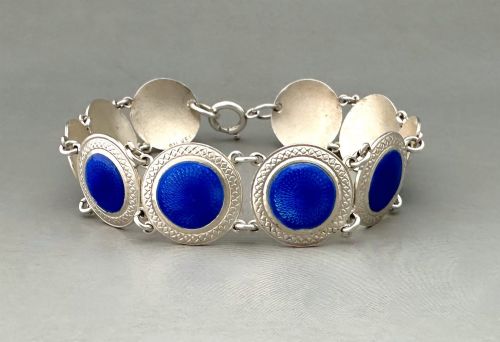
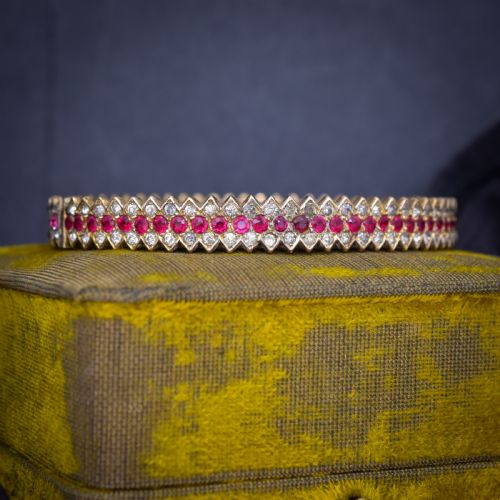
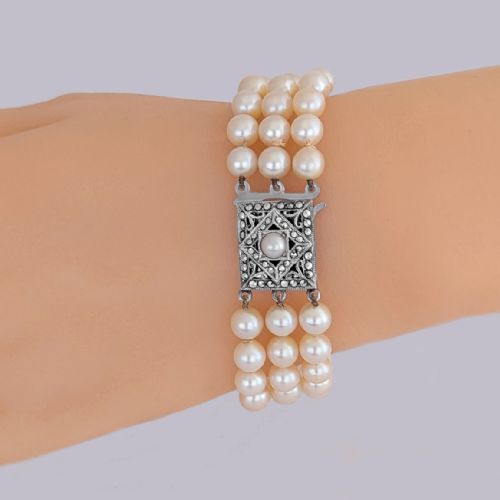
The pieces on this page span the nineteen-twenties through to the nineteen-fifties, showing how geometric design evolved from precious gemstones into chrome, silver, and paste variations. The core of the selection relies on platinum and white gold mounts framing calibrated sapphires, diamonds, and pearls.
Makers utilised symmetrical motifs, stepped architectural shapes, and linear arrangements across both fine jewellery and accessible costume pieces. This variety ensures that every iteration, whether a heavy gold tank design or a delicate seed pearl strand, maintains the characteristic rhythm of the style.
Materials and Construction Techniques
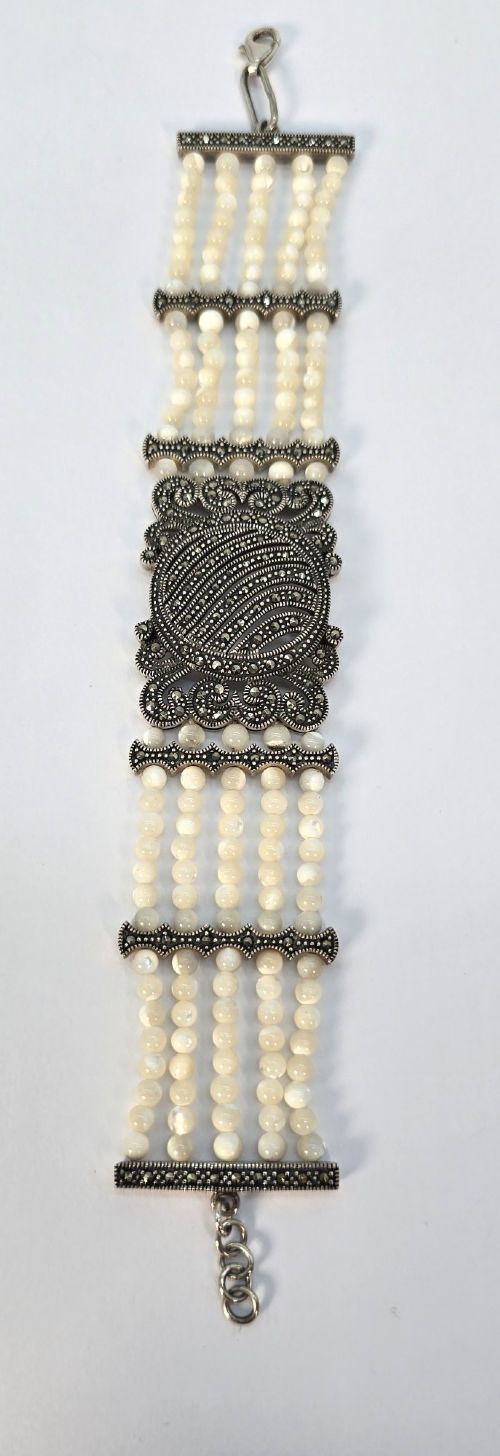
Platinum and white gold serve as the primary structural metals for high-value gemstone pieces, allowing for knife-edge settings and intricate pierced galleries. Yellow and rose gold also appear in heavier tank-style constructions, while chrome and silver support paste, enamel, and marcasite designs.
Gems such as diamonds, sapphires, rubies, and citrines are typically old-cut or calibré-cut to fit flush within strict geometric channels. Enamel, rock crystal, and agate are integrated alongside seed pearls and filigree work to build texture and contrast across the links.
Art Deco Bracelet Retail Price Guide 2026
Typical asking prices for art deco bracelet among the pieces listed under this phrase on Sellingantiques today, from the lower quarter to the upper quarter. They describe what is for sale here now, not the wider market.
Some industrial chrome creations originated from German factories that normally produced machinery parts and pocket watch chains.
Distinctions in Quality and Execution
Quality rests upon the precision of the metalwork and the integration of the stones within the geometric scheme. Superior examples display seamless articulation between individual links, ensuring the piece drapes fluidly around the wrist without catching.
The choice of materials divides the range between high-karat gold and platinum settings with fine diamonds, and silver, chrome, or base metals set with paste and synthetic stones. Masterful stone-cutting and hand-finished piercing elevate a piece far above standard commercial production.
Jakob Bengel·Max Neiger of Gablonz·Longines·Omega·Knoll and Pregizer
The Art Deco Bracelet Glossary
- Line bracelet
- A flexible, continuous strand of symmetrically set gemstones, most frequently diamonds or sapphires mounted in platinum. This form hugs the wrist closely with an unbroken band of sparkle.
- Calibré-cut
- Small gemstones cut specifically in square, rectangular, or trapezoidal shapes to fit tightly together without visible metal gaps. This technique creates solid blocks of vibrant colour in premium jewels.
- Tank bracelet
- A bold, architectural link design inspired by military machinery and heavy transport, fashioned in yellow or rose gold. These pieces display broad, flat surfaces and stepped profiles.
- Paste
- Hand-cut lead glass used as a substitute for precious gemstones in period jewellery. High-grade paste is foiled and secured in silver or base metal settings to mimic real diamonds and coloured stones.
- Filigree
- Delicate openwork created by twisting and soldering fine threads of precious metal into lace-like patterns. It appears frequently in silver-gilt and fine gold pieces from the era.
Art Deco Bracelet: Frequently Asked Questions
How do I wear an art deco bracelet?
These pieces suit both evening wear and tailored daytime outfits, depending on whether you choose a diamond line setting or a chrome and enamel band.
Because many feature flexible links or secure box clasps, they sit comfortably against the skin for extended wear.
What metals were used?
Platinum and eighteen-carat white gold dominate the fine gemstone pieces, offering a bright, reflective backdrop for diamonds and sapphires.
Silver, chrome, fifteen-carat rose gold, and base metals appear in alternative designs alongside paste, marcasite, and enamel.
How can I tell a nineteen-twenties piece from later decades?
Nineteen-twenties and thirties pieces typically rely on platinum, old-cut diamonds, and intricate filigree or geometric panel work.
Later items from the nineteen-fifties often incorporate heavier gold construction, distinct watch integrations, or simpler modernist links.
Are these bracelets durable for daily use?
Fine platinum and gold items with secure channel or prong settings withstand regular wear provided the hinges and clasps are checked periodically.
Pieces utilising chrome, enamel, or paste require more careful handling to protect the surface finishes and vulnerable stone settings.