

Art Deco Bird
When you search for art deco bird, you encounter sculptural figures, glass paperweights and furniture accented with avian motifs from the 1920s and 1930s.
Art Deco Bird
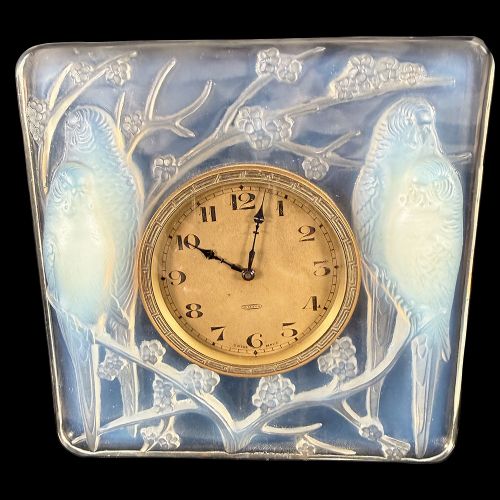
The art deco bird category spans domestic decorative objects and figural sculptures alongside functional items like furniture and clocks. These works capture the avian form through stylised geometric lines and sleek contours typical of the period.
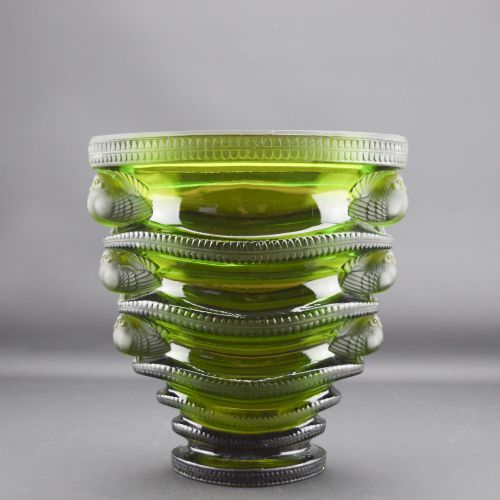
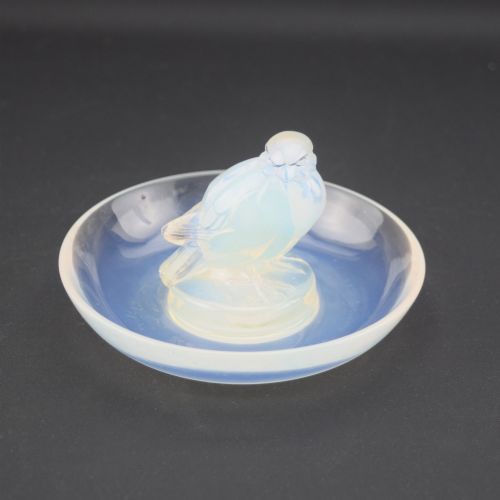
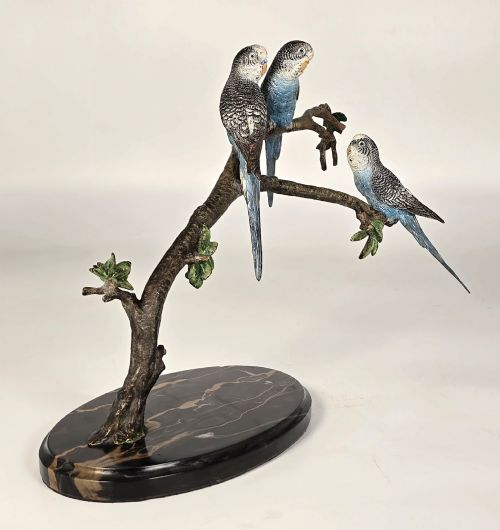
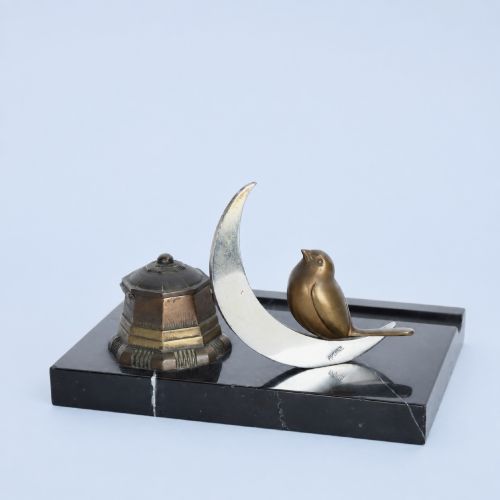
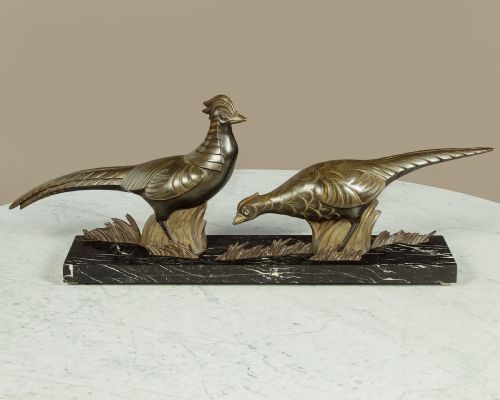
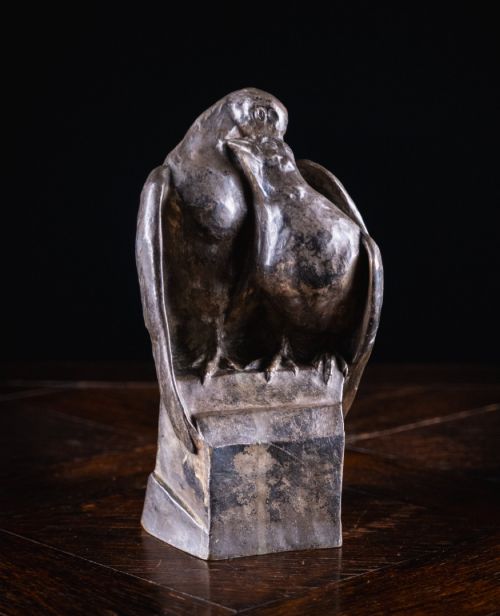
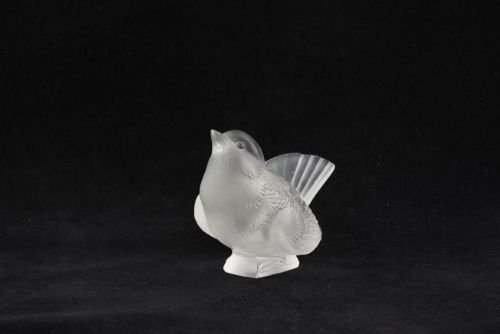
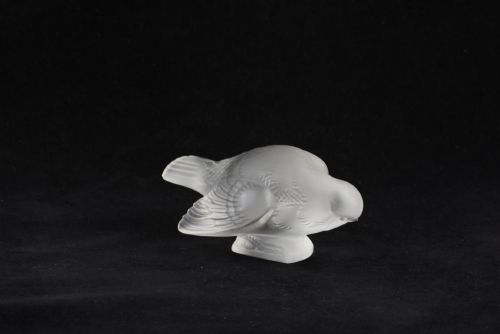
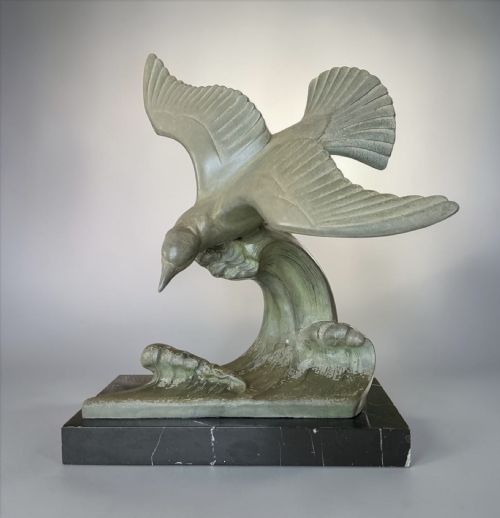
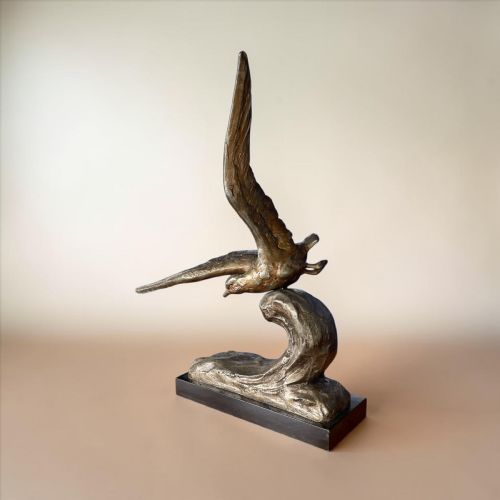
Sculptures and paperweights dominate the smaller decorative items, frequently rendered as sparrows, pheasants, pigeons and seabirds. Glass figures by makers such as René Lalique appear alongside cold-painted metal and bronze studies mounted on marble plinths.
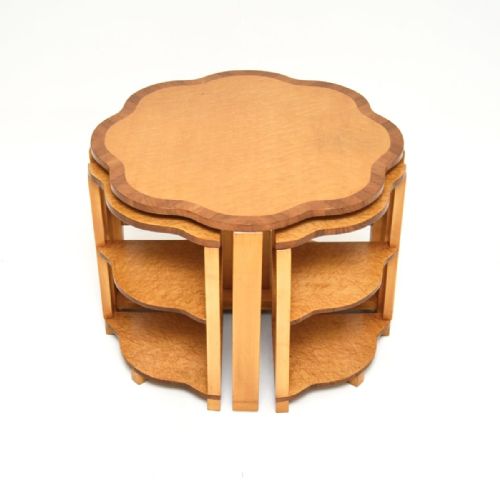
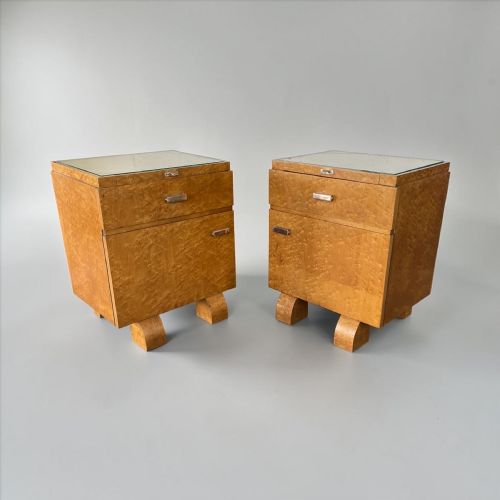
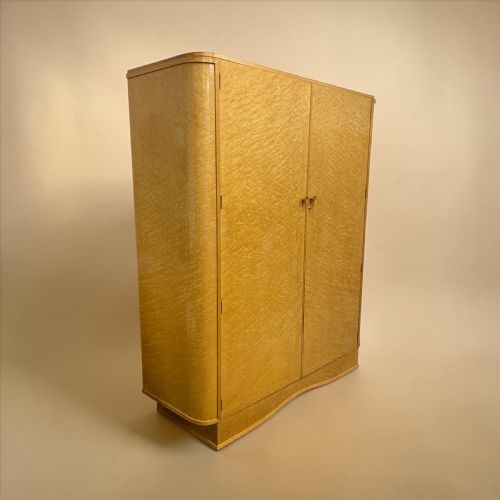
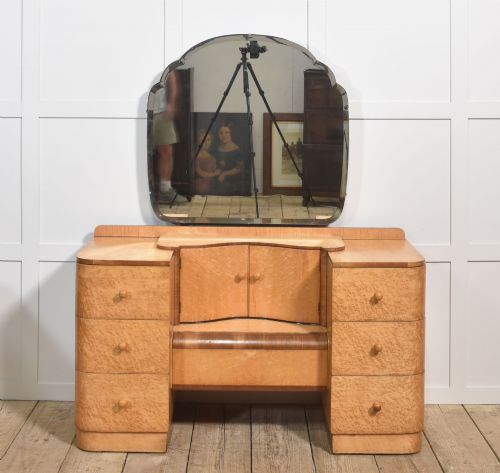
The furniture forms encompass bird's eye maple dressing tables, bedside cabinets and cocktail cabinets that utilise avian imagery or wood grain patterns. These pieces sit alongside lighting and desk accessories incorporating brass and silver details.
How they were made
Makers utilised glass casting and moulding techniques to create opalescent and frosted paperweights, often employing acid staining or blue tinting to define the plumage. Metal works combined bronze, spelter and nickel, frequently finished with cold-painted enamel colours applied by hand.
Cabinetmakers constructed furniture carcasses in walnut, rosewood and heavy application of bird's eye maple veneer, contrasting pale woods with dark borders. Marble bases and black marble desks provided solid plinths for metal and glass sculptures.
Listings feature 1930 and 1920 predominantly, with occasional pieces from 1900, 1910 and 1940.
What varies in quality
The degree of detail in the casting and chiselling separates standard decorative items from superior sculptural works. Finer metal and bronze pieces retain crisp feather definition and purposeful patination, whereas lesser examples show softer contours and simpler finishes.
In glass production, the depth of opalescence and the clarity of the moulding dictate the standing of a piece. Strong colour saturation and well-defined frost finishes distinguish the best moulded glassware from plain production runs.
Rene Lalique·Maurice Adams·Zoldan Kovats·Hille Furniture Company·Harry and Lou Epstein
The Art Deco Bird Glossary
- Opalescent glass
- Glass that milky or translucent appearance which catches light with blue or amber tones. This technique was used extensively by glasshouses to create depth in figural paperweights.
- Cold-painted bronze
- Metal sculpture decorated with unfired oil-based paints applied after casting. These pigments are susceptible to rubbing and loss over decades of handling.
- Spelter
- A zinc alloy commonly utilised as a substitute for bronze in decorative figures and mood lamps. It accepts metallic finishes well but possesses a lighter weight than true bronze.
- Bird's eye maple
- Timber figured with small circular patterns resembling tiny eyes caused by local distortions in the wood grain. It was sliced into decorative veneers for high-end cabinets and bedroom suites.
Art Deco Bird: Frequently Asked Questions
What materials are common?
The objects utilise bird's eye maple, walnut, marble, bronze, brass and pressed glass. These materials reflect the industrial and luxury palette of the interwar decades.
Cabinet pieces rely on wood veneers, while decorative items favour cast metals and moulded glass.
How were these figures used?
Sculptures and glass pieces served as desk accessories, paperweights, bookends and mantel ornaments. They brought stylised nature into domestic interiors.
Larger furniture items integrated bird motifs or decorative wood veneers into bedrooms and reception rooms.
How do I date an item?
Dating relies on stylistic markers such as the geometry of the base, the specific moulding signatures on glass, and the construction methods of the furniture carcasses. Most examples date from the 1920s and 1930s.
Documentation, signatures and maker stamps assist in narrowing the production window.
How do I care for wood and glass?
Wooden furniture requires stable humidity and periodic waxing to protect the delicate bird's eye maple veneer from drying out. Glass pieces need gentle cleaning with lukewarm water to preserve surface patination.
Harsh chemical cleaners should be avoided on cold-painted metal surfaces and delicate glass tints alike.