





Art Deco Bird Bronze
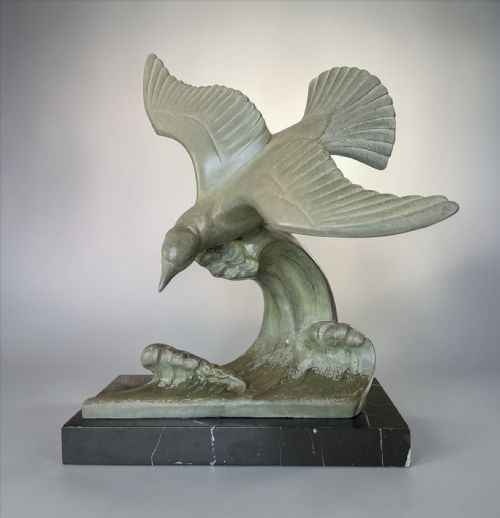
An art deco bird bronze captures the sleek lines of avian life through metalwork, offering collectors a stylish centrepiece for any room.
Art Deco Bird Bronze
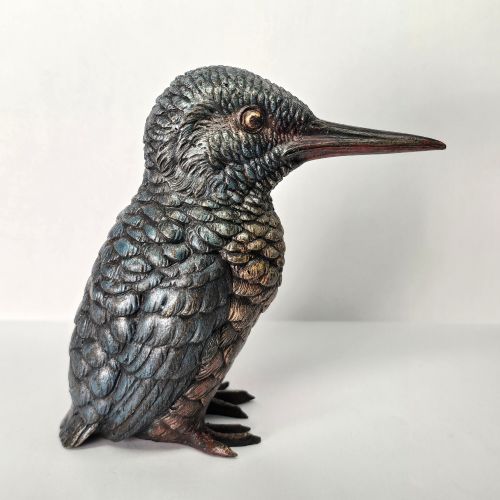
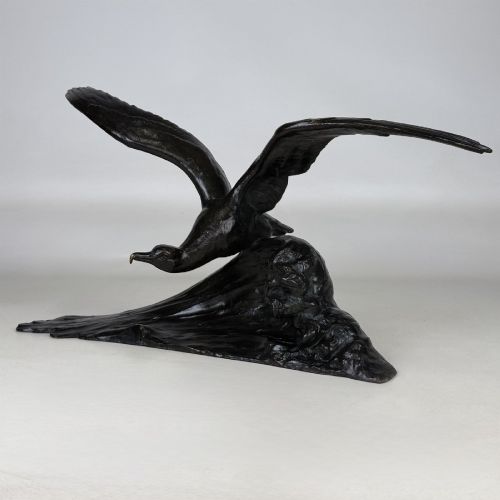
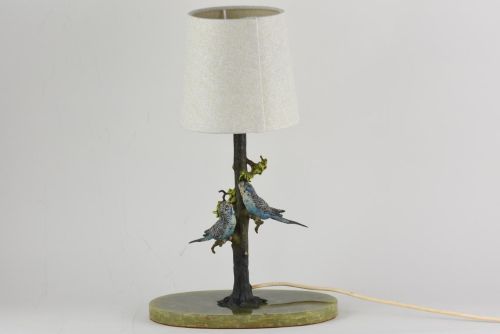
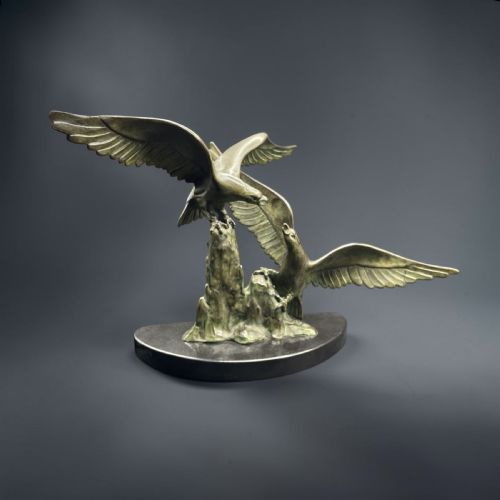
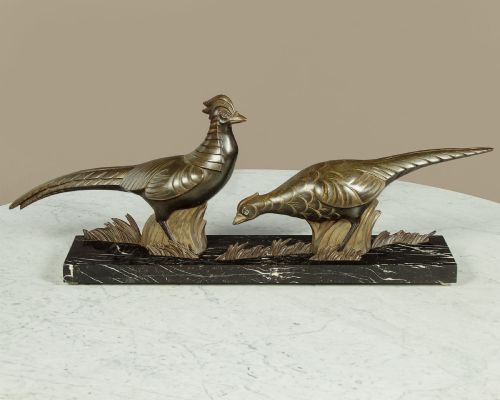
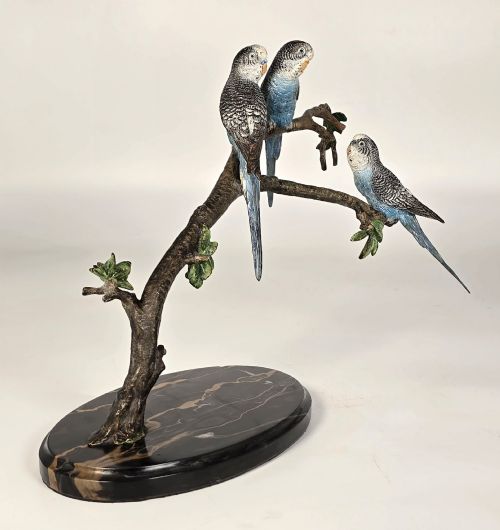
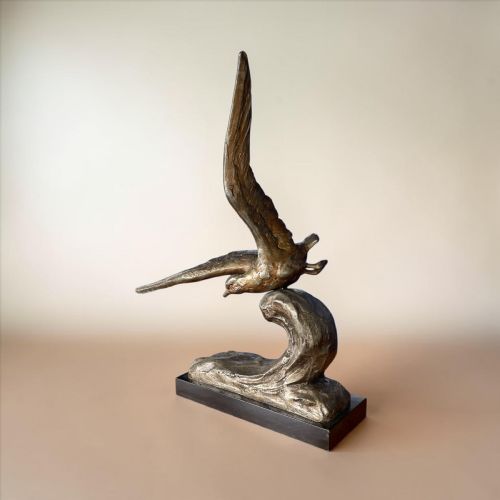
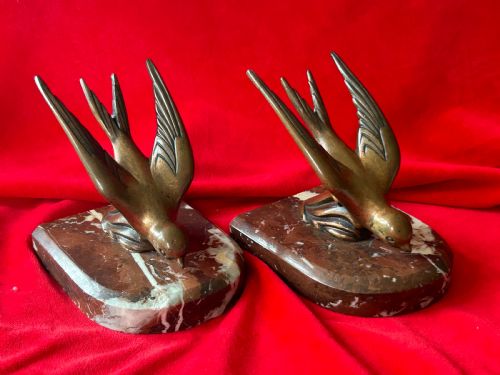
When you search for an art deco bird bronze, you are looking at figural sculptures, desk accessories, lamps, and clocks produced primarily between 1910 and 1930. These objects translate the natural forms of seagulls, kingfishers, budgerigars, and pheasants into the stylised geometry of the period.
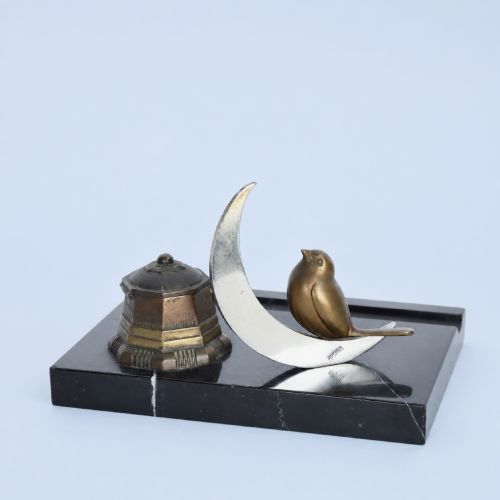
The versions most frequently met on this page include French and Austrian works mounted on bases of black marble or onyx. They range from small bookends and inkwells to larger mantel clocks and standalone sculptures depicting birds in flight or perched on branches.
How they were made
The production of these pieces relied on casting metal, predominantly bronze, spelter, and brass, often enhanced with cold painted polychrome finishes or gilding. Artisans utilised techniques such as lost-wax casting to capture fine detail in feathers and anatomical structures.
Many sculptures incorporate mixed media elements, pairing metal bird figures with contrasting natural materials like carved marble, onyx, or cut crystal. Some designs also integrate functional components such as glass lamp panels and inkwells.
Art Deco Bird Bronze Retail Price Guide 2026
Typical asking prices for art deco bird bronze among the pieces listed under this phrase on Sellingantiques today, from the lower quarter to the upper quarter. They describe what is for sale here now, not the wider market.
The listings span the 1910, 1920, and 1930 periods, incorporating materials such as marble, bronze, spelter, onyx, glass, brass, patinated metal, and paint.
What varies in quality
Quality in these works depends largely on the crispness of the casting and the sensitivity of the artistic interpretation. Superior examples exhibit finely chiselled feather detail and harmonious proportions between the bird and its stone or marble plinth.
The application of surface finishes, such as cold painting or patination, also dictates the standard of a piece. Well-preserved pigment layers and carefully executed signatures from known sculptors elevate the overall standing of the object.
Maximilien Fiot·P. Marec·Herzig
The Art Deco Bird Bronze Glossary
- Cold painted
- A method where bronze is painted with natural pigments without high-temperature firing. This technique was widely used by Austrian workshops to render lifelike plumage on bird studies.
- Spelter
- A zinc-based alloy commonly utilised as a cost-effective alternative to bronze. It was frequently cast and patinated to resemble bronze in decorative lamps and bookends.
- Patinated metal
- Metal treated with chemicals to produce a specific surface colour or aged finish. This process highlights sculptural contours and protects the underlying material.
- Garniture clock
- A clock accompanied by matching decorative side pieces, such as urns or flanking ornaments. In this context, they form part of a unified mantel set.
- Desk tidy
- A desktop accessory designed to hold writing instruments, inkwells, or stamps. These items often feature figural metal sculptures integrated into marble or onyx trays.
Art Deco Bird Bronze: Frequently Asked Questions
How do I clean a bronze sculpture?
Dust the surface gently with a soft, dry microfibre cloth to remove accumulated particles without disturbing the patina. Avoid using harsh chemical cleaners or abrasive polishes that can strip the original finish.
For pieces with cold painted surfaces, take extra care around coloured areas. Professional conservation is recommended if deeper cleaning is required.
Are these sculptures solid bronze?
Many figures are cast in solid bronze, though some pieces utilise related alloys such as brass or spelter. Heavier decorative items often combine metal figures with substantial bases made of black marble or onyx.
Examining the underside and weight of the object usually helps determine the primary metal used in its construction.
Where were these pieces manufactured?
The listings show production originating primarily from France and Austria during the early twentieth century. Austrian studios were particularly noted for cold painted wildlife studies, while French workshops drove avant-garde decorative styles.
Export marks and signatures often provide clues to the specific foundry or regional origin of an item.
How can I date an art deco piece?
Dating relies on stylistic markers, material combinations, and documented maker signatures active during the decades surrounding 1920 and 1930. The integration of geometric marble plinths and specific patination styles helps narrow the timeframe.
Comparing the casting methods and mounting techniques with known period examples also aids in establishing approximate age.