




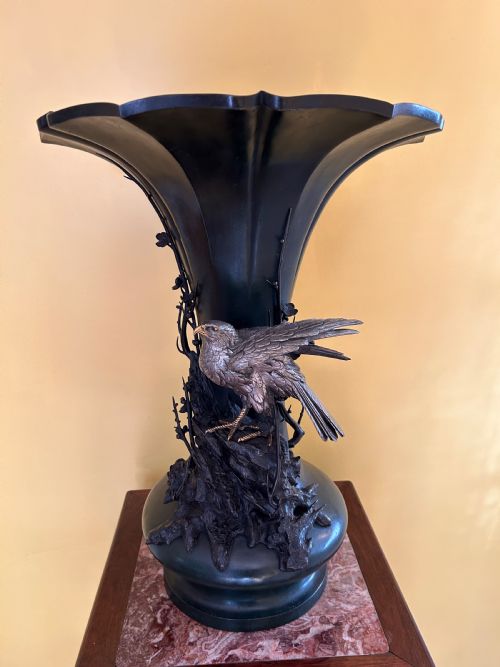

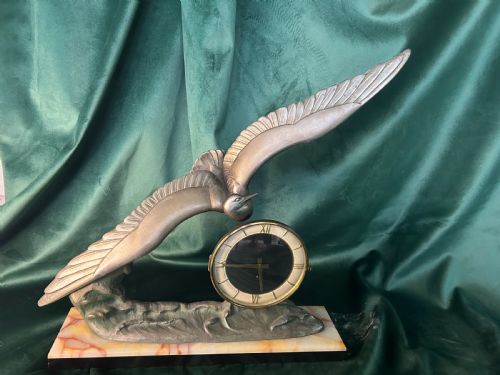


Antique Metal Bird Sculpture
These antique metal bird sculpture pieces bring domestic interiors and gardens to life with enduring character.
Antique Metal Bird Sculpture
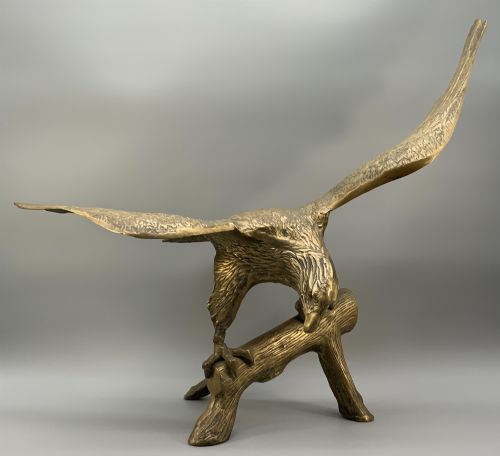
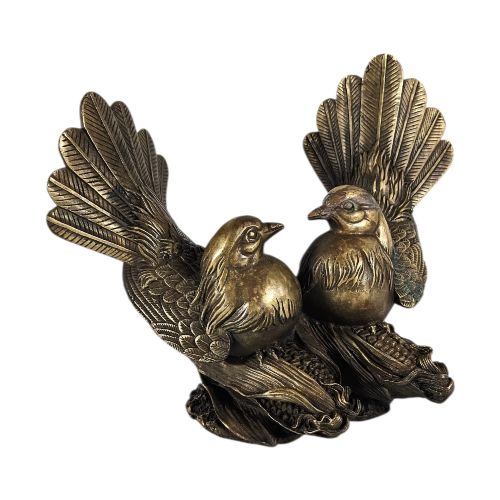
An antique metal bird sculpture captures avian forms across various historical periods, ranging from domestic fowl to exotic wildlife. When exploring this selection, buyers encounter figures cast or worked in diverse metals, often mounted on stone bases or integrated into functional objects.
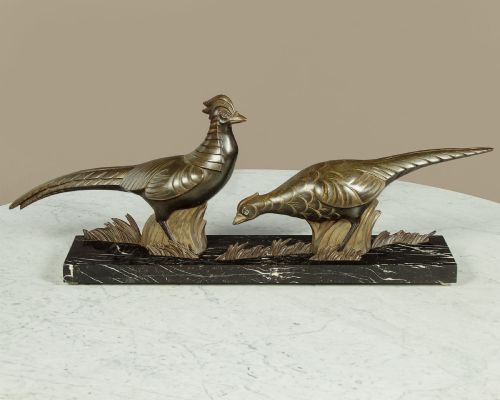
The objects on this page span from the nineteenth century into the Art Deco era, encompassing British, European, and Asian origins. Common forms include realistic pairs of pheasants, cranes, and ducks, alongside folk art weather vanes and garden statuary.
Makers utilised these sculptures for both pure ornamentation and practical utility, such as mantel clocks, bookends, and table lamps. The variety reflects changing domestic tastes throughout the Edwardian and early twentieth centuries.
Materials and construction methods
Foundry work relied heavily on bronze and cast iron, shaping durable figures that could withstand exterior garden conditions or anchor heavy interior bookends. Spelter and white metal offered more accessible alternatives for intricate decorative figures.
Cold painting applied colour directly to metal surfaces, particularly evident in Austrian and Vienna bronze productions where naturalistic bird plumage required careful pigment application. Silver plating and gilt brass finishes provided reflective surfaces for display pieces.
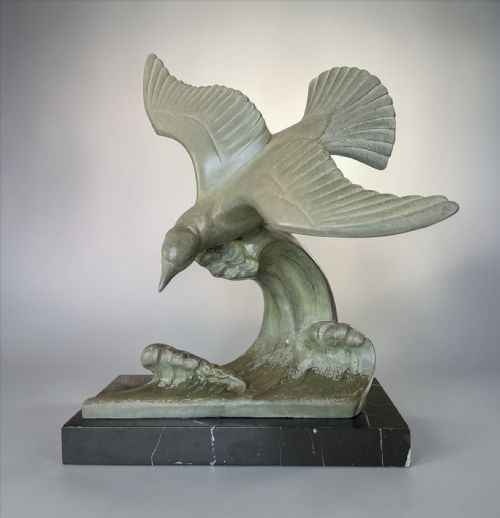
Plinths and bases incorporated natural stones like marble and onyx, grounding the metal figures and providing stability for tabletop display. Mixed metal techniques combined different alloys to achieve varied patination and textural contrast.
Antique Metal Bird Sculpture Retail Price Guide 2026
Typical asking prices for metal bird sculpture among the pieces listed under this phrase on Sellingantiques today, from the lower quarter to the upper quarter. They describe what is for sale here now, not the wider market.
Listings feature items spanning the nineteenth century through the Art Deco period, utilising bronze, cast iron, and marble.
Distinctions in craftsmanship and finish
The fidelity of the casting dictates the sharpness of feather detail and anatomical proportion. Superior examples capture musculature and posture with precision, whereas simpler pieces rely on generalised surface texture.
Preservation of original cold painted surfaces significantly influences the standing of a piece, as flaking or overpainting alters the intended appearance. The integration of supporting elements, such as genuine marble or onyx bases, also distinguishes workshop standards.
Ferdinand Pautrot
The Antique Metal Bird Sculpture Glossary
- Cold painted bronze
- Bronze figures decorated with unfired paint applied to the surface. This technique requires specialist care to prevent flaking over time.
- Spelter
- A zinc alloy commonly used as a cost-effective substitute for bronze in decorative figures. It is softer and lighter than bronze.
- Okimono
- Japanese decorative objects designed for display on shelves or tokonoma. These pieces often depict natural subjects with high realism.
- Patina
- The surface sheen or colour developed on metal through age and handling. A natural patina indicates authenticity and history.
Antique Metal Bird Sculpture: Frequently Asked Questions
Were these sculptures made for gardens?
Many larger pieces, such as cast iron eagles and bronze cranes, were designed specifically for outdoor placement and garden statuary. Weathering on these items reflects their original exposure to the elements.
Smaller cold painted bronzes and spelter figures were strictly intended for indoor display on mantels, desks, or tables. Placing indoor pieces outside risks severe damage to the metal and paint.
What is cold painting?
Cold painting involves applying natural pigments to a metal base without firing the piece in a kiln. This method allowed makers to achieve vibrant, lifelike plumage on bronze birds.
Because the paint sits on the metal surface rather than fusing with it, surviving examples often show varying degrees of wear. Collectors value pieces that retain their original pigment intact.
How can I tell bronze from spelter?
Bronze feels heavier and exhibits a resonant ring when tapped gently, whereas spelter sounds duller and is notably lighter. Bronze also develops a stable, deep patina over time.
Inspecting the underside or areas of wear often reveals the greyish metal beneath a spelter finish. Bronze shows a warm, reddish-brown hue under the surface layer.