


Art Ceramic Display Plate
An art ceramic display plate turns a blank wall or sideboard into a rich study of global glaze, pigment and form.
Art Ceramic Display Plate
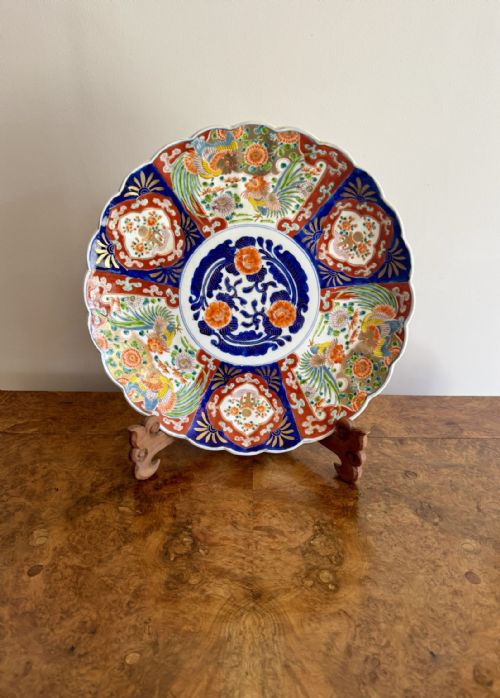
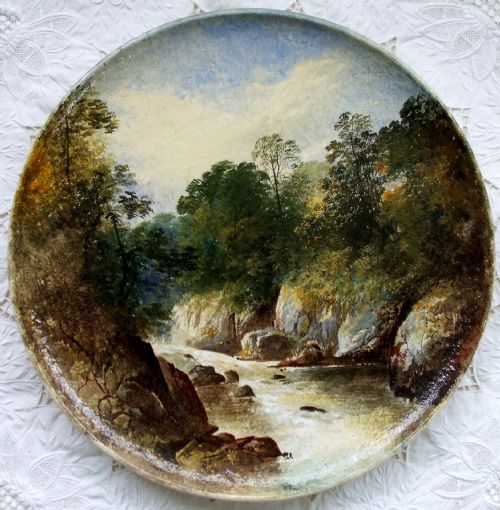
An art ceramic display plate covers a wide sweep of decorative plates, chargers and wall plaques originating from English factories, Japanese kilns, French potteries and Dutch workshops. The version you are most likely to meet on this page is the Japanese Imari charger or plate, alongside English Victorian landscape plaques and twentieth-century tubelined earthenware.
The objects take various shallow forms, ranging from modest cabinet dishes to massive forty-three centimetre chargers designed to command a room. They emerge from periods spanning the late Yuan dynasty through the eighteenth and nineteenth centuries up to the Art Deco era of the nineteen-thirties.
Materials and Technique
Makers shaped these pieces from porcelain, earthenware and fine clay bodies, applying glazes, paint and overglaze enamel to build up dense visual fields. Many incorporate rich touches of gold leaf and gilt to highlight borders and central motifs.
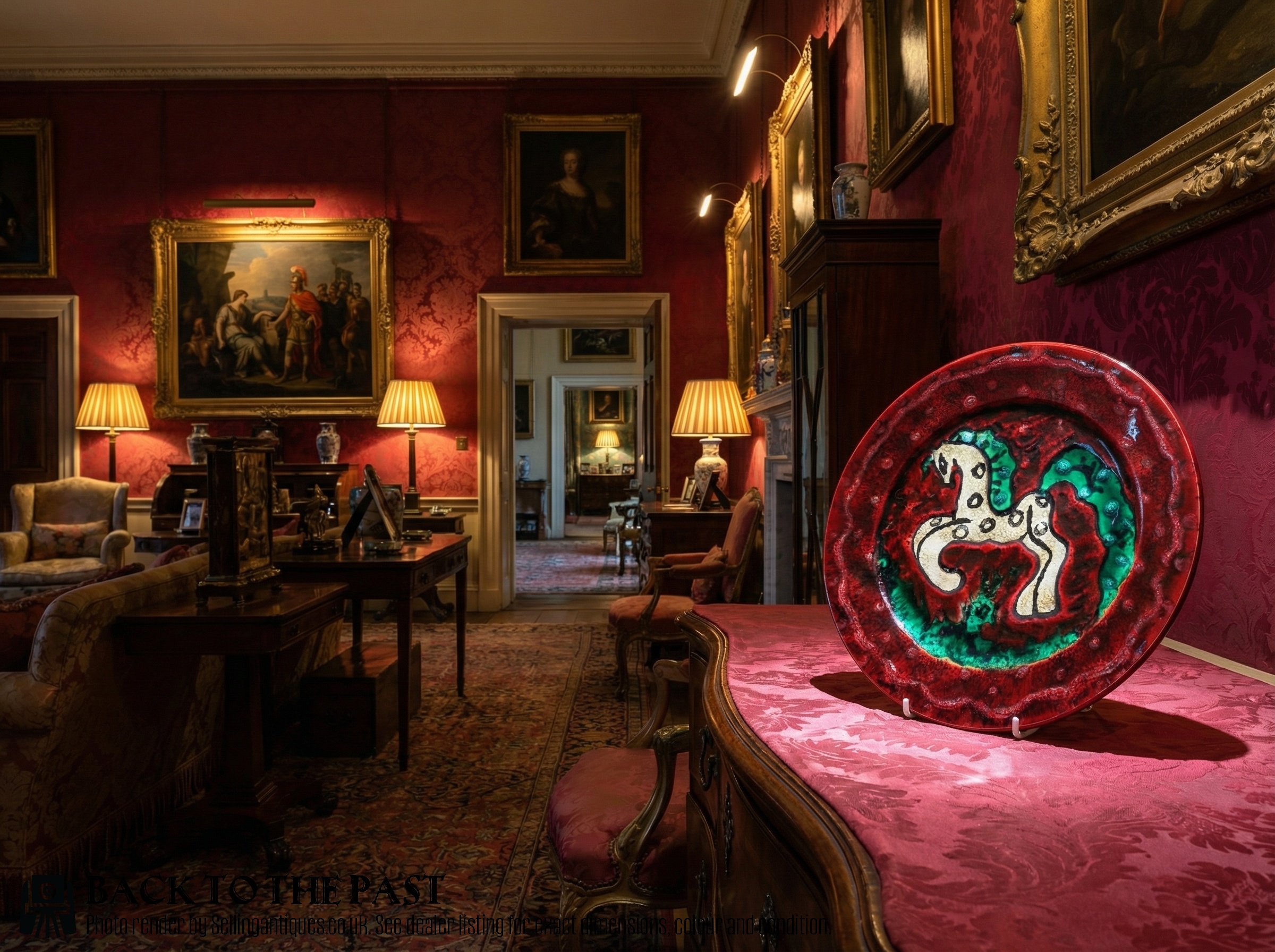
Specific methods include the tubelined designs seen on twentieth-century earthenware chargers, where raised clay lines contain the liquid pigments, alongside hand-painted underglaze and overglaze techniques on Japanese porcelain and European Delftware.
Materials represented across the selection include porcelain, earthenware, tin-glazed faience, celadon, and refined overglaze enamels enhanced with gold leaf and gilt highlights.
Distinctions in Quality
Quality rests upon the crispness of the moulding, the control of the high-fired glaze and the precision of the hand-painted or tubelined decoration. Pieces that demonstrate a master's hand in signed artist work or distinct studio output stand apart from standard commercial production.
The depth and complexity of the palette, particularly the successful combination of iron reds, blues and gold leaf, separate simpler domestic ware from exceptional display chargers intended for exhibition.
William Yale·Shuzan for Yasuda·Charlotte Rhead Crown Ducal
The Art Ceramic Display Plate Glossary
- Charger
- A large decorative plate traditionally used for display rather than dining. These substantial pieces anchor a wall arrangement or sideboard.
- Tubelined
- A method of applying liquid clay through a nozzle to form raised outlines on pottery before glazing and firing. This technique creates distinct cellular compartments for enamel colours.
- Imari
- A style of Japanese porcelain featuring a tripartite palette of underglaze blue, iron red and gilt. It gained immense popularity across European collectors from the seventeenth century onward.
- Delftware
- Tin-glazed earthenware produced in the Netherlands and England, typically showing blue or polychrome painting on a white opaque surface. Geometric and floral motifs dominate the traditional output.
- Plaque
- A flat ceramic panel produced specifically for hanging or framing as a picture. Copeland and other English makers used these to present painted landscape scenes.
Art Ceramic Display Plate: Frequently Asked Questions
Were these plates used for dining?
Most of the larger chargers and painted plaques listed here were produced strictly for display on sideboards, walls or cabinets. Their size, precious overglaze enamels and signature panels mark them out as decorative works rather than utilitarian tableware.
Smaller Imari plates saw functional use in their period, but surviving examples in fine condition are typically preserved for collection and display.
How do I distinguish Imari from Satsuma ware?
Imari porcelain relies on a hard, resonant white body decorated with a distinctive palette of underglaze cobalt blue, iron red and generous amounts of gold leaf. The designs are often busy and botanical or geometric.
Satsuma ware utilises an earthenware body covered in a finely crackled ivory glaze, typically painted with detailed figurative scenes and muted enamels often associated with specific workshop signatures.
What is the difference between earthenware and porcelain?
Earthenware is a porous, lower-fired pottery body that requires a glaze to become impermeable to liquids. It forms the base for tin-glazed Delftware and Art Deco tubelined chargers.
Porcelain is fired at much higher temperatures until the clay vitrifies into a dense, non-porous material that often rings when struck and allows for thin, refined wall construction.