

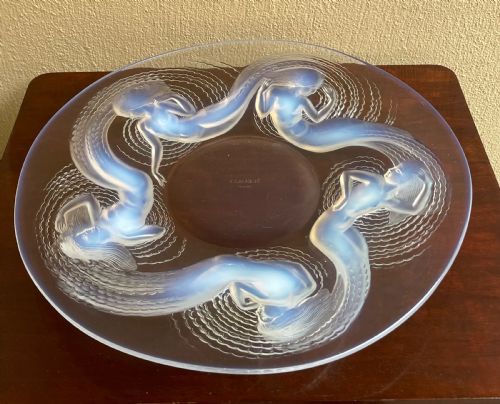


1930s Art Deco Charger
These 1930s art deco charger pieces combine geometric design with opalescent glass and earthenware, offering a striking display of period craftsmanship.
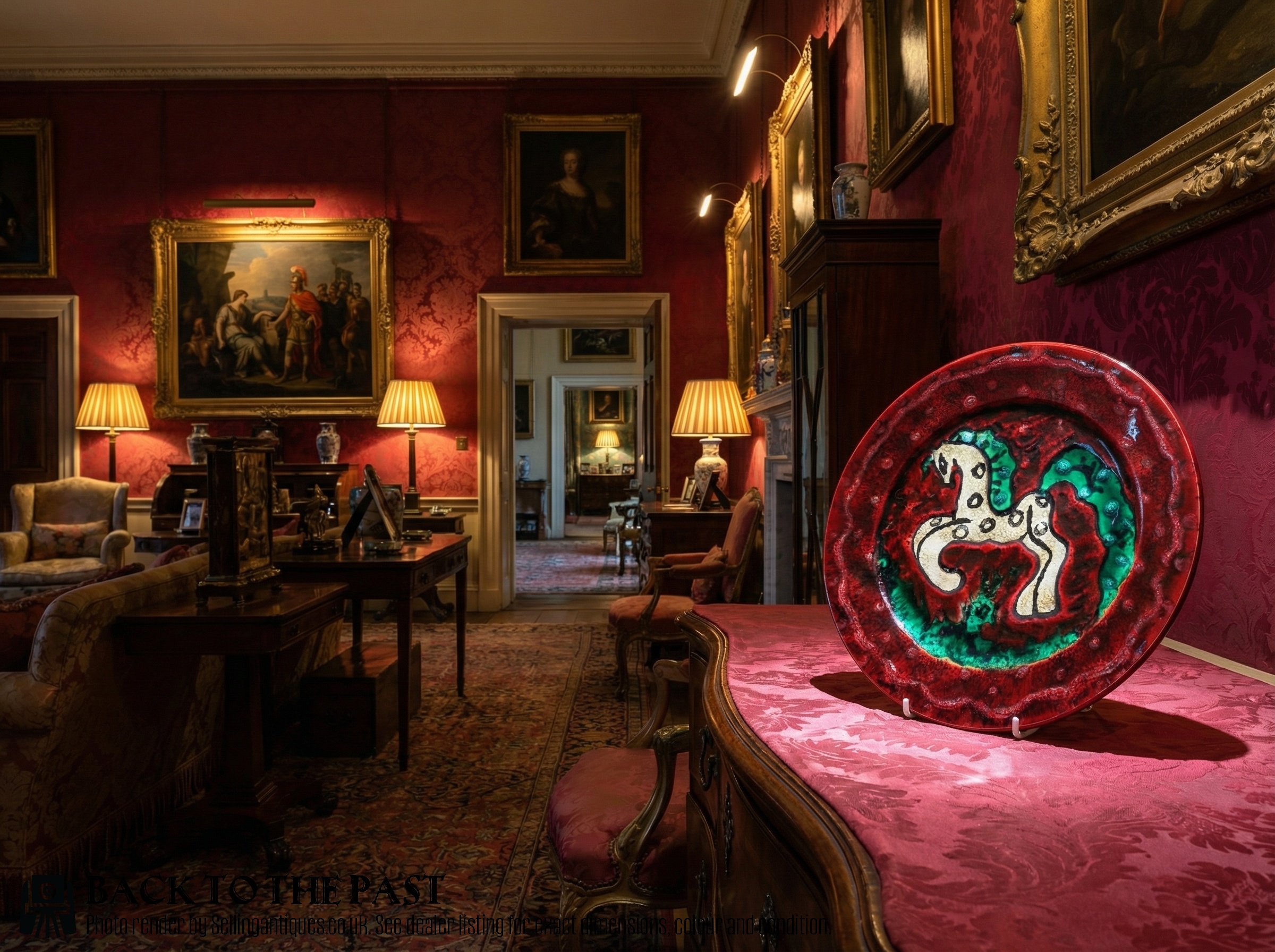
1930s Art Deco Charger
A 1930s art deco charger is a large decorative plate or shallow bowl designed to command attention on a wall, sideboard or table. When you search for a 1930s art deco charger, you find substantial glass and earthenware pieces bearing the characteristic geometric motifs and stylized natural forms of the era.
The pieces on this page span French moulded opalescent glass and English earthenware. You meet works by prominent makers alongside high-fired pottery, all sharing the bold visual language typical of the period.
Most examples take the form of wide circular plates or shallow coupe bowls. Their surfaces display either relief-molded botanical and aquatic themes in shimmering glass or vibrant hand-painted tubelined patterns on ceramic bodies.
How they were made
Glass pieces utilise hot-molding techniques to achieve heavy relief work. Makers manipulate the cooling process to create the signature opalescent effect, where the glass shifts in tone according to the light.
Ceramic chargers employ earthenware bodies finished with colourful glazes. Artisans apply raised tubelined outlines by hand to contain the pools of glaze before firing the pieces in kilns.
High-fired art pottery examples rely on the chemistry of kiln temperatures to develop unpredictable glaze reactions across the surface. This technique produces rich, varied textures unique to each firing.
The listings on this site combine French moulded opalescent glass with English earthenware and high-fired art pottery from the 1930s.
What varies in quality
The clarity and depth of the opalescence set glass pieces apart. Superior examples display a sharp, high-relief mould impression that catches the light strongly across the motifs.
Ceramic quality depends on the precision of the hand-painted decoration and the crispness of the tubelined borders. Pieces with well-defined patterns and rich, even glaze coverage represent the better end of the range.
Signatures and factory stamps add distinction. Clearly marked pieces from known makers carry greater clarity of provenance than unmarked studio pottery.
Rene Lalique·Charlotte Rhead·Clarice Cliff·Sabino
The 1930s Art Deco Charger Glossary
- Opalescent glass
- Glass containing ingredients that cause it to milky-blue or fire-like appearance in transmitted light and a warm yellowish tone in reflected light. This technique defines many French decorative plates from the period.
- Tubelined
- A ceramic decoration method where liquid clay is squeezed through a nozzle onto a flat clay body to form raised outlines. Artisans then fill the resulting compartments with coloured glazes.
- Coupe
- A round, shallow vessel with a smooth, sloping interior curve rather than a distinct flat base and rim. Many glass plates from this era take this form.
- High fired
- Pottery subjected to elevated kiln temperatures to mature the body and glaze. This process alters the surface texture and colour chemistry of the earthenware.
- Earthenware
- Porous pottery fired at lower temperatures than stoneware or porcelain. It serves as the primary ceramic base for decorated plates of this era.
1930s Art Deco Charger: Frequently Asked Questions
What is a charger?
A charger is a large decorative plate, typically exceeding standard dinner plate dimensions. In the 1930s, these pieces served primarily as display items on sideboards, walls, or tables rather than for practical dining use.
Their substantial surface area provided artists and glassmakers with a broad canvas to showcase prominent geometric patterns, moulded reliefs, and vibrant glazes.
How do I display an art deco charger?
Due to their size and decorative weight, these pieces suit placement on sturdy plate stands or wooden plate racks. Many ceramic and glass chargers feature substantial rims that safely accommodate specialised wall-mounting brackets.
Positioning them where natural or artificial light can strike the surface is particularly effective for opalescent glass, which shifts in tone as illumination changes.
How can I tell glass from ceramic?
Glass chargers from this era utilise moulded opalescent or clear material that allows light to pass through the body. They rely on heavy relief-molded motifs, such as fish, flora, or abstract forms, created during the pressing process.
Ceramic chargers utilise opaque earthenware bodies finished with fired glazes and often feature hand-painted or tubelined surface decoration that sits above the base clay.
Were these pieces used for dining?
While technically capable of holding food, most examples on this page functioned as decorative objects. Their artistic finishes, delicate opalescent surfaces, and intricate tubelined designs made them unsuited for everyday tableware.
Makers intended them to act as central decorative focal points in domestic interiors, highlighting modern design trends of the period.