


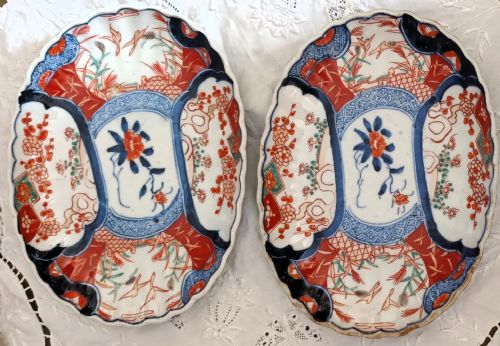


Arita Ware Charger Plate
An arita ware charger plate brings centuries of Japanese ceramic artistry into your home through vibrant hand-painted floral, bird and foliate designs.
Arita Ware Charger Plate
When you search for an arita ware charger plate, you are looking at large decorative porcelain dishes and chargers originating from Japan. The listings show a strong presence of Japanese Imari styles, alongside earlier Edo period pieces and Meiji period examples.
The selection ranges from large blue and white charger plates to intricate gold Imari designs, with various shapes including oval, fan, square and scalloped edges. These items serve primarily as decorative display plates and substantial dishes rather than everyday tableware.
Materials and construction
Potters shaped these pieces from fine porcelain and ceramic bodies, applying cobalt underglaze for deep blue motifs before firing. Artisans then added enamel glazes, gold leaf and gilding over the glaze to build up the characteristic colourful palettes seen on Imari and Aka-e wares.
Hand painting defines the surface decoration, with skilled brushwork depicting cranes, birds and floral arrangements within scrolling foliate borders. Many items received meticulous attention to detail on both the front display surface and the varied rim shapes.
Current listings span multiple centuries, ranging from seventeenth-century Hizen Aka-e dishes up to pieces made around nineteen-twenty.
Distinguishing quality across pieces
The precision of the hand-painted brushwork sets the finer examples apart, particularly in the rendering of complex floral, bird and foliate designs. Crisp cobalt underglaze application and the careful placement of gold leaf and enamel create a much sharper visual impact.
Age and period also influence character, with seventeenth and eighteenth-century pieces demonstrating different throwing techniques and pigment depths compared to later Meiji and turn-of-the-century production. Unusual forms such as fan shapes, square plates and scalloped edges often reflect higher ambition in design.
The Arita Ware Charger Plate Glossary
- Arita ware
- Japanese porcelain originating from the town of Arita in Hizen province. It represents the birthplace of Japanese porcelain production.
- Imari
- A style of Japanese export porcelain decorated in underglaze blue, iron red, and gold. This palette became immensely popular across Europe and Asia.
- Edo Period
- The period in Japanese history spanning from 1603 to 1867. Pieces from this era often show foundational aesthetic shifts in Japanese ceramic art.
- Meiji Period
- The era from 1868 to 1912 marked by the modernisation of Japan and increased export of decorative arts. Many large chargers date from this vibrant manufacturing period.
- Cobalt Underglaze
- A blue pigment applied to the raw ceramic body before glazing and firing. It creates deep, permanent blue designs beneath a clear glossy surface.
Arita Ware Charger Plate: Frequently Asked Questions
How were charger plates used?
Historically, large chargers served decorative purposes on sideboards or as base plates beneath smaller courses during formal dining. Today, collectors primarily display them on walls or sturdy plate stands to showcase the painted designs.
Because of their substantial size, they function well as standalone decorative focal points in a room rather than functional kitchenware.
How do I identify an Edo period piece?
Edo period items date between 1603 and 1867, encompassing early Arita and classic seventeenth or eighteenth-century Imari styles. Look at the weight, the iron impurities in the ceramic body, and the specific tone of the cobalt underglaze.
Earlier pieces often display more organic potting irregularities and deeper, less uniform blue tones than late nineteenth-century equivalents.
What is the difference between Imari and blue and white Arita?
Arita blue and white porcelain relies solely on cobalt underglaze applied to the white ceramic body. Imari ware builds upon this by incorporating vibrant enamel glazes, predominantly iron red and gold leaf.
Both styles share the same ceramic origins in Arita but offer entirely different visual textures and colour palettes for display.
Can I hang these plates on the wall?
Many collectors display chargers on walls using specialised, secure spring-loaded plate hangers designed for heavy porcelain. Ensure the hanger distributes the weight evenly and grips the rim safely without exerting excessive pressure.
For exceptionally large or antique chargers, a dedicated wall bracket or display shelf provides a much safer alternative to wire hangers.