




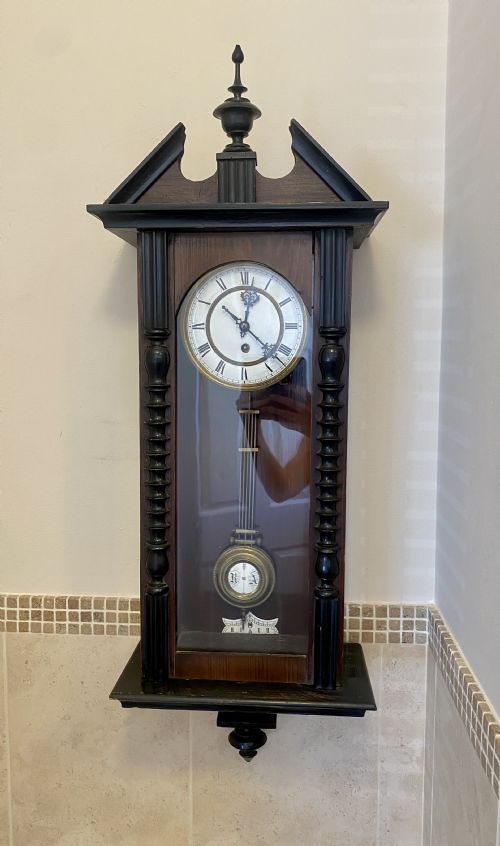


Architectural Wooden Clock
An architectural wooden clock brings structural presence and mechanical precision into a room through classical porticos, gables, and heavy timber cases.
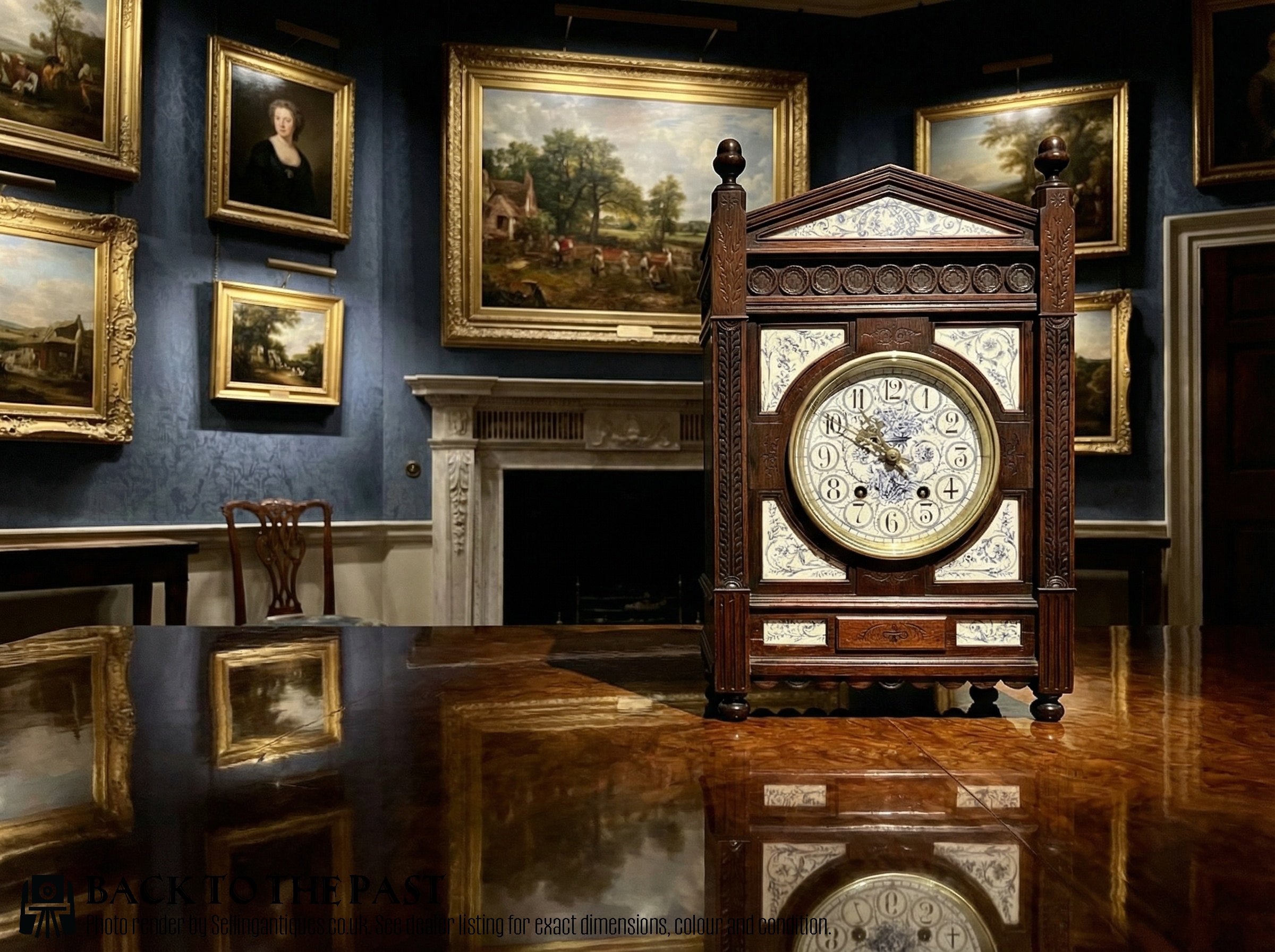
Architectural Wooden Clock
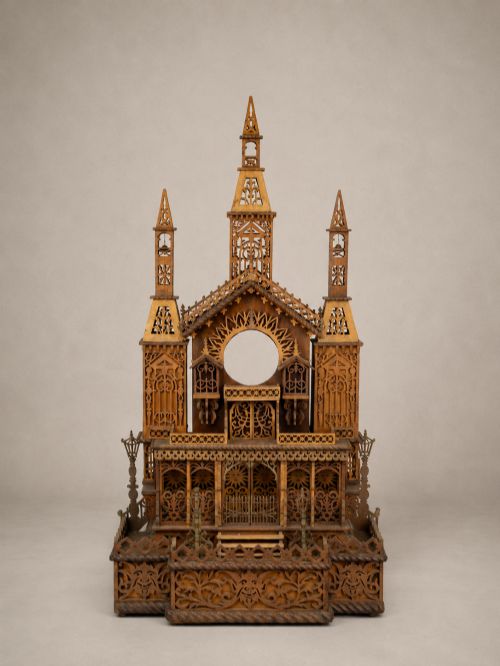
An architectural wooden clock takes its visual cues from buildings, echoing the pediments, columns, and porticos of classical architecture in miniature form. When you search for an architectural wooden clock, you encounter pieces that function simultaneously as timekeepers and sculptural furniture for the mantel, desk, or wall. The selection spans domestic wall regulators, imposing bracket clocks, and striking mantel pieces that translate grand masonry forms into polished timber.
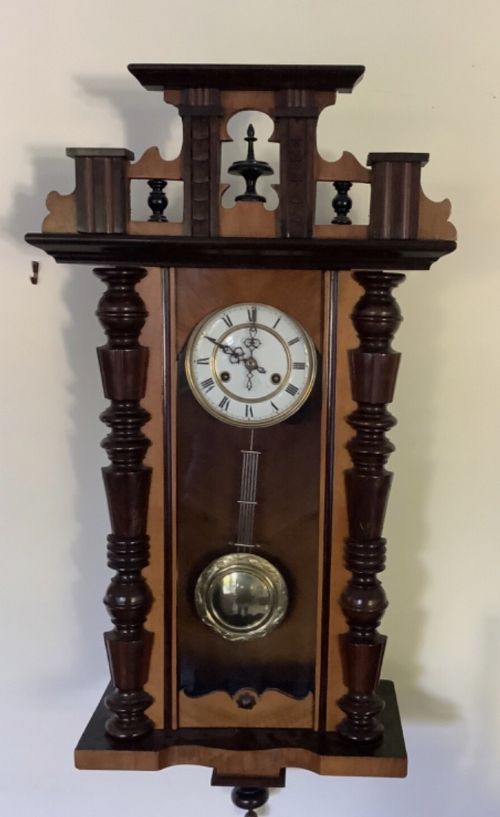
The specimens recorded here draw primarily upon Victorian, Gothic Revival, French Empire, and Aesthetic Movement sensibilities. You meet walnut, rosewood, oak, and ebonised wood cases, often standing tall as French portico clocks or hanging as Vienna wall regulators. These objects range from the mid nineteenth century through to the turn of the twentieth century, reflecting the prevailing taste for solid craftsmanship and historicist design.
How they were made
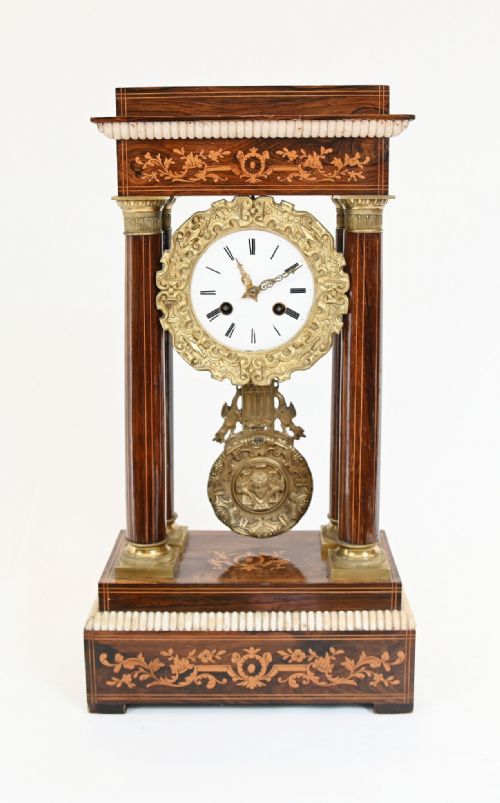
Cabinetmakers constructed the wooden housings using dense timbers such as walnut, rosewood, and mahogany, frequently applying ebonising or intricate marquetry and inlay to the surfaces. Brass, ormolu, and glass components were integrated to frame white enamel dials and protect delicate pendulum movements. Clockmakers then fitted mechanical movements, including twin fusee systems and fourteen-day striking trains, behind the timber facades.
Makers achieved structural depth through fretwork, applied columns, and stepped cornices that mimic stone building facades. The precision of the joinery allowed heavy timber cases to house intricate brass gear trains securely without warping over decades of service.
Listings feature cases constructed from walnut, rosewood, oak, and ebonised wood alongside brass, glass, and enamel components.
What varies in quality
The hierarchy of quality rests upon the crispness of the architectural detailing and the integrity of the timber housing. Superior examples display sharply defined mouldings, well-executed marquetry, and original ebonised finishes that have aged without cracking. Lesser pieces often rely on softer wood species with simpler joinery and generic replacement fittings.
Movement sophistication also divides the range, separating standard timepieces from twin fusee or quarter-striking mechanisms. A heavier, finely integrated brass movement paired with a substantial walnut or rosewood case signals a higher standard of manufacture from the workshop.
German H.A.C.·Johann Baptist Beha·L. Donne Birchin Lane
The Architectural Wooden Clock Glossary
- Portico clock
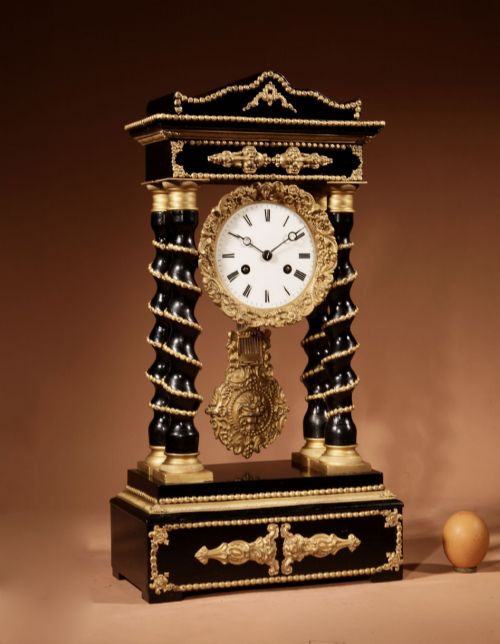
- A clock featuring a freestanding architectural frame supported by columns, typically in the French style. This form highlights symmetrical timber architecture around a central pendulum chamber.
- Fusee
- A conical pulley used in spring-driven clocks to maintain equal power as the mainspring unwinds. This mechanism ensures consistent timekeeping accuracy across the duration of the wind.
- Ebonised
- Wood treated to imitate ebony, usually through staining or painting. This technique creates a deep, black finish popular in nineteenth century aesthetic and revival pieces.
- Marquetry
- Decorative veneer applied to wood in intricate patterns or pictorial designs. Craftsmen use various contrasting timbers to build up visual depth on the flat surfaces of the case.
- Vienna wall regulator
- A precise wall-mounted clock featuring a long glazed case to display the swinging pendulum. These pieces originated in Austrian workshops to serve as reliable time standards.
Architectural Wooden Clock: Frequently Asked Questions
How do I wind a mechanical wooden clock?
Most models require a key inserted into the dial to gently tension the springs or raise the weights, depending on whether the movement uses a fusee or weight-driven system.
Care must be taken not to overwind the mechanism, stopping as soon as resistance is felt to protect the internal brass teeth.
Where should I place an architectural clock?
These pieces suit heavy mantelpieces, sturdy wooden sideboards, or dedicated wall fixings that can securely bear the substantial weight of timber and brass.
Keep the clock away from direct sunlight, damp areas, and extreme temperature fluctuations to preserve the polished wood and delicate enamel dial.
How do I identify a French portico clock?
Look for a tall, narrow wooden case supported by four or more freestanding vertical columns that frame the central pendulum suspended in open view.
They frequently feature ormolu mounts, inlaid woodwork, and classical architectural pediments reflecting Charles X or Napoleon III design idioms.
What maintenance do antique clock movements need?
A professional service every few years ensures the brass pivots, gears, and suspension springs remain free of dried oil and dust accumulation.
Between professional visits, keeping the case level on a stable surface ensures the pendulum beats evenly without stopping.