





Architectural Salvage Pediment
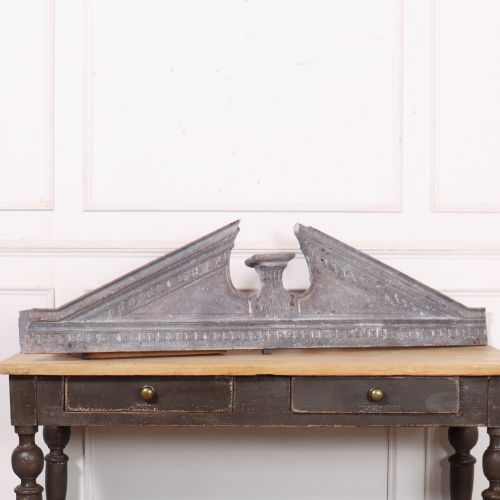
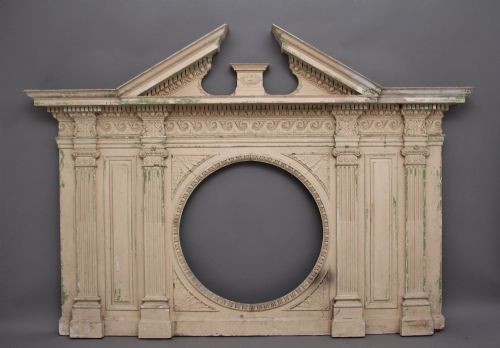
These architectural salvage pediment pieces bring historical presence into a room, offering carved wooden details from centuries past.
Architectural Salvage Pediment
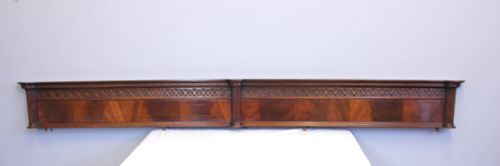
An architectural salvage pediment is a decorative structural element salvaged from buildings, taking forms such as overdoors, overmantels, pelmets, and wall panels. Buyers hunting for an architectural salvage pediment typically encounter large wooden items shaped by historical periods ranging from the seventeenth to the early twentieth century.
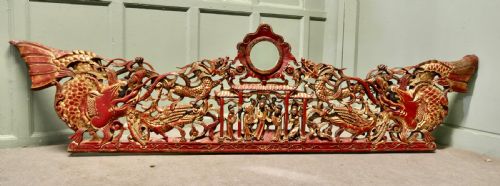
The selection here includes French chateau pieces, Gothic revival panels, and Baroque carvings alongside Chinoiserie temple fragments and Georgian items. Oak, pine, and carved wood dominate the selection, often accompanied by paint, gold leaf, gesso, and zinc.
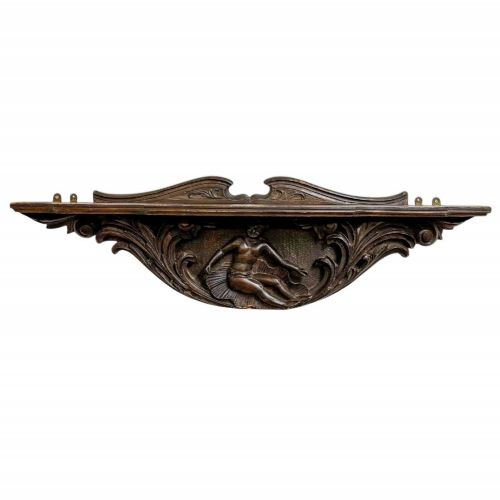
Many examples function as overdoor pediments with shelves, while others serve as wall carvings or ecclesiastical church tracery panels. The nineteenth century yields the highest volume of items, though seventeenth and eighteenth-century examples also appear.
What varies in quality
The depth and clarity of the hand-carved detail separate standard architectural salvage pediment examples from exceptional ones. Master carvers achieved sharper undercutting and more expressive figures, visible in pieces attributed to specific historical hands.
The preservation of original surface finishes, such as early paint layers or gold and silver leaf, dictates the character of the piece. Intact structural joinery and the selection of superior timber grades like pollard oak or dense pine also elevate the standing of an item.
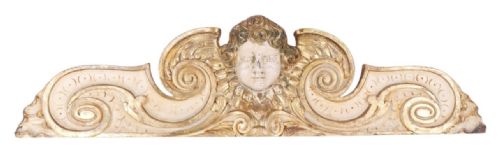
Among the salvaged architectural timberwork, a cherub peers down from an overdoor pediment.
Edward Pearce
The Architectural Salvage Pediment Glossary
- Pediment
- A triangular or decorative architectural crown placed above doors, windows, or mantelpieces. It forms the primary focal point of these salvaged items.
- Overdoor
- A decorative panel or pediment positioned directly above a doorway. These often incorporate shelves or elaborate carvings.
- Tracery
- Openwork pattern made of intersecting ribwork, commonly seen in Gothic ecclesiastical panels. It mimics stone window tracery in carved wood.
- Gesso
- A plaster-like mixture applied to wood as a base for paint or gold leaf. It allows for crisp, moulded surface details.
- Capital
- The uppermost member of a column or pilaster, often richly carved with foliage or scrolls. Pairs of these frequently survive as independent architectural fragments.
Architectural Salvage Pediment: Frequently Asked Questions
Where can I hang an overdoor pediment?
An overdoor pediment mounts securely above interior doorways to create a sense of height and architectural completeness. They also sit effectively above large mirrors, beds, or low mantelpieces.
Ensure the wall fixings match the substantial weight of solid oak or pine timbers.
How do I identify a Gothic revival panel?
Gothic revival pieces display pointed arch motifs, ecclesiastical church tracery, and vertical emphasis typical of medieval architecture. Makers in the nineteenth century revived these medieval forms for decorative interiors.
Look for geometric tracery patterns carved into pine or oak panels.
What is the difference between an overdoor and an overmantel?
An overdoor pediment is designed specifically to sit horizontally above a doorway, sometimes incorporating a display shelf. An overmantel spans the wider space above a fireplace opening.
Both serve as major decorative focal points but fit different architectural proportions.