



Antique Wall Hanging Pediment
These antique wall hanging pediment pieces are architectural ornaments and case furniture tops that bring period presence to a room.
Antique Wall Hanging Pediment
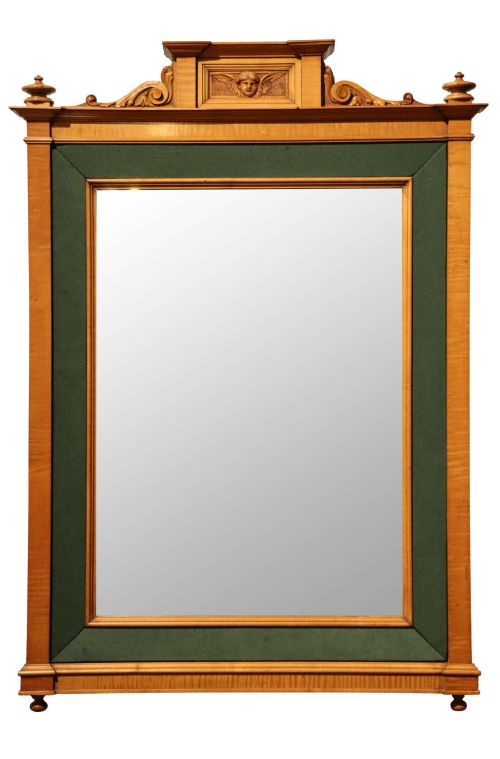
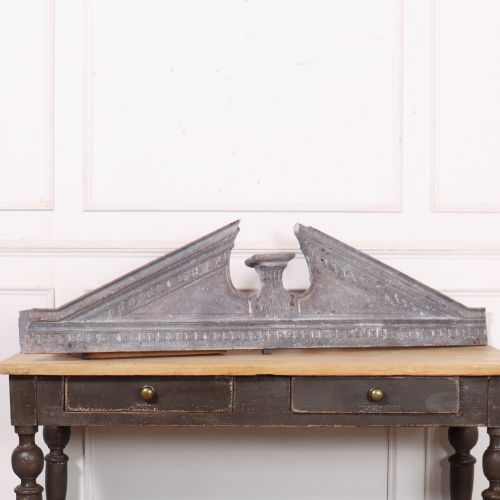
When you search for an antique wall hanging pediment, you encounter architectural elements like overdoor pediments alongside wall cabinets, mirrors, and corner cupboards featuring broken arch or crested tops. These items originate predominantly from the Georgian, Victorian, and Edwardian eras, spanning the eighteenth and nineteenth centuries.
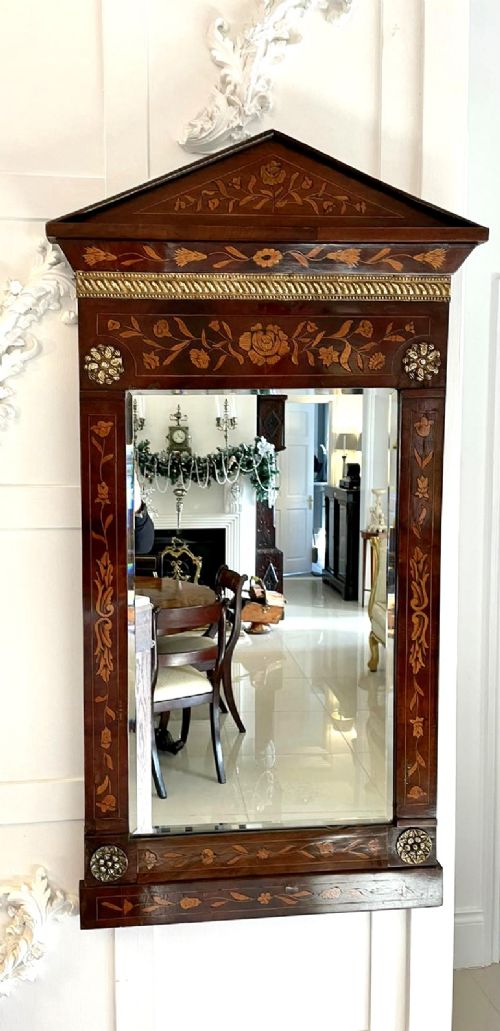
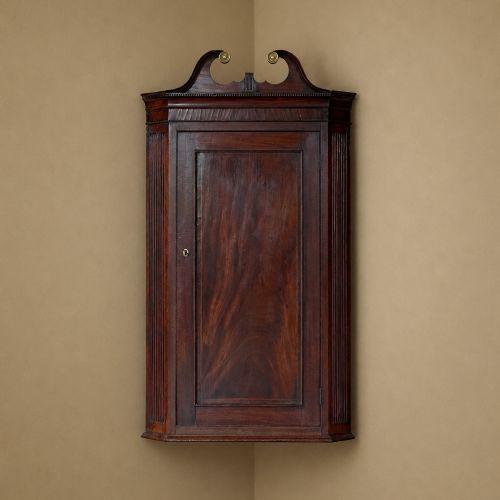
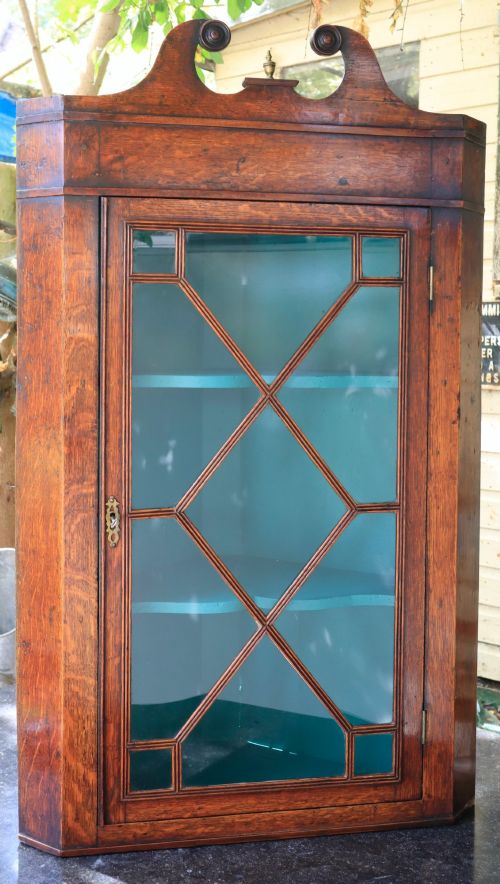
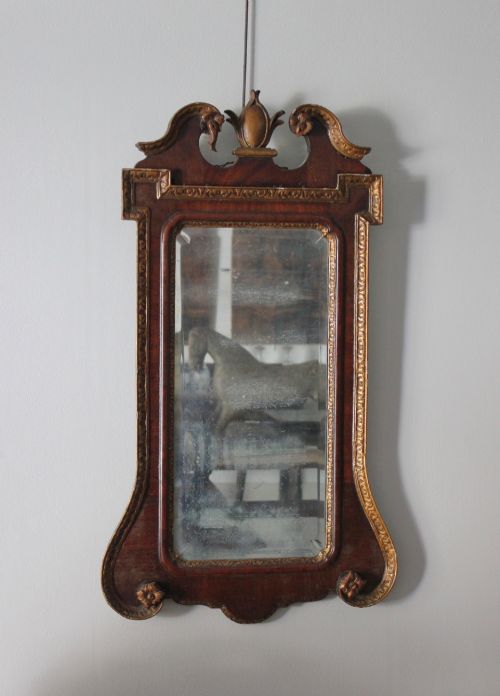
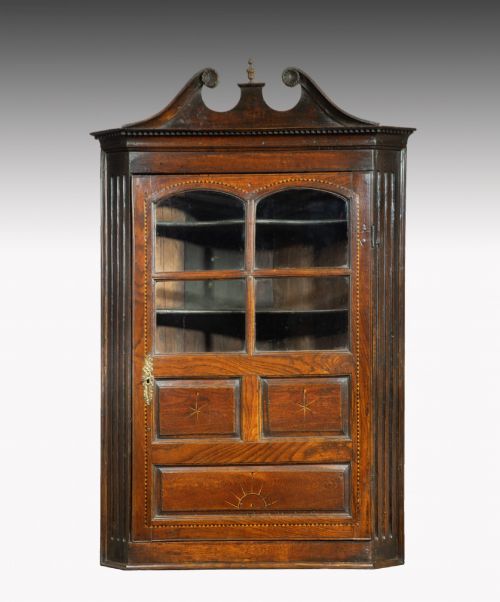
The pieces on this page range from freestanding carved wooden crests and Italian silver leaf pediments to complete mahogany corner cupboards and wall mirrors with architectural framing. Cabinetry forms lean heavily towards hanging corner cupboards in oak and mahogany, often displaying glazed doors and inlaid boxwood or satinwood.
Origin details in the listings point toward English craftsmanship, complemented by Dutch marquetry and Italian decorative work. Whether you examine a stick barometer, a pier mirror, or a dedicated architectural salvage pediment, each item relies on classical proportion and timber construction.
Assessing craftsmanship and condition
Material selection marks the distinction between standard production and top tier pieces, seen in dense flame mahogany, fine boxwood stringing, and well-preserved gilding or silver leaf. Original glass panes, brass hardware, and untouched cabinet interiors contribute substantially to the standing of a piece.
Object forms span corner cabinets, wall mirrors, stick barometers, and architectural salvage overdoor pediments.
PINCHETTI & CO, LONDON·Tarone Gally & Co.
The Antique Wall Hanging Pediment Glossary
- Pediment
- An architectural crowning feature, often triangular or broken-arched, placed above doors, furniture, or mirrors.
- Marquetry
- Decorative veneer work formed by fitting pieces of various coloured woods into a design.
- Gesso
- A plaster-like mixture applied to wood surfaces as a base for gilding or painting.
- Giltwood
- Timber that has been coated with gold leaf or gold paint for decorative effect.
- Stringing
- A narrow inlay of contrasting wood used to outline panels or drawer fronts on cabinet furniture.
Antique Wall Hanging Pediment: Frequently Asked Questions
How do I hang a heavy wooden corner cupboard safely?
These cabinets require secure fixing points into wall studs or masonry using appropriate brackets, as solid mahogany and oak add substantial weight to the structure.
Ensure the internal hanging brackets or battens are firmly attached to the main frame before mounting the piece at eye level or above.
What is the difference between an overdoor pediment and a cabinet pediment?
Overdoor pediments function as standalone architectural salvage pieces mounted directly above doorways for decorative impact, whereas cabinet pediments form the integral upper crest of a corner cupboard or bookcase.
Standalone pediments focus purely on carved ornament and profile, while cabinet tops often incorporate broken arches designed to crown a tall piece of furniture.
How do I identify a Georgian mahogany corner cupboard?
Georgian examples typically feature dense mahogany timber, brass H-hinges, and classical cornices, often with astragal-glazed doors or flame mahogany panels dating from the eighteenth century.
Many of these cabinets include interior shelving shaped to fit corner spaces, occasionally accented with satinwood or boxwood inlay work.
Where should I place a wall hanging architectural pediment?
These ornaments suit placement above interior doorways, large mirrors, or focal wall spaces where they introduce architectural depth and period character.
Their scale works best when matched to the proportions of the wall or door frame they surmount.