



Architectural Landscape Painting Panel
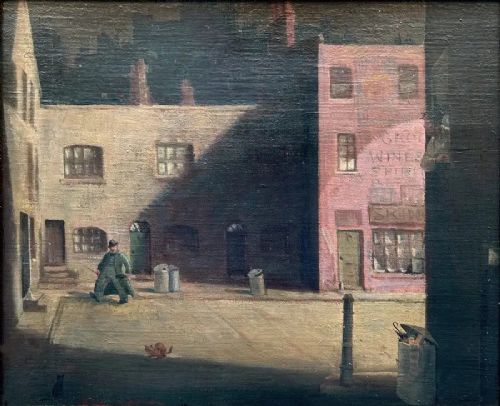
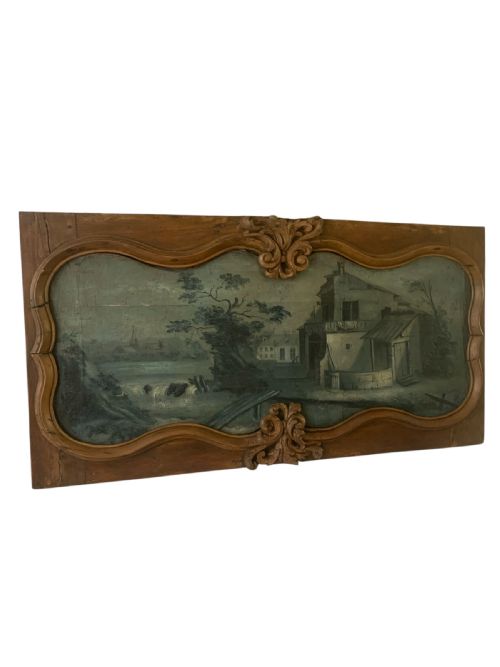
An architectural landscape painting panel brings together built forms and open vistas, combining structural precision with natural scenery.
Architectural Landscape Painting Panel
An architectural landscape painting panel unites built structures and natural vistas, taking forms such as oil paintings on wood boards and canvases alongside hand-painted leaded glass windows. These works emerge from diverse periods spanning Georgian and Regency eras through the nineteenth century, Edwardian times, and the nineteen-thirties.
The selection ranges from overmantel mirrors and overdoor panels to detailed interior scenes and countryside views featuring castles and abbeys. Buyers encounter works executed in styles including French Rococo, English Naive Art, Post-Impressionism, and Modernism.
The most common examples on this page balance interior or urban elements with distant rural backdrops, utilising media ranging from traditional oil paint to stained glass.
Materials and construction
Artists painted primarily upon wood panels, oak boards, and canvas supports using oil paint, sometimes incorporating gesso grounds for preparation. Glass works involve leaded construction combined with hand-painted, etched designs.
Frames and architectural surrounds often employ giltwood or white-painted wood to complement the panel itself, while glass windows integrate lead came to secure individual painted sections.
One unexpected panel captures a quiet interior moment through a window while blossoming trees stand near a ruined abbey.
Judging the work
Quality rests upon the handling of perspective between built architecture and the surrounding landscape, alongside the precision of brushwork or glass etching. The integration of structural lines with natural light dictates the visual strength of the piece.
Condition of the underlying wood panel, canvas, or leaded glass window influences the integrity of the surface, particularly where gesso, oil paint, and giltwood frames show age.
Francisco Sancha·Paul-Élie Gernez·George Lambert
The Architectural Landscape Painting Panel Glossary
- Panel
- A flat support for a painting, commonly made of wood such as oak rather than canvas. This rigid base was favoured for many older architectural and landscape works.
- Leaded glass
- Window construction where pieces of glass are joined together using lead cames. Hand-painted details are frequently fired onto the glass before assembly.
- Overmantel
- A decorative panel, mirror, or painting designed to be placed directly above a fireplace mantelpiece. They often reflect the architectural proportions of the room.
- Gesso
- A plaster-like mixture applied to wood panels or frames to prepare a smooth surface for painting or gilding. It provides a stable foundation for fine decorative details.
- Triptych
- A picture or carving divided into three sections, often hinged or displayed together as a single unified composition. This format frequently frames central landscape views with flanking panels.
Architectural Landscape Painting Panel: Frequently Asked Questions
What is an architectural landscape painting panel?
It is a pictorial work or decorated glass window that incorporates buildings, ruins, or structural elements alongside natural scenery. These pieces range from oil paintings on wood boards to leaded glass panels.
Such items were designed to serve as focal points within rooms, functioning as overdoor inserts, overmantel mirror components, or window insertions that connected interior spaces with exterior views.
How do I care for wood panel paintings?
Wood panels require stable environmental conditions with minimal fluctuations in temperature and humidity to prevent warping or cracking of the paint layer. Keep them out of direct sunlight.
Dust the surface gently with a soft, dry cloth and avoid using liquid cleaners or oils on either the painted panel or its original frame.
Where were these panels displayed originally?
Many panels were integrated directly into domestic architecture, placed above fireplaces as overmantels or fitted into doorways as overdoors. Leaded glass variants served as exterior or interior windows.
Larger oil paintings on panel were typically hung within reception rooms or libraries, often matching the specific proportions of the wood panelling in the house.
How do I distinguish between an oil painting and a painted glass panel?
Oil paintings utilise pigments suspended in drying oil applied to solid supports like wood panels or canvas, presenting an opaque surface with visible brushwork. Painted glass relies on translucent or stained material held together by lead.
Glass panels allow light to pass through the painted countryside or architectural scene, whereas wood panel paintings reflect ambient room light from the front.