




Post Impressionist Cityscape Artwork
Post impressionist cityscape artwork captures the changing light and motion of urban streets across decades of European painting.
Post Impressionist Cityscape Artwork
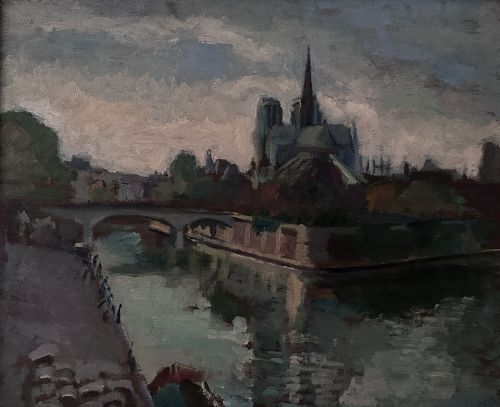
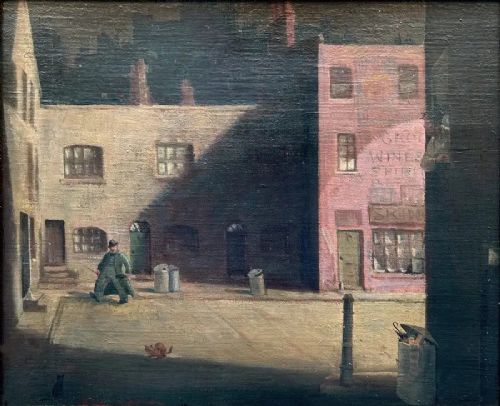
Post impressionist cityscape artwork brings together painted views of urban environments, street scenes, and architectural landmarks from the nineteenth and twentieth centuries. These pieces record bustling boulevards, famous bridges, and quiet harbours through the expressive lens of post-impressionism and French post-impressionism.
Buyers encounter works dated across several decades, including pieces from the nineteen-tens, twenties, thirties, forties, fifties, and sixties. These canvases range from intimate sketches of landmark buildings to large horizontal compositions of city streets.
Materials and techniques
Artists painted primarily with oil paint and pastels, applying pigment onto prepared canvas, wood panel, timber, or board supports. These mediums allowed painters to build rich surface textures and layers of colour that define urban light and shadow.
Framed works incorporate timber and metal framing elements designed to protect the canvas edges and complement the painted composition. Support materials vary from standard stretched canvas to rigid wooden panels used for smaller plein air sketches.
Several artists managed to paint bustling morning traffic without ever getting run over by a horse-drawn omnibus.
Elements of quality
Quality rests upon the artist's handling of paint and the confidence of the brushwork in capturing atmosphere, movement, and light across architectural forms. Stronger pieces demonstrate a distinct command of colour and composition rather than mere technical accuracy.
The relationship between the support medium and the pigment application shapes the overall depth of the painting. Works that retain vibrant surface texture and clear compositional focus stand out among period examples.
Francisco Sancha·Alfred Wolmark·Paul-Jean Anderbouhr·Merio Ameglio·Marc Aldine·Antoine Bouvard Senior·Eduard Leon Cortes·Pierre Peltier
The Post Impressionist Cityscape Artwork Glossary
- Post-Impressionism
- An artistic movement following impressionism that focuses on expressive brushwork, symbolic use of colour, and distinct structural forms. Painters emphasised personal vision over direct optical realism.
- Oil on Canvas
- A traditional painting technique where oil paint is applied to a woven cloth stretched across a wooden frame. This surface provides flexibility and a textured ground for the pigment.
- Oil on Board
- A method involving oil paint applied directly to a rigid wooden or composite board. Artists frequently utilised this support for smaller or portable outdoor studies.
- Pastel Painting
- An artwork created using dry pigment sticks composed of powdered colour and a binder. The medium produces velvety matte surfaces with soft colour transitions.
- Mid-Century Modern
- A design and aesthetic movement spanning the middle decades of the twentieth century. In painting, it often reflects streamlined forms and modern urban sensibilities.
Post Impressionist Cityscape Artwork: Frequently Asked Questions
What subjects appear in these cityscapes?
The works primarily depict prominent European urban centres, with a strong focus on Parisian street scenes, river views along the Seine, and famous bridges like the Pont Neust.
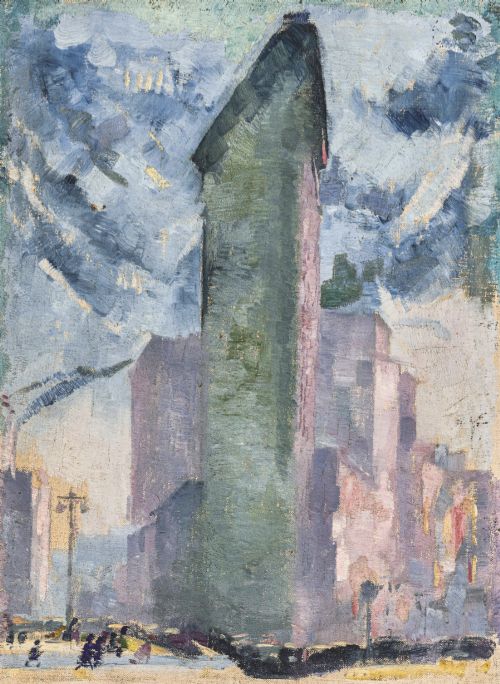
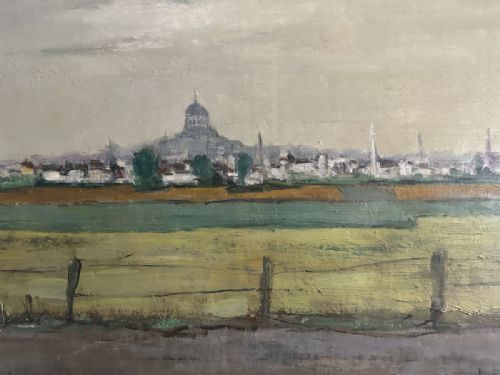
Artists also recorded architectural landmarks such as Notre Dame Cathedral, harbour views in Rouen, and industrial or commercial buildings like the Flatiron Building.
How do I identify the period of a painting?
Dating relies on inscribed dates on the canvas or board, stylistic markers associated with specific decades, and artist biographical records. Mid-century pieces often reflect post-war modernist sensibilities, whereas earlier works align with nineteenth-century or early twentieth-century traditions.
Material supports and framing styles also offer clues to the era in which the artwork was produced.
What is the difference between canvas and board supports?
Canvas consists of woven fabric stretched over a wooden frame, offering a flexible surface that responds well to layered oil paint and textured brushwork. Board provides a rigid wooden or timber backing, which artists frequently utilised for smaller, direct studies.
Both supports accommodated the spontaneous application of paint characteristic of post-impressionist styles.
Where should I hang a cityscape artwork?
These paintings suit living rooms, studies, and hallways where adequate wall space allows the composition to anchor the room. Lighting should be indirect to prevent glare on oil surfaces while highlighting the brushwork and colour palette.
Framed works require stable indoor environments away from excessive moisture and direct sunlight to protect the canvas and paint layers.