




Urban Landscape Oil Painting
An urban landscape oil painting captures the kinetic energy of streets, architecture, and city life through layered pigments.
Urban Landscape Oil Painting
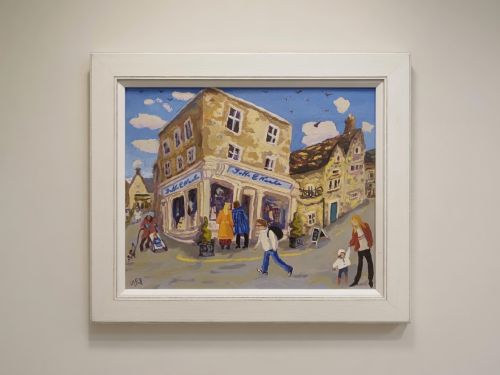
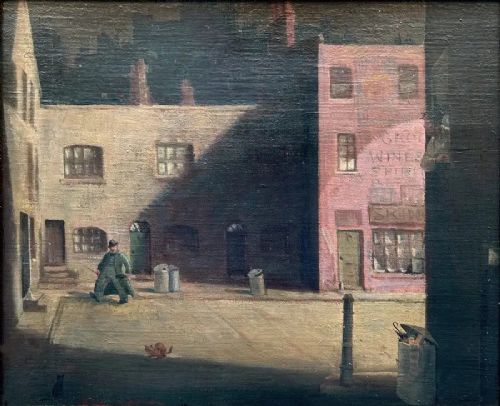
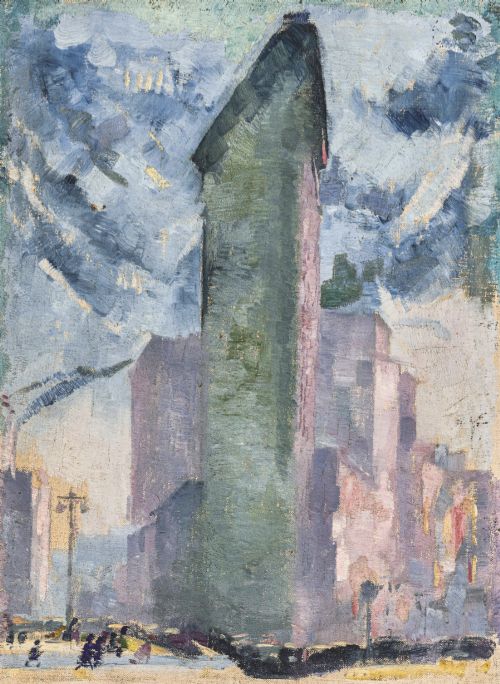
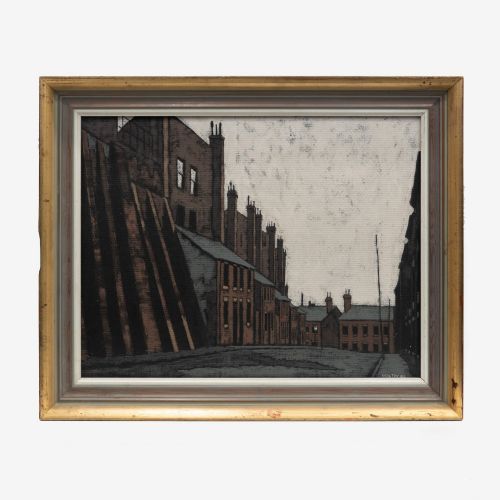
When searching for an urban landscape oil painting, collectors encounter diverse cityscapes, street scenes, and architectural views spanning multiple centuries.
The selections on this page range from late Georgian and Victorian depictions to mid-century impressionist and contemporary British interpretations.
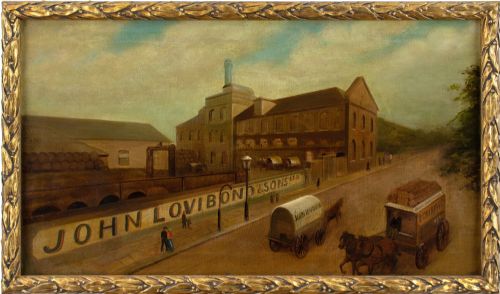
Works appear on various traditional supports, capturing bustling Parisian streets, industrial breweries, and moonlit metropolitan churches.
Materials and Technique
Artists apply oil paint directly onto prepared canvas or sturdy wooden boards, utilising the slow-drying medium to blend tones and build rich textures.
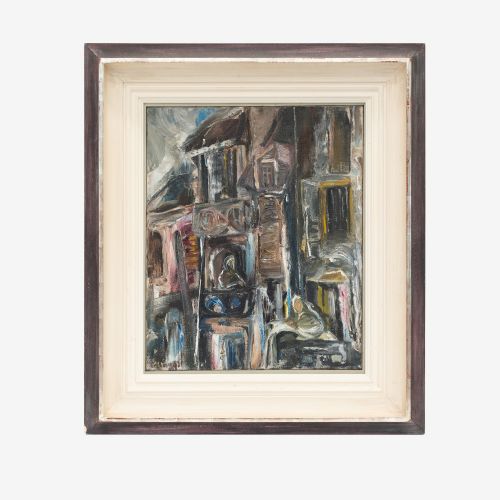
Impasto techniques build heavy, raised layers of pigment that lend physical dimension to architectural masonry and winter rooftops.
Surrounding frames often utilise carved and gilded wood, complementing the painterly depth of the city views within.
Several canvases capture the silent chill of winter rooftops alongside the warm glow of evening streetlights.
Assessing Quality
Distinction in these works lies in the confidence of brushwork and the artist's ability to command light and shadow across complex urban geometries.
Stronger pieces demonstrate deliberate handling of perspective and atmospheric tone, whether depicting a quiet continental bridge or a dense industrial skyline.
The harmony between the pigment application and the original support contributes significantly to the visual integrity of the composition.
Lucy Pratt·Francisco Sancha·Alfred Wolmark·Stuart Walton·Lilian Colbourn·E A Minardo·Lewis J Wood·Job de Vogel·Walter Meegan·Guillaume Urban Régamey
The Urban Landscape Oil Painting Glossary
- Impasto
- Paint applied thickly to a canvas or board, standing out in relief from the surface. This technique allows the artist to build physical texture into streets, buildings, and skies.
- Oil on Board
- A painting executed on a rigid wooden or composite panel rather than stretched fabric. Boards provide a firm, stable ground for direct brushwork.
- Post-Impressionism
- An art movement extending beyond impressionism to emphasise symbolic content and geometric forms. Works in this style focus on structural clarity within urban compositions.
- Giltwood
- Wood that has been treated with a thin layer of gold leaf or gilt. This finish is commonly found on traditional frames encasing fine art.
- Continental City
- A term denoting a settlement located on mainland Europe. Such urban views often feature distinct architectural traditions differing from British townscapes.
Urban Landscape Oil Painting: Frequently Asked Questions
What periods do these paintings cover?
The available works span several centuries, including late Georgian, Victorian, early twentieth-century pieces, and mid-century modern examples.
Later contemporary British and post-impressionist canvases also contribute to the diverse chronological range seen across the listings.
What surfaces are these painted on?
Artists traditionally applied oil pigments to woven canvas stretched over wooden frames or directly onto prepared wooden boards.
Both supports offer distinct tactile qualities that interact differently with thick impasto applications and finer brushwork.
How should I display a cityscape painting?
These works suit prominent wall placement where adequate lighting can illuminate the varied textures of the oil paint and the depth of the urban perspective.
Matching the frame, such as a traditional giltwood surround, to the interior aesthetic helps integrate the artwork into the room.
How do I distinguish between an impressionist and a realist urban view?
Realist pieces focus on precise architectural details and accurate topographical representation of streets, bridges, and buildings.
Impressionist and expressionist works prioritize atmospheric effects, loose brushwork, and the subjective mood of the cityscape over strict photographic accuracy.