



Original City Scene Painting
An original city scene painting captures urban life from bygone decades, offering buyers a window into historic streets and architectural landmarks.
Original City Scene Painting
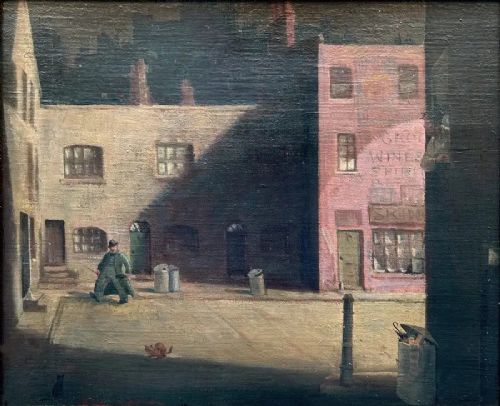
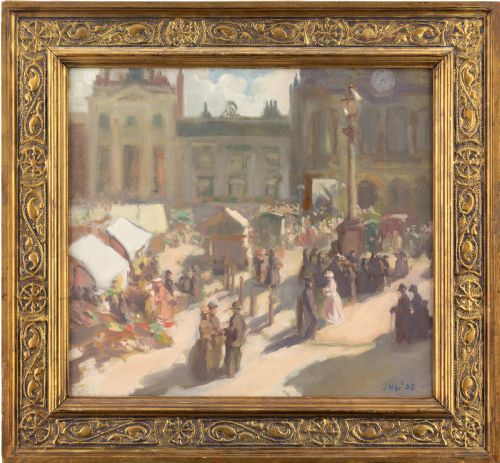
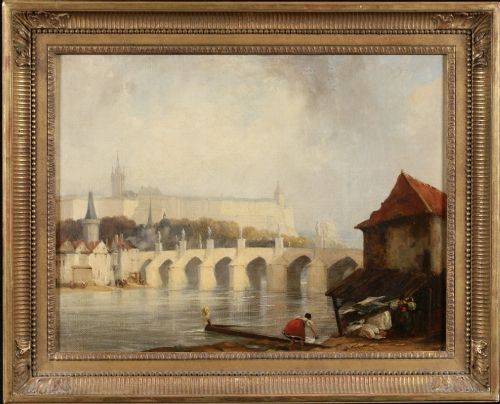
An original city scene painting depicts urban streetscapes, bustling markets, rivers, and architectural landmarks from historical periods. These works capture the atmosphere of metropolitan life across Britain and continental Europe.
Buyers frequently encounter nineteenth-century watercolours alongside twentieth-century canvases on this page. Common subjects range from London thoroughfares and provincial towns to Parisian boulevards and Venetian canals.
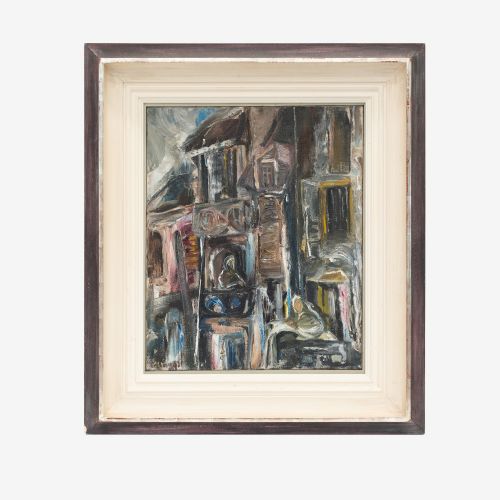
The selection encompasses various artistic movements, including British Impressionism, Edwardian art, and Mid-Century Modernism. Works span from detailed nineteenth-century topographical studies to expressive post-war compositions.
Factors of quality
Quality rests upon the artist's ability to render perspective, light, and movement within a bustling urban environment. Stronger examples demonstrate confident brushwork and a compelling composition that anchors the viewer within the streetscape.
The condition of the pigment and the support medium heavily influence the piece. Well-preserved surfaces retain their original tonal depth without extensive overpainting or conservation damage.
Milkmaids and stray cats occasionally wander through nineteenth-century alleyways.
John Hodgson Lobley RBA·Charles James Lauder·Ron Folland·Henry Sanders·Alfred Pollentine
The Original City Scene Painting Glossary
- Watercolour
- A painting method where fine pigment is suspended in a water-soluble binder, traditionally applied to paper.
- Impressionism
- An artistic style focusing on light, atmospheric effects, and rapid brushstrokes rather than rigid detail.
- Gilt wood
- Wood coated with a thin layer of gold leaf, commonly used for period picture frames.
- Canvas
- A heavy woven fabric used as a surface for oil painting.
Original City Scene Painting: Frequently Asked Questions
How do I date a city painting?
Dating relies upon architectural clues, clothing styles of figures within the street, and artist signatures or exhibition records. Framing and the physical composition of the canvas or paper also provide chronological markers.
Comparison with documented works from specific periods helps narrow down the decade of creation.
Are these works painted outdoors?
Many artists sketched preliminary views on location before completing the final painting in the studio. Watercolours were frequently executed directly on the spot.
Larger oil paintings typically required studio work based on preparatory watercolours and observations.
How should I care for a watercolour?
Watercolours require protection from direct sunlight to prevent the fading of delicate pigments on paper. Displaying works in rooms with stable humidity levels preserves the paper substrate.
Conservation-grade framing with acid-free mounts safeguards the medium over time.
What is the difference between an oil and a watercolour?
Oils use pigment suspended in drying oils applied to canvas or board, offering heavy texture and deep opacity. Watercolours utilise water-soluble pigments on paper, creating translucent and luminous effects.
Both mediums were widely used to document urban environments across different centuries.