
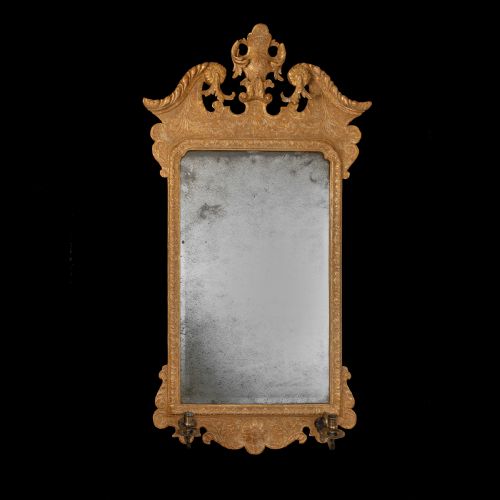


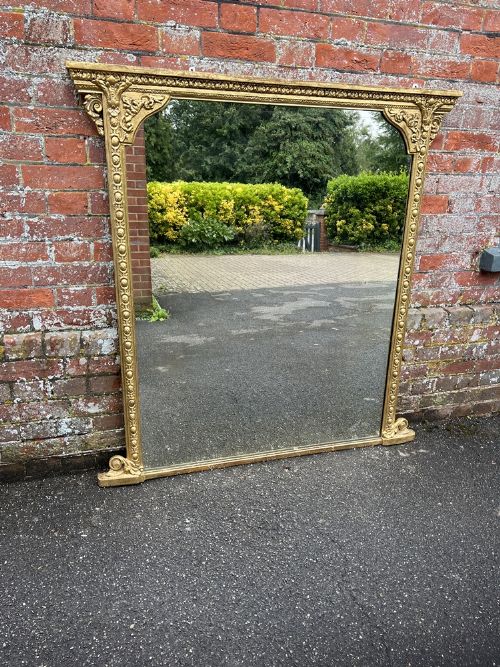
Architectural Gesso Mirror
These architectural gesso mirror examples bring classical proportion and reflective light to a room, spanning periods from the mid-eighteenth century to the late Victorian era.
Architectural Gesso Mirror
An architectural gesso mirror combines structural framing with moulded surface ornament, drawing upon classical building forms such as columns, arches, and pediments. When searching this phrase, buyers encounter substantial pieces designed to anchor a room, most frequently appearing as nineteenth-century overmantel mirrors with arched or shaped tops alongside earlier eighteenth-century pier mirrors.
The dominant form on this page is the large English nineteenth-century overmantel mirror, often framed by painted or gilt columns and elaborate gesso mouldings. Alongside these Victorian examples, the selection includes eighteenth-century George II pier mirrors that display earlier interpretations of carved wood and gesso craftsmanship.
These wall mirrors and overmantel mirrors serve both decorative and spatial functions, reflecting interior light while imposing a strong vertical or horizontal presence. The variety spans Victorian Classical and Rococo Revival styles, each adapting architectural motifs to domestic interiors.
Construction and materials
The foundation of each piece relies on a wooden substrate, typically carved wood that provides the structural integrity necessary for large overmantel frames. Workers then applied layers of gesso - a mixture of plaster or chalk and binder - directly onto the timber to build up crisp decorative reliefs and architectural details.
Surface finish is achieved through the application of gold leaf, giltwood, or paint over the prepared gesso base. Mirror glass, sometimes incorporating brass fittings, is then secured within these ornate frames to complete the reflective surface.
Every heavy overmantel mirror carries the quiet weight of nineteenth-century parlours where guests checked their hair before knocking.
Assessing quality
Quality in an architectural gesso mirror rests upon the depth and crispness of the moulded ornament, where sharper botanical and classical motifs indicate superior craftsmanship. The handling of the gesso layer determines how well the fine details of columns, arches, and frames endure across centuries.
The coherence between the wooden carcass and the applied gesso decoration dictates the structural integrity of the piece. Superior examples maintain a harmonious relationship between the architectural proportions and the decorative surface finish.
The Architectural Gesso Mirror Glossary
- Gesso
- A plaster-like material applied to wood to create a smooth surface for carving or gilding. This mixture allows makers to fashion intricate relief ornamentation.
- Overmantel mirror
- A large mirror designed to hang specifically above a fireplace mantel. These pieces often dominate the chimney breast in period interiors.
- Pier mirror
- A tall wall mirror designed to hang on the pier of wall between windows. They typically reflect light back into the centre of a room.
- Giltwood
- Wood that has been treated with gold leaf or gold paint. This technique gives the frame a luminous metallic appearance.
- Rococo Revival
- A nineteenth-century style that revives the asymmetric scrolls and naturalistic motifs of the eighteenth century. It adds fluid ornamentation to architectural frames.
Architectural Gesso Mirror: Frequently Asked Questions
Where should an overmantel mirror hang?
These large mirrors are traditionally positioned directly above a fireplace mantel to anchor the room's main hearth. Their substantial scale allows them to reflect natural light and balance the vertical volume of the chimney breast.
Alternatively, they function effectively on principal walls in reception rooms where their architectural frames act as primary focal points.
How do I distinguish George II from Victorian pieces?
George II mirrors, dating from the mid-eighteenth century, typically display earlier proportions and hand-carved gesso details associated with Georgian design. Pieces from this era often take the form of pier mirrors rather than overmantels.
Nineteenth-century Victorian examples tend to be larger overmantel mirrors incorporating arched tops, column frames, and heavier moulded ornament within Revival styles.
What is the difference between gesso and carved wood?
Carved wood forms the structural timber base of the frame, providing the physical strength required for large wall pieces. Gesso is the plaster mixture applied over that wood to build up the crisp surface details and mouldings.
Craftsmen carve the underlying timber and then shape the gesso layers to achieve sharp architectural lines and decorative reliefs.
How do I care for gilt gesso surfaces?
Gilt gesso surfaces require gentle dusting with a soft, dry cloth to prevent the accumulation of particles without disturbing the delicate finish. Moisture and harsh cleaning agents must be avoided entirely to protect the gold leaf and underlying plaster.
Stable indoor humidity helps preserve both the wooden carcass and the gesso layer over time.