


Architectural Etching Print
These architectural etching print examples capture classical buildings and ancient ruins on paper through ink lines, offering a direct view of historic structures.
Architectural Etching Print
An architectural etching print presents structured views of buildings, monuments and antiquities created across several centuries. The selections on this page range from seventeenth-century classical subjects to early twentieth-century drypoint plates, recording cathedrals, bridges and grand interiors.
Buyers encounter works originating from various periods including the eighteenth century and the Victorian era. These pieces appear in forms such as individual framed works and sets depicting classical scenes or city views.
The subjects span European antiquities, British landmarks and classical mythology rendered through intaglio techniques. Works often reflect stylistic movements from neoclassical and baroque designs to early twentieth-century realism.
Materials and Technique
Makers produced these works using paper supports and ink, sometimes applying hand watercolour washes or gold leaf details by hand. Copper plates formed the basis for many engravings and etchings, allowing fine linear detail.
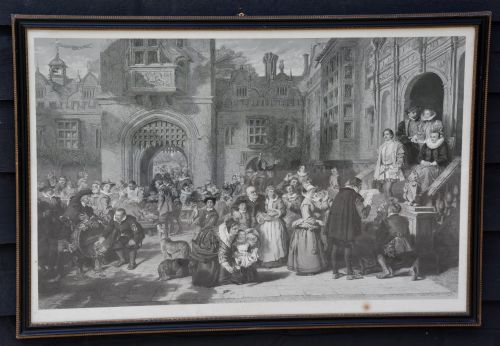
Framing materials recorded in the listings include glass, wood and gilt wood alongside original Hogarth frames. These housings protect the paper while complementing the aesthetic of the period.
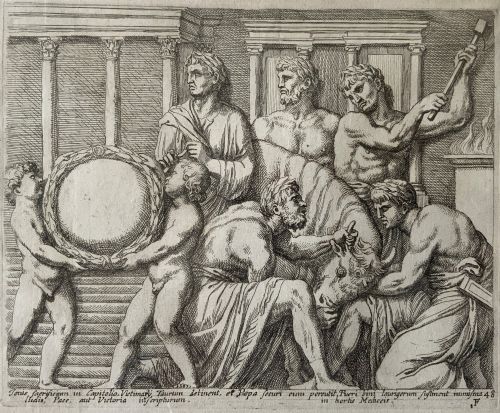
Several architectural plates record ancient Greek gods and mythical creatures sharing space with classical columns and stone courtyards.
Variations in Quality
Quality separates through the precision of the plate impression and the fidelity of the inked lines. Crisp, deep impressions reveal the nuances of the artist's hand whereas worn plates yield softer, less distinct details.
The condition of the paper surface and the preservation of any hand-applied colour also distinguish finer examples. Original framing and provenance provide further context for discerning collectors.
François Perrier·Francesco Piranesi·Claes Jansz Visscher·James Basire·Giovanni Ottaviani
The Architectural Etching Print Glossary
- Etching
- A printmaking process where acid bites lines into a metal plate covered with an acid-resistant ground. Ink is then applied to the recessed grooves for transfer to paper.
- Engraving
- A technique where an artist cuts lines directly into a metal plate using a sharp tool called a burin. This method produces clean, precise lines characteristic of architectural plates.
- Drypoint
- A printmaking method where the artist scratches directly into the metal plate with a sharp needle. This action raises a burr of metal that holds ink to create a velvety line.
- Lithograph
- A planographic printing process based on the chemical repulsion of oil and water. The image is drawn on limestone or a metal plate before printing onto paper.
- Neoclassical
- A style inspired by the classical art and architecture of ancient Greece and Rome. It emphasises symmetry, proportion and classical motifs in architectural prints.
Architectural Etching Print: Frequently Asked Questions
How should I frame an old architectural print?
Protect the paper by using acid-free mounts and UV-filtering glass to prevent fading over time. Traditional wood or gilt frames often match the historical period of these works.
Keep prints away from direct sunlight and damp environments to preserve the integrity of the paper and ink.
What is the difference between an etching and an engraving?
An etching uses acid to bite lines into a metal plate covered with a protective ground. This chemical process creates fluid, varied lines.
An engraving relies entirely on manual force with a burin to cut lines directly into the metal, resulting in sharper, more uniform strokes.
How do I identify the age of an architectural print?
Examine the paper type, plate marks and any inscribed signatures or dates within the margins. Watermarks and paper texture often provide clues regarding the century of production.
Stylistic elements like neoclassical details or specific publishing information can further narrow down the era.
Were these prints always coloured by hand?
Many early prints were produced purely in black and white using ink on paper. Artisans sometimes added watercolour by hand later to enhance specific architectural details.
Hand-coloured examples vary based on whether the tinting was applied contemporaneously or during a later period.