

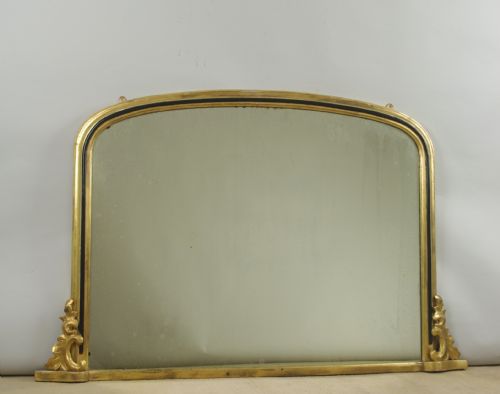
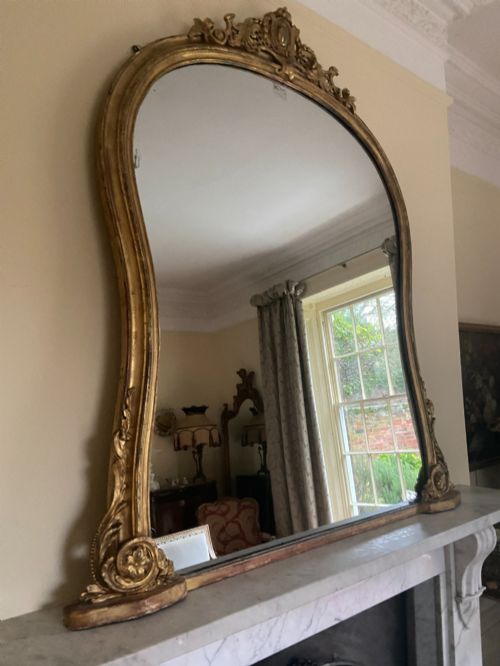
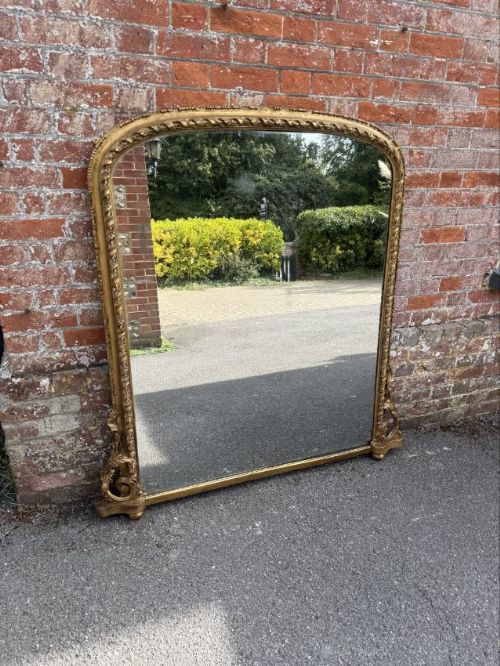
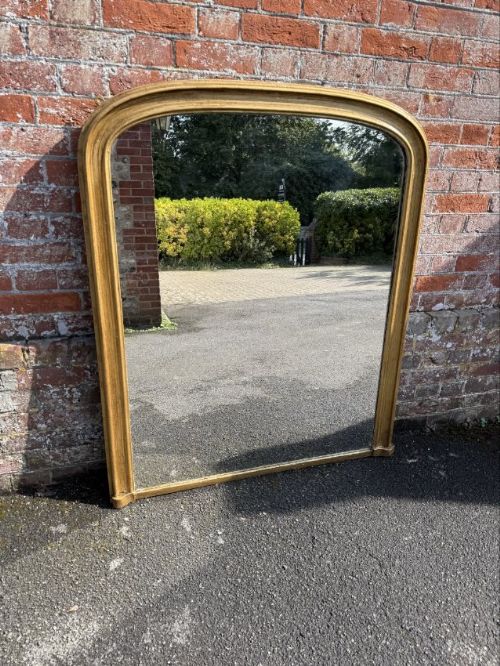
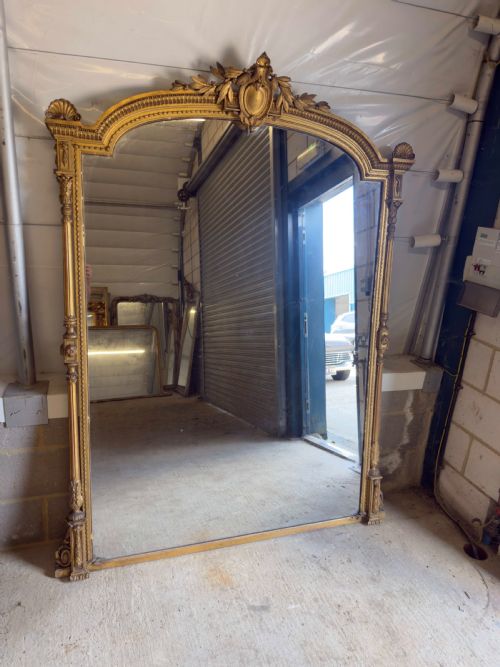
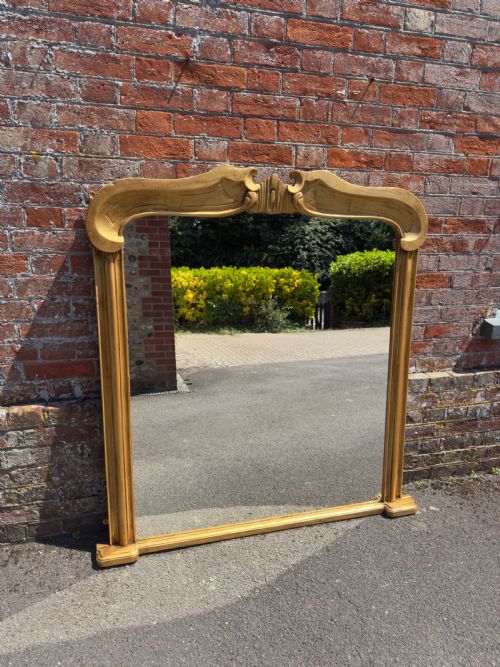
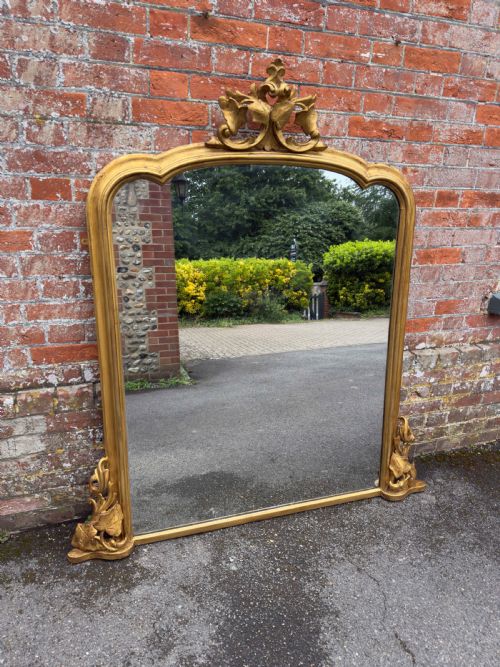


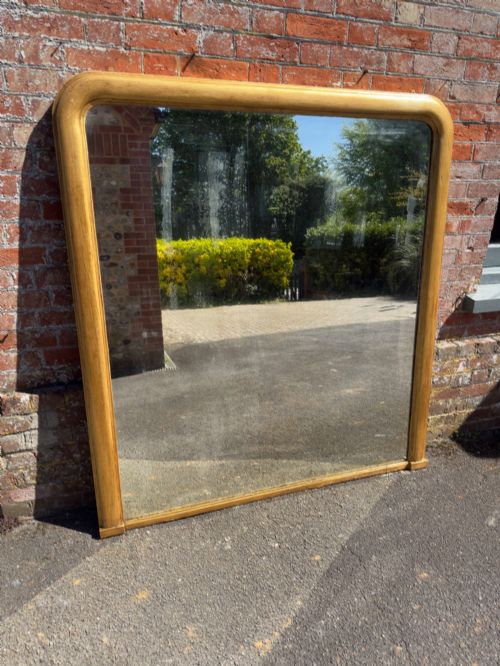


Arched Top Chimney Glass
These arched top chimney glass pieces are large decorative overmantels designed to anchor a room and bounce light across a period interior.
Arched Top Chimney Glass
An arched top chimney glass serves primarily as an overmantel mirror designed to sit above a fireplace hearth. When you search for this phrase, you encounter grand nineteenth-century wall mirrors built to dominate a main reception room wall.
The pieces appearing on this page span the Victorian era, alongside French Louis XV style and English Country examples. Most examples date from the eighteen-sixties and eighteen-seventies, showing substantial proportions built for high-ceilinged period houses.
Makers and craftsmen shaped these frames to draw the eye upward, utilising curved profiles that contrast with the linear geometry of fireplace surrounds. Their substantial presence means they function as architectural focal points rather than simple domestic looking glasses.
Construction and materials
Makers built the structural foundations of these mirrors using carved wood, oak, or walnut, establishing a robust chassis capable of supporting heavy glass plates. Artisans then applied layers of gesso over the wooden frame to create a smooth, pliable surface for detailed ornamentation.
Surfaces received finishes of gold leaf, parcel-gilt, paint, or plain silver and gilt, often supplemented by floral embossed details, ribbed columns, or rope twist carvings. Within these frames, original mirror glass reflects the passage of time through characteristic foxing and silvering wear.
Arched Top Chimney Glass Retail Price Guide 2026
Typical asking prices for arched top chimney glass among the pieces listed under this phrase on Sellingantiques today, from the lower quarter to the upper quarter. They describe what is for sale here now, not the wider market.
Materials documented across the inventory include carved wood, gesso, gold leaf, giltwood, oak, walnut, and painted finishes.
Judging quality and craftsmanship
Quality reveals itself in the crispness of the gesso mouldings and the depth of the hand-carved wooden details adorning the frame. Finer pieces demonstrate superior joinery and more ambitious ornamental programmes, such as intricate floral embossing or architectural ribbed columns.
The integrity of the original gilding and the preservation of early mirror plates distinguish superior examples from ordinary production. Lesser pieces display heavier, repetitive cast ornament, whereas better items retain hand-finished subtleties across their curved arches.
The Arched Top Chimney Glass Glossary
- Gesso
- A plaster-like mixture applied to wood frames to provide a smooth base for gilding or painting. Artisans carved intricate decorative motifs directly into this dried compound.
- Giltwood
- Timber coated with a thin layer of gold leaf or metallic powder. This finish provided a rich, reflective surface suited to formal nineteenth-century reception rooms.
- Overmantel Mirror
- A large looking glass specifically proportioned to hang on the wall directly above a mantelpiece. These fixtures were essential for reflecting candlelight and fireglow.
- Parcel Gilt
- A decorative treatment where only selected portions of a wooden or painted frame are gilded. This technique created contrast against a darker painted or polished wood background.
- Rope Twist
- A carved architectural moulding resembling intertwined ropes. Craftsmen used this decorative relief pattern to frame mirror plates on Victorian overmantels.
Arched Top Chimney Glass: Frequently Asked Questions
Where should I hang an arched top chimney glass?
These mirrors were historically manufactured to sit directly above a fireplace mantelpiece in a principal reception room. Their considerable scale allows them to anchor large wall spaces and reflect natural light from opposing windows.
When hanging one, ensure the wall structure can support substantial weight, as the combined mass of the wooden frame, gesso, and thick glass plate is considerable.
Are these mirrors suitable for modern interiors?
Their grand proportions and ornate carved frames make them striking focal points in contemporary rooms, where they introduce historical contrast and a sense of vertical height. Placing one above a sideboard or low console table works well if a fireplace is absent.
The reflective glass and gilt finishes help brighten darker corners and visually expand the dimensions of smaller modern spaces.
How do I distinguish Victorian from French styles?
Victorian examples on this page often feature architectural elements like ribbed columns, rope twist borders, and robust oak or walnut structures. They lean toward a sturdy, formal aesthetic tailored to English domestic interiors.
French Louis XV style and chateau pieces typically display more fluid, asymmetrical curves and lighter decorative motifs focused on ornate giltwood and floral relief work.
What does original mirror glass look like?
Original nineteenth-century mirror plates frequently exhibit foxing, which appears as small dark spots, minor clouding, or gentle silvering degradation across the reflective surface. These age marks confirm the glass has remained undisturbed within its frame for generations.
Buyers often value this authentic degradation because it proves the mirror retains its original historic components rather than a modern replacement.