


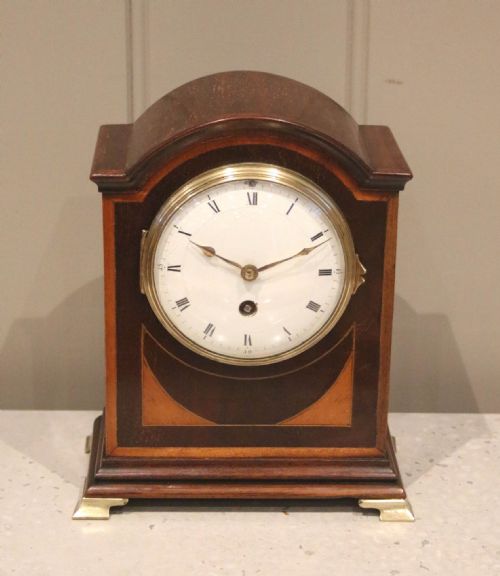

Arched Mantle Clock
These arched mantle clock examples combine domestic timekeeping with cabinetmaking, offering period presence and mechanical interest.
Arched Mantle Clock
An arched mantle clock sits upon furniture surfaces, housing mechanical movements inside wooden or glazed cases. The arched silhouette shapes the top of the timber housing, frequently framing a round or shaped dial.
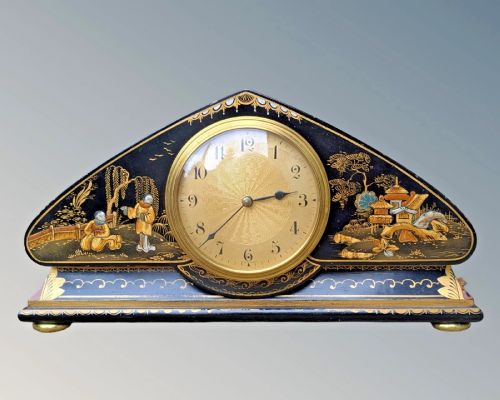
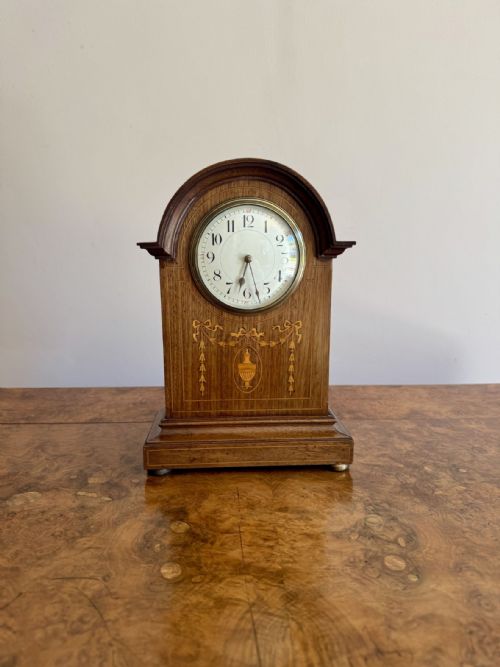
Makers shaped these cases in mahogany, walnut, and satinwood, applying brass fittings and inlay. The selection spans Georgian, Regency, Victorian, and Edwardian periods, alongside Chinoiserie lacquer and revival styles.
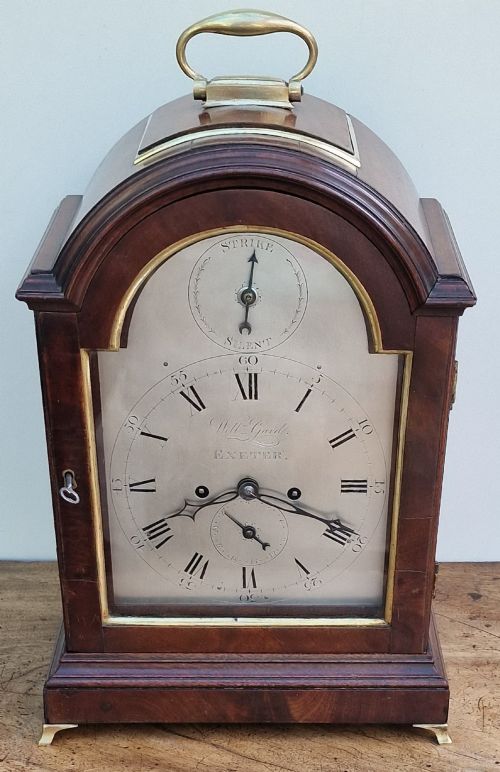
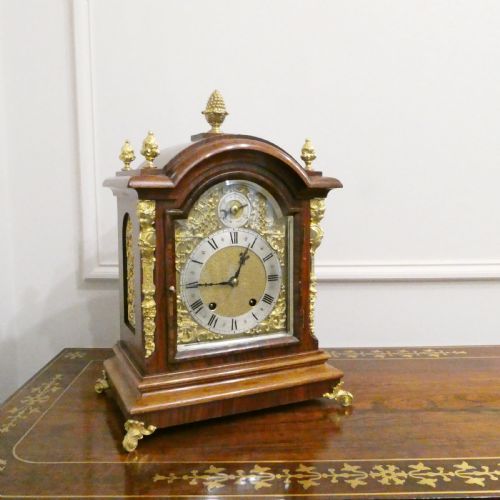
Clock forms range from small brass-handled carriage timepieces to large double fusee bracket clocks. Buyers frequently encounter Edwardian mahogany designs and Georgian bracket clocks by named makers.
Materials and construction
Cabinetmakers constructed the primary cases using solid mahogany, walnut, and various wood veneers. They often added delicate satinwood inlay work and mounted brass carrying handles, bezels, and feet.
Listings feature brass, glass, mahogany, enamel, satinwood, lacquer, wood, and ormolu materials across eight distinct stylistic periods.
Distinctions in quality
Superior examples display precise timber selection with figured walnut or well-matched mahogany grain patterns. Fine inlay work and crisp brass mountings differentiate high-grade workshop production from standard commercial output.
Mechanical execution separates basic timepieces from complex bracket clocks featuring twin fusee movements or striking capabilities. Original enamel dials and signed backplates contribute further distinction to surviving pieces.
William Gard·Schneckenburger·Thomas Moss·Cording of London·Perigal & Duterrau·Ganthony of London·Edwards Of London·Mitchell & Russell
The Arched Mantle Clock Glossary
- Fusee
- A conical pulley used in spring-driven clocks to equalise the declining power of the mainspring as it unwinds. This mechanism helps maintain steady timekeeping accuracy across the duration of the wind.
- Bracket clock
- A portable spring-driven clock originally designed to sit on a wall bracket or table. Many retain their original brass carrying handles and glazed side panels.
- Enamel dial
- A metal dial face covered with a fused vitreous glass coating, usually featuring painted Arabic or Roman numerals. These surfaces require careful handling to avoid hairline cracks.
- Chinoiserie
- European decorative styles reflecting Chinese artistic motifs, applied here as lacquered case decoration. This finish often incorporates painted figures and landscapes on dark grounds.
- Lancet top
- A clock case profile featuring a pointed Gothic arch shape resembling a lancet window. This architectural form appears on Regency and later bracket clock designs.
Arched Mantle Clock: Frequently Asked Questions
How do I wind an antique clock?
Use the correct winding key gently on the arbours, turning it clockwise or counter-clockwise depending on the movement design. Avoid over-winding the mainspring to prevent mechanical damage.
Consult a professional horologist if the tension feels unusual or if the movement fails to hold its power reserve.
Where should I place a mantle clock?
Position the clock on a stable, level surface away from direct sunlight, draughts, and damp walls. Mantelpieces and sturdy sideboards provide suitable placement.
Ensure the surface does not vibrate excessively, as steady placement helps maintain the correct beat of the pendulum or balance.
Why does my clock stop ticking?
Stoppages often occur if the clock is out of beat or if dust has accumulated within the mechanical gear train. A simple adjustment to the cabinet position may restore the proper ticking rhythm.
If cleaning or oiling is required, arrange for a qualified clockmaker to service the movement rather than attempting home repairs.
How can I date my clock case?
Examine the timber species, construction methods, and hardware styles such as bracket feet or brass handles. Georgian and Regency pieces typically display different proportions and veneer choices compared to Edwardian versions.
Signatures painted on dials or engraved on backplates offer direct clues to the maker's active working period.