


Small Shelf Clock
A small shelf clock brings neat proportion and mechanical interest to a mantelpiece, offering fine cabinetwork and practical timekeeping in miniature.
Small Shelf Clock
When you search for a small shelf clock, you encounter compact timepieces designed for domestic interiors across the nineteenth and early twentieth centuries. These objects take the form of mantel clocks, table clocks, and library clocks sitting comfortably on narrow ledges.
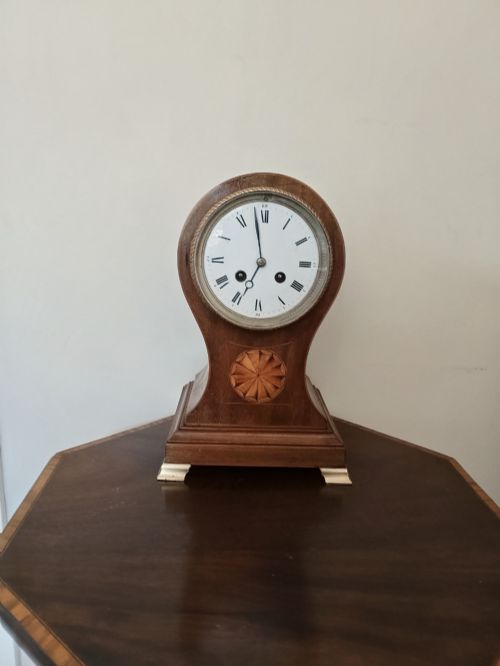
The examples available here span the Regency period through to the nineteen-twenties, encompassing Victorian productions and Edwardian interpretations. You find familiar shapes like the balloon case, the lyre shape, and simple architectural chamfer tops.
Cabinet woods dominate the selection, alongside occasional marble and metal housings. Makers housed French movements in mahogany and walnut or built sturdy English fusee timepieces in oak and satinwood.
Materials and construction
Cabinetmakers utilised figured timbers such as burr walnut, mahogany, and satinwood, frequently enhancing the surfaces with delicate stringing or marquetry inlay. Ormolu mounts and gilt bronze accents provide decorative contrast to the polished wood.
Dials incorporate enamel numerals and protective glass bezels, while movements rely on brass wheel trains and escapements. Structural integrity depends on precise joinery within small proportions, maintaining balance despite the weight of internal metal components.
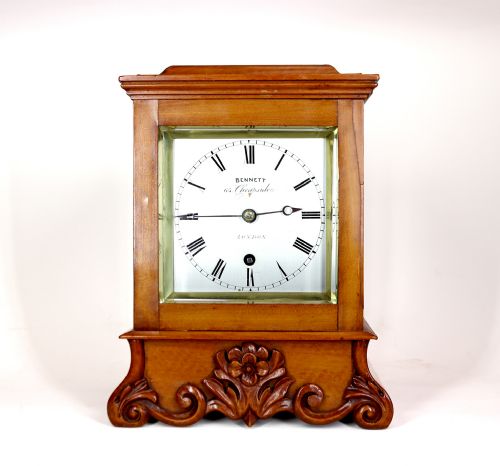
Some miniature library clocks manage to fit an entire striking train behind a dial scarcely larger than a pocket watch.
Judging quality in miniature horology
Superior examples demonstrate crisp execution in the timber veneer and the casting of metal mounts. The precision of the inlay and the harmony of the case proportions separate high-grade library and table clocks from standard production items.
Quality also rests in the fidelity of the movement to its original housing and the clarity of the enamel dial. A well-proportioned small clock maintains decorative balance without crowding the dial into too tight a space.
Sir John Bennett·Lenzkirch·McCabe
The Small Shelf Clock Glossary
- Fusee
- A conical pulley used in spring-driven clocks to equalise the declining power of the mainspring as it unwinds. This mechanism ensures more consistent timekeeping throughout the duration of the wind.
- Ormolu
- Gilded bronze used for decorative mounts and feet on nineteenth-century clock cases. The technique involves applying a mercury and gold amalgam to a bronze base before heating.
- Library clock
- A compact timepiece traditionally suited for study desks or bookshelves. These pieces prioritise legible dials and restrained wooden cases.
- Balloon clock
- A case design characterised by a swelling, curved top tapering down to a narrow base. This French-inspired silhouette became popular during the late Victorian era.
- Chamfer top
- A sloping edge cut across the corners or top of a rectangular wooden case. This detail lightens the profile of architectural mantel clocks.
Small Shelf Clock: Frequently Asked Questions
Where should I place a small shelf clock?
These compact timepieces suit narrow ledges, mantelpieces, and library desks where larger instruments overwhelm the space. Their modest scale allows them to integrate into existing room arrangements without dominating.
Ensure the surface is stable and level to keep the movement running accurately. Avoid spots with extreme temperature fluctuations or direct sunlight that might dry out antique timber veneers.
How do I distinguish French and English movements?
French movements often feature distinct striking arrangements and platform escapements visible through glazed rear doors. They frequently use drum-style housings within decorative wooden or marble frames.
English examples, particularly those utilising fusee movements, demonstrate traditional chain or gutline drives. The layout of the plates and the signature style on the dial often confirm the origin.
What maintenance do these clocks require?
Keep the exterior timber clean by dusting with a soft, dry cloth and occasionally feeding the wood with appropriate wax. Avoid harsh chemical cleaners that strip the original polish.
Internal mechanisms benefit from professional cleaning and lubrication every few years to prevent wear on the brass pivots. Regular care ensures the gear train continues to function smoothly.