
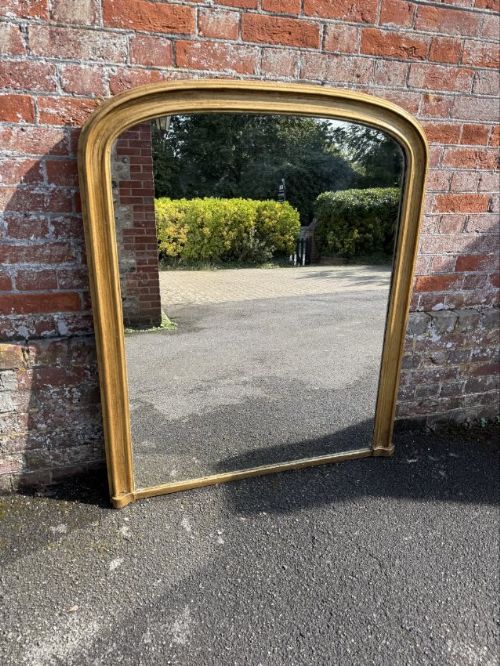
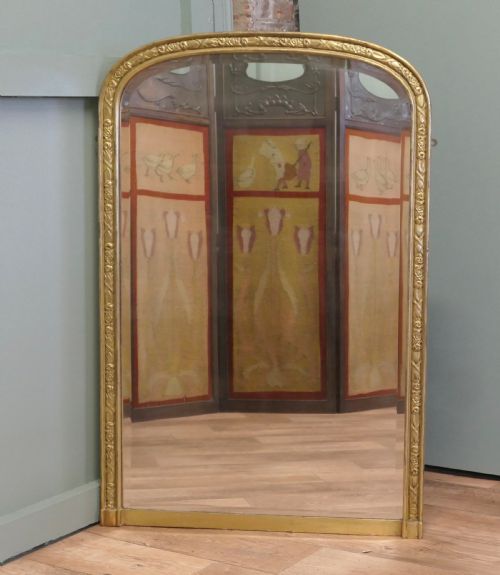


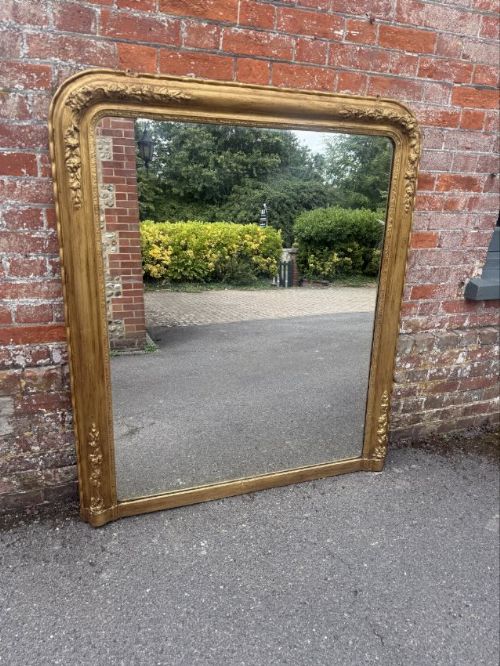
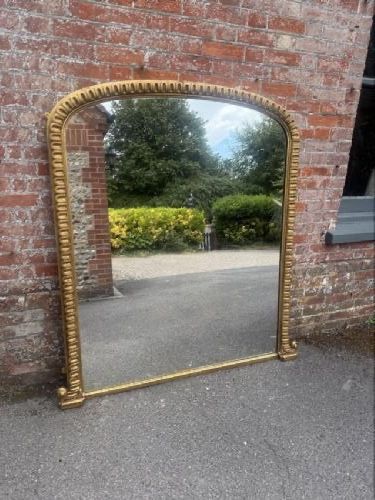
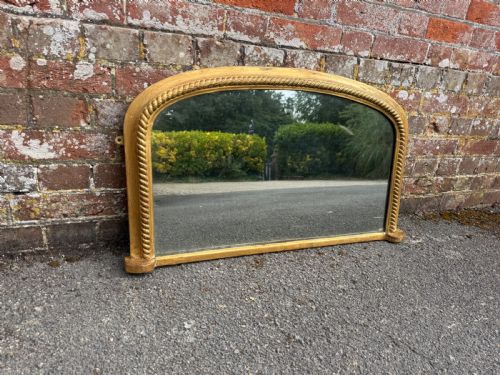
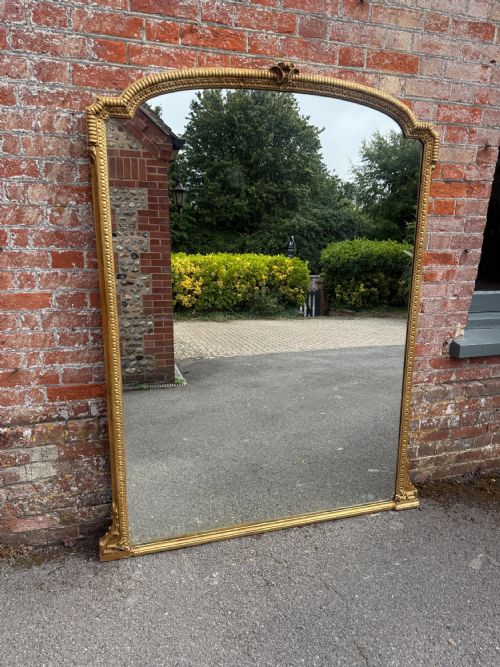
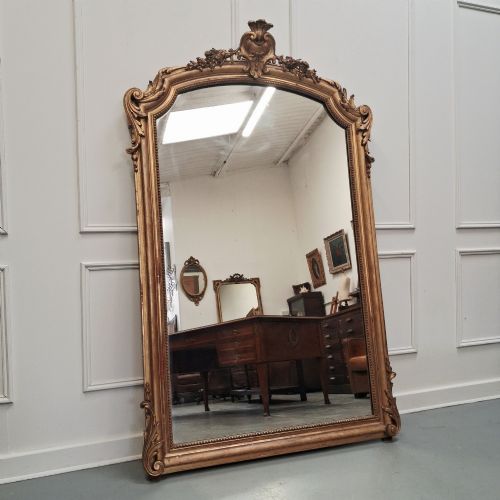
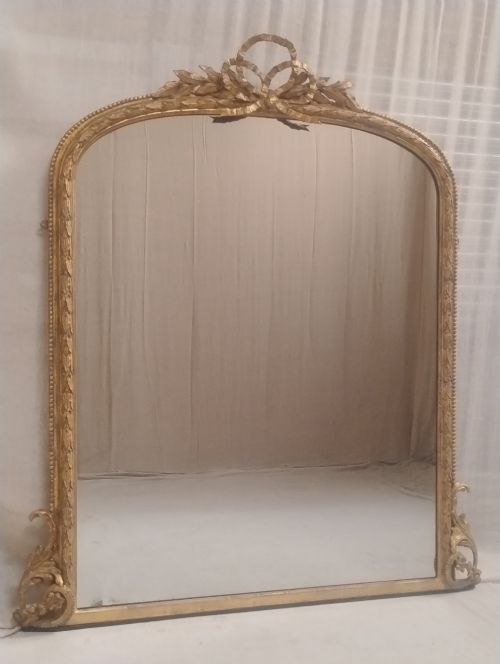
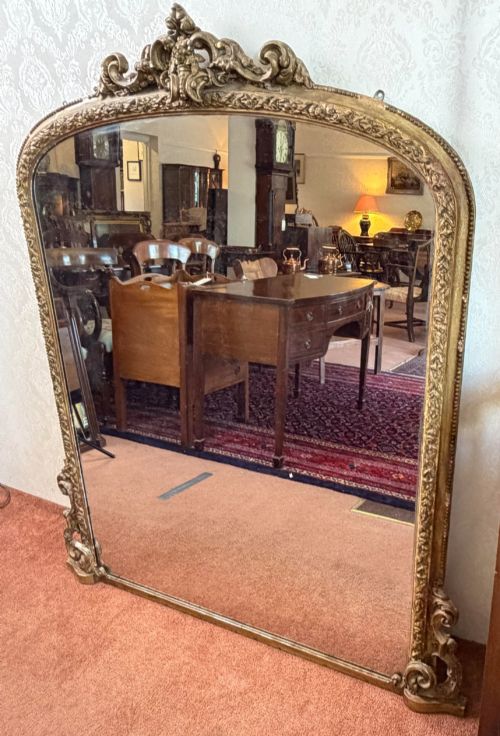
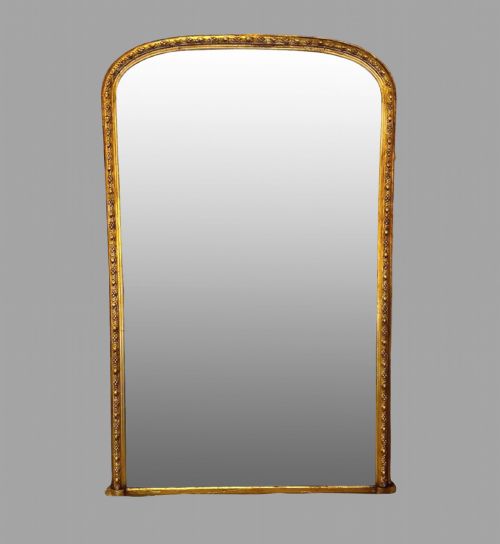
Arched Gold Gilt Mirror
An arched gold gilt mirror brings architectural presence and reflected light to a room, drawing on Victorian and French 19th-century traditions.
Arched Gold Gilt Mirror
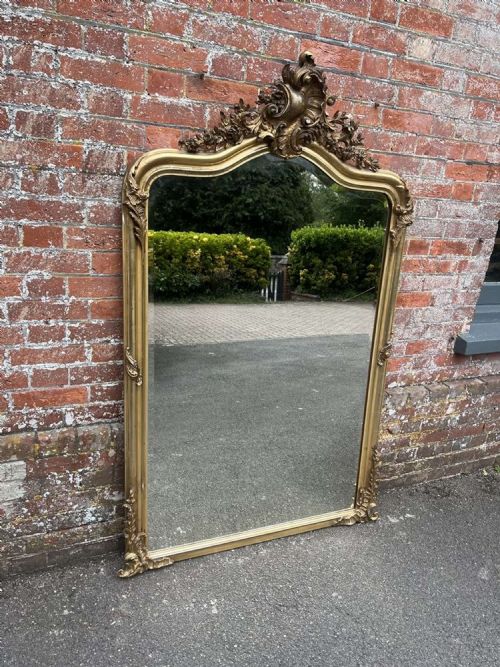
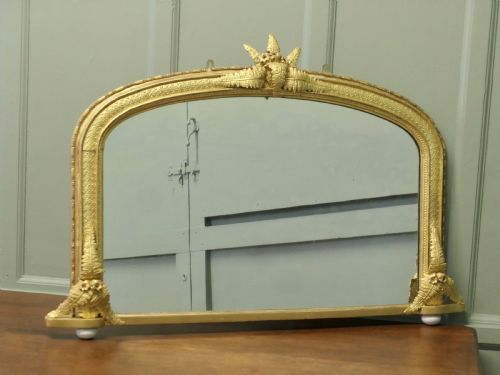
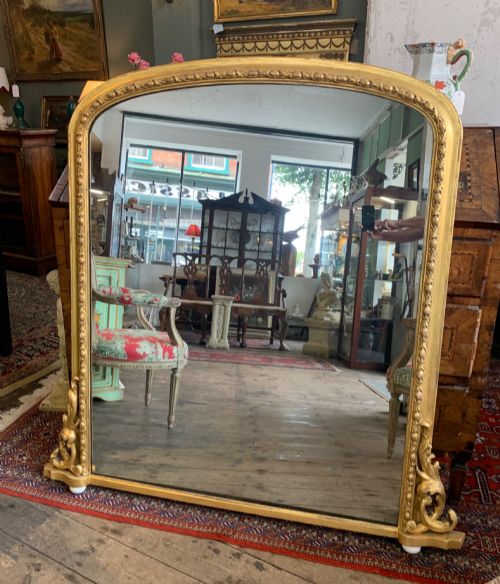
An arched gold gilt mirror is a reflective wall piece defined by its curved upper section and metallic finish, most commonly encountered here as a large Victorian or 19th-century English overmantel mirror designed to sit above a fireplace. These large formats appear alongside French Louis Philippe and Rococo Revival wall mirrors, spanning periods from the 18th century through to the late 19th century.
The form is dominated by substantial overmantel mirrors alongside tall pier mirrors and wall mirrors, constructed with arched, shaped, or crested tops. English examples from the mid to late 19th century frequently display ribbed, rope twist, or tulip frames, while French equivalents favour cleaner Louis Philippe lines or ornate Rococo curves.
How they were made
Traditional construction relies on a carved wood or composite substructure coated in gesso, a plaster-like mixture applied to build up decorative mouldings, rope twists, and ribbing before gilding. Gold leaf or applied gilt is then laid over the prepared gesso surface to create the characteristic metallic sheen.
Mirror glass is set within these frames, occasionally noted in period pieces as mercury glass with foxing, held by wooden backs that support the weight of heavy wall and overmantel formats.
What varies in quality
Quality resides in the crispness and depth of the carved wood and gesso ornamentation, where hand-modelled details on Victorian and French frames outpace simpler moulded production. The weight of the timber ground and the application of the gold leaf dictate how well the surface ages and reflects light.
Proportion and scale separate ordinary domestic looking glasses from monumental statement pieces, with balanced arches and substantial original frames commanding visual weight.
The Arched Gold Gilt Mirror Glossary
- Gesso
- A plaster-like preparation applied to a wooden frame to provide a smooth, sculpted base for gilding. It allows for intricate relief work such as rope twists and floral motifs.
- Giltwood
- Timber that has been coated with gold leaf or metallic powder. It forms the primary structural and decorative medium for these mirrors.
- Overmantel mirror
- A wide mirror specifically designed to hang on the wall directly above a fireplace mantelpiece. They often feature large arched tops to echo architectural proportions.
- Louis Philippe
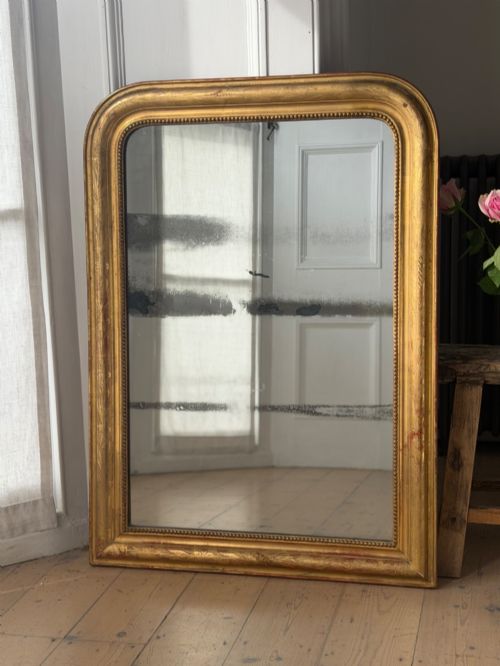
- A French style from the mid-19th century characterised by simple, elegant arched frames with subtle corner detailing. It offers a restrained alternative to heavier Victorian carving.
- Foxing
- Age-related spots and discolouration within the mirror glass itself. This chemical change causes small dark patches that indicate original vintage plates.
Arched Gold Gilt Mirror: Frequently Asked Questions
Where should an arched gold gilt mirror be hung?
These mirrors are traditionally positioned above a fireplace mantelpiece where their height draws the eye upward and amplifies room proportions.
They also function effectively on a principal living room wall as a standalone statement piece opposite a window to maximise natural light.
How do I clean a giltwood frame?
Dust the carved gesso and gold leaf surfaces gently with a soft, dry brush to prevent accumulation in the recesses of the ornament.
Avoid liquid cleaners, moisture, and chemical polishes entirely, as these can strip or discolour the delicate metallic leaf.
What is the difference between an overmantel and a wall mirror?
Overmantel mirrors are traditionally wider and proportioned to span the horizontal width of a fireplace breast, frequently featuring heavy wooden frames.
Standard wall mirrors and pier mirrors tend to be narrower and taller, designed to hang between windows or on open wall spaces.
How do I identify a 19th-century French mirror?
French examples from this period often display Louis Philippe or Rococo Revival styling with softer, curved shoulders and minimal heavy moulding.
They may also house original foxed mercury glass plates held within pine or hardwood backing frames.