
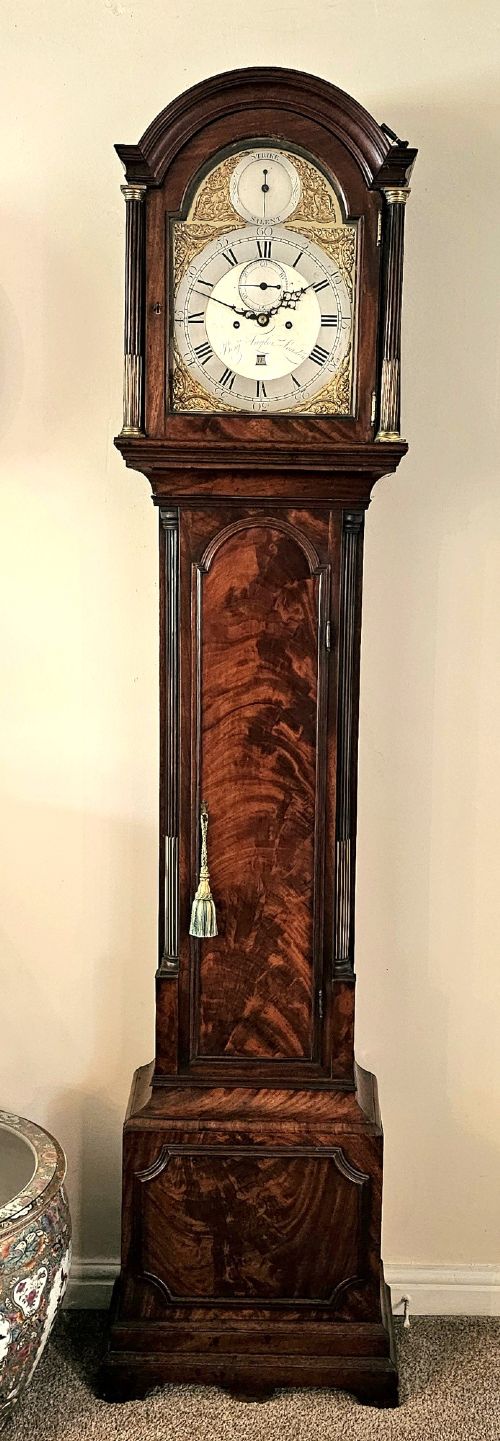
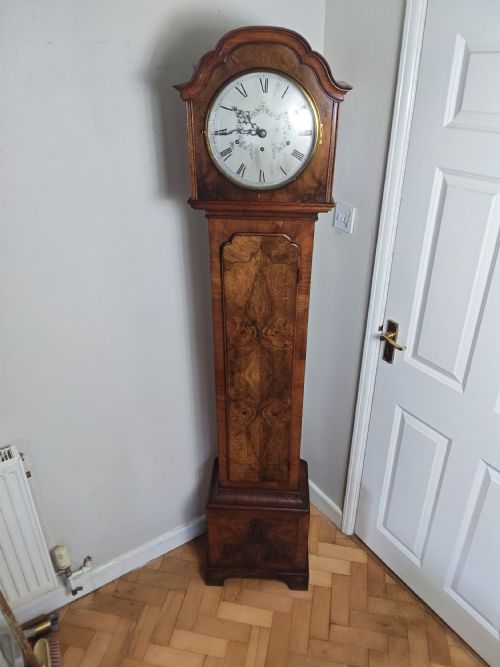
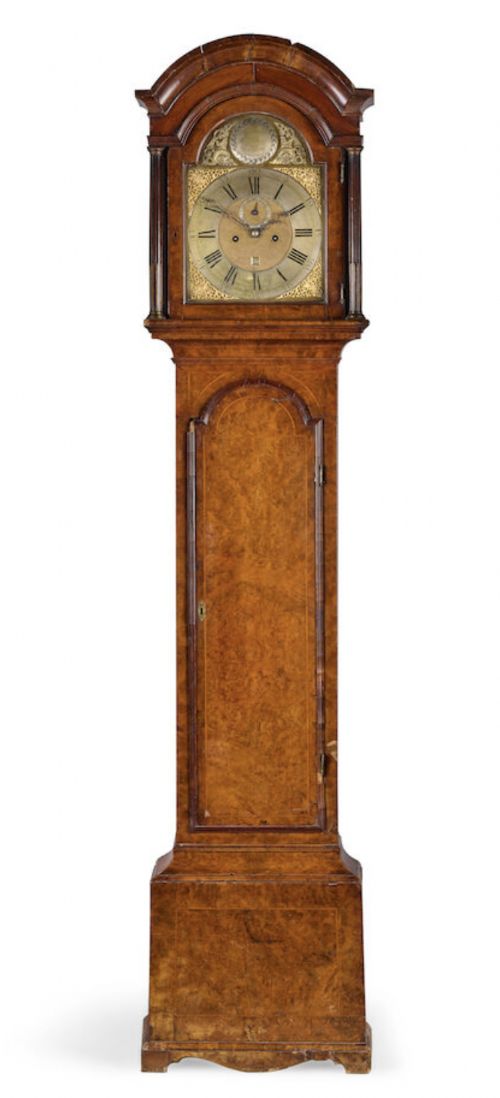
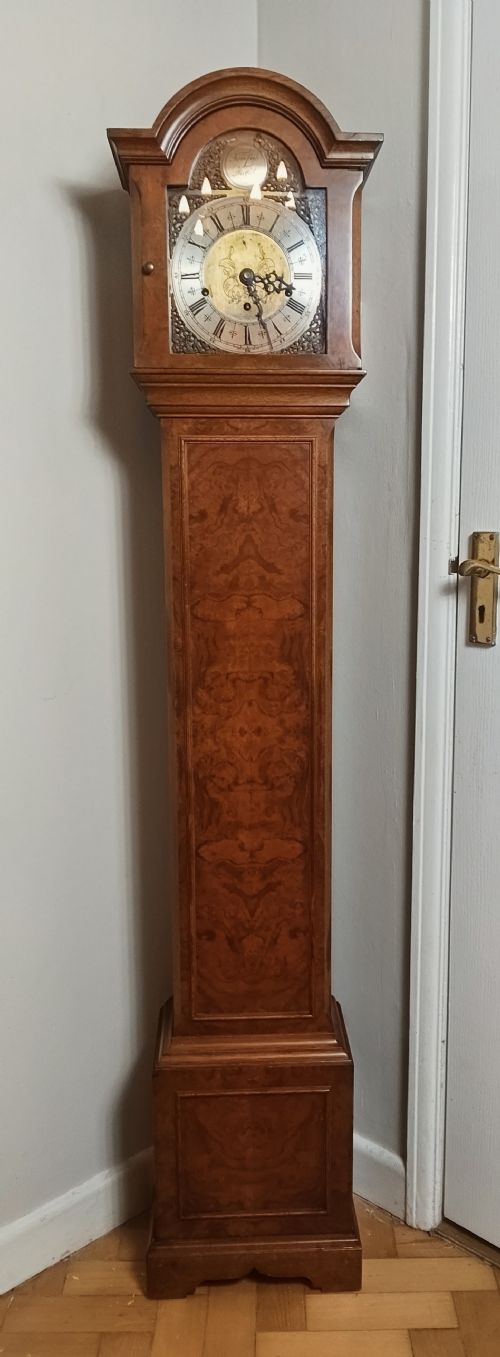
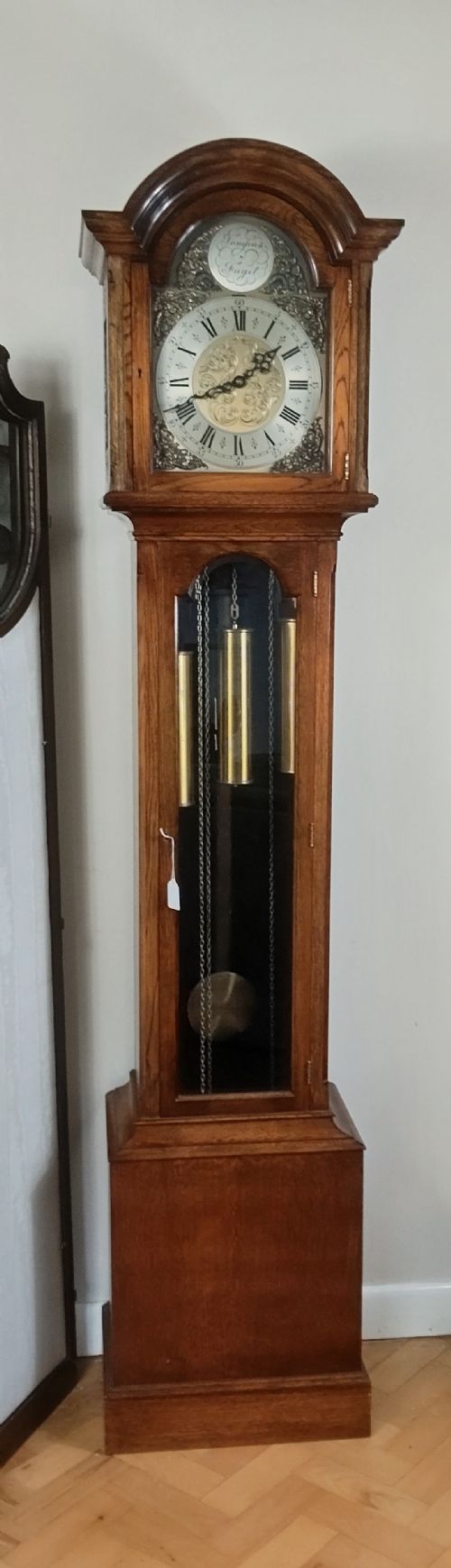
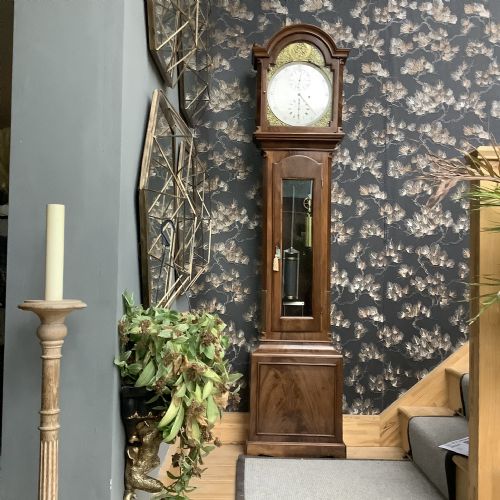


Arched Dial Standing Clock
An arched dial standing clock brings architectural dignity and precision timekeeping into a room, offering mechanical mastery housed in timber.
Arched Dial Standing Clock
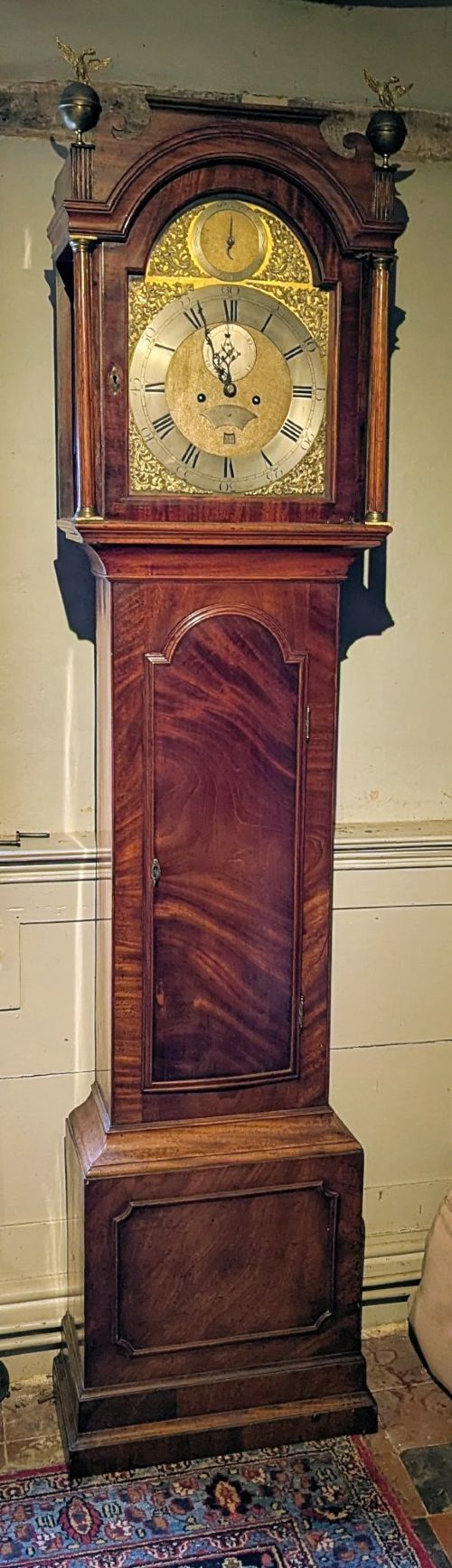
An arched dial standing clock is a tall floor-standing timepiece featuring a curved upper section on the face and case hood, designed to house long pendulums and weight-driven movements. These pieces appear in forms ranging from full-sized floor models to smaller revival proportions.
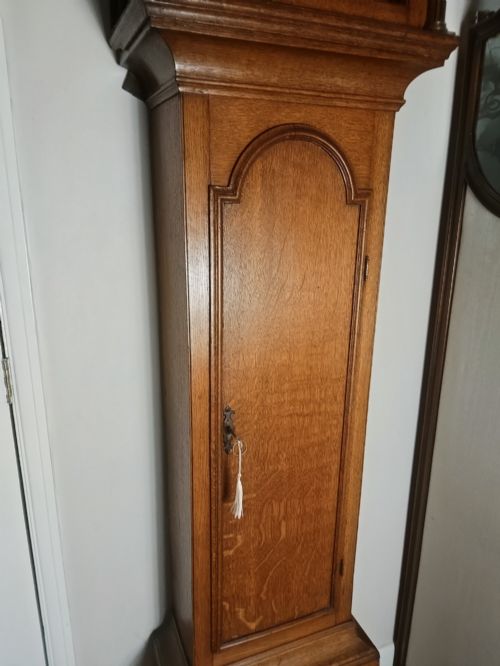
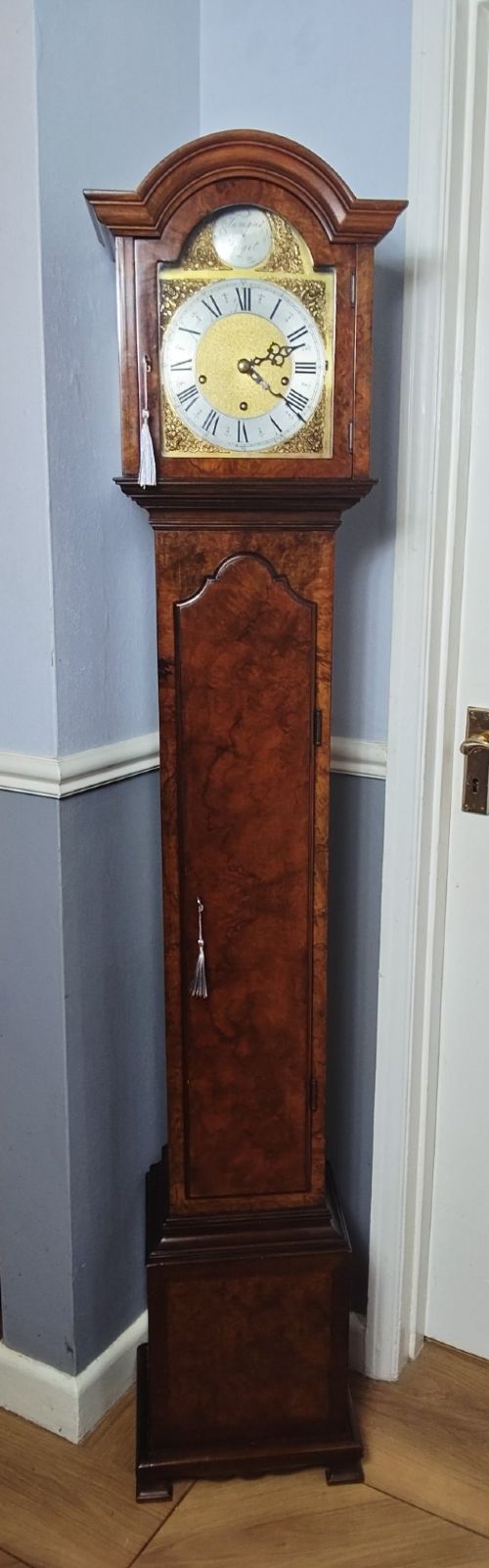
The versions most common on this page date from the Georgian and eighteenth century periods, constructed in oak or mahogany with brass or painted dials. Later twentieth-century examples also appear as smaller walnut grandmother clocks.
Makers housed these movements in tall wooden cases designed to stand directly on floor surfaces, combining utility with domestic presence.
How they were made
Cabinetmakers utilised native timbers like oak alongside imported hardwoods such as mahogany and burr walnut, often applying flame veneers and quarter-veneering to principal surfaces. Cases feature glazed hood doors protecting the dial and brass or steel mechanical parts within.
The listings on this page include mahogany, oak, and walnut timbers spanning the Georgian, Victorian, and twentieth-century periods.
What varies in quality
The refinement of the movement determines much of the standing clock's merit, moving from standard eight-day striking trains to complex quarter-chiming or musical mechanisms involving multiple weights and bells. Master clockmakers signed their brass dials to signify high standards of internal engineering.
Cabinetwork quality reveals itself in the selection of figured timber veneers, proportion, and the crisp carving of mouldings and hood details. Regional workshops and prominent London makers achieved distinct levels of decorative and mechanical execution.
Benjamin Taylor·Windmills and Wightman·James Tregent·Edward Upjohn·Francis Perigal·William Wady·James Coster·Lister And Sons·Dwerrihouse And Carter·John Walker
The Arched Dial Standing Clock Glossary
- Arched dial
- A clock face featuring a curved upper section above the main circular chapter ring, often used to display moon phases or subsidiary dials.
- Longcase clock
- A tall pendulum clock enclosed in a wooden case standing directly on the floor, frequently termed a grandfather clock.
- Grandmother clock
- A smaller, more slender version of the traditional longcase clock, typically dating from the twentieth century.
- Moon roller
- A rotating mechanism behind the arched dial that tracks the phases of the lunar cycle.
- Spandrel
- An ornamental bracket or corner piece fitted in the spaces between the circular chapter ring and the corners of the dial.
Arched Dial Standing Clock: Frequently Asked Questions
What is an arched dial standing clock?
An arched dial standing clock is a tall floor-standing timepiece featuring a curved upper section on the face and case hood, designed to house long pendulums and weight-driven movements.
These timepieces combine mechanical engineering with fine cabinetmaking, serving as both functional instruments and architectural furniture.
How do I wind an eight day clock?
Eight-day clocks require winding using a specialised key inserted into winding holes on the dial face, which draws the internal weights back up.
Careful handling ensures the gut lines or chains remain correctly seated on the barrels during the winding process.
Where should I place a longcase clock?
Longcase clocks need stable, dry locations against solid interior walls where floorboards remain steady and free from excessive vibrations.
Placing the case away from direct sunlight and heat sources protects the timber veneer and internal wooden components.
What is the difference between a grandfather and grandmother clock?
Grandfather clocks are the standard full-sized floor models developed in the seventeenth and eighteenth centuries to house long pendulums.
Grandmother clocks are scaled-down versions produced predominantly during the twentieth century to fit smaller modern ceiling heights.
What does a strike silent mechanism do?
A strike silent mechanism allows the owner to disengage the hourly striking train via a small lever on the dial face.
This feature prevents the clock from sounding during the night while keeping the timekeeping movement running continuously.