



Arch Dial Mantel Clock
An arch dial mantel clock brings the steady rhythm of a mechanical movement into a room within a handsome timber case.

Arch Dial Mantel Clock
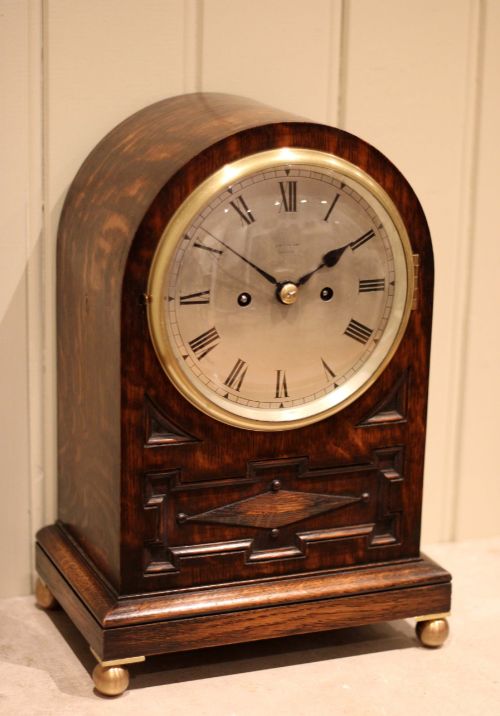
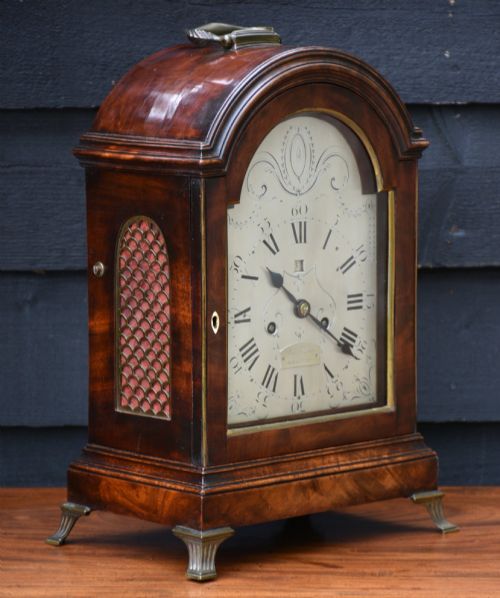
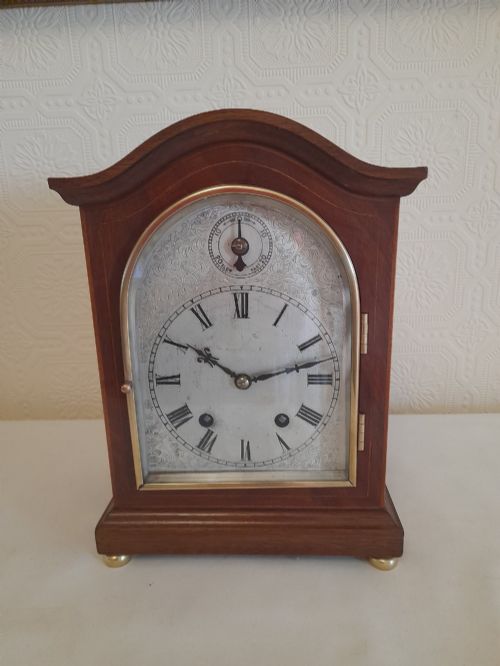
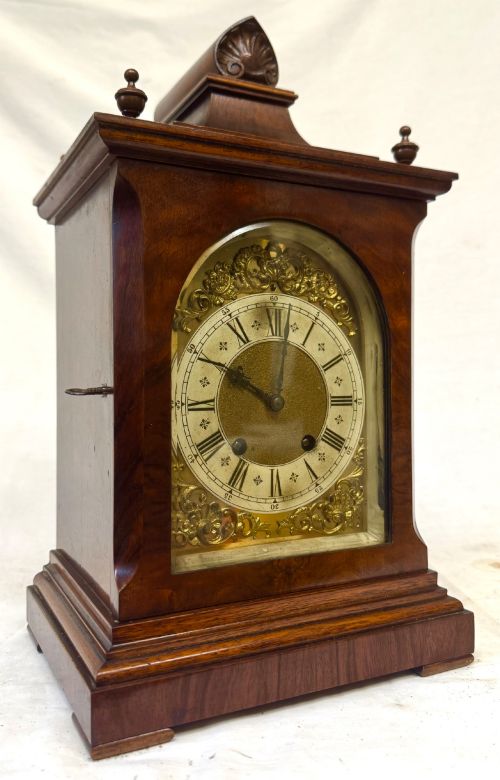
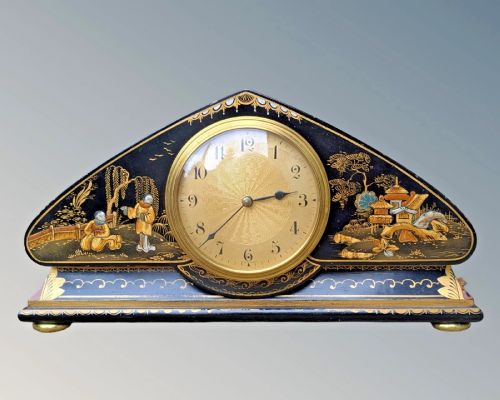
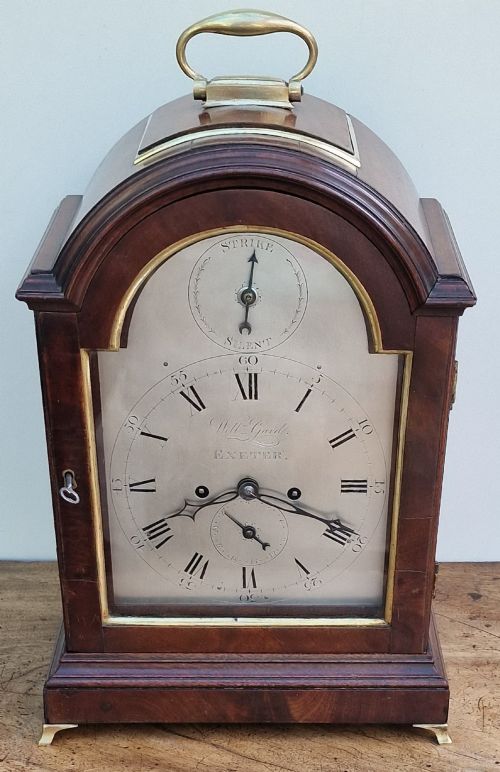
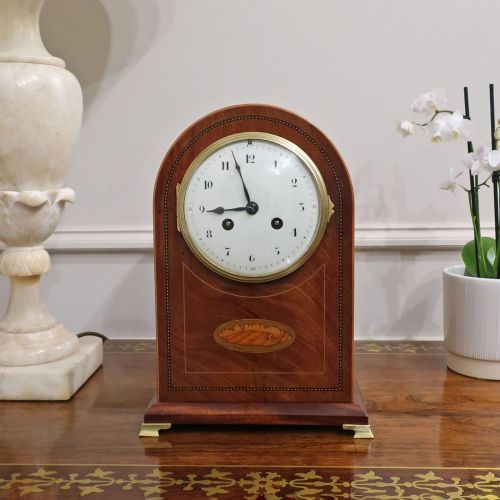
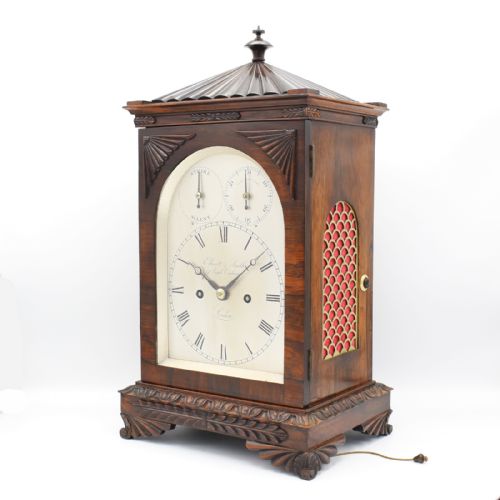
An arch dial mantel clock is a self-contained timekeeper designed to sit on a shelf, table, or bracket, distinguished by the curved top of its dial and face. When you search for an arch dial mantel clock, you are looking at timepieces spanning the Georgian, Victorian, and Edwardian eras.
The versions most likely to meet you on this page are housed in rich mahogany, walnut, or ebonised wood cases, often taking the form of traditional bracket clocks. These pieces combine functional timekeeping with cabinetry, showing stylistic shifts from plain eighteenth-century proportions to ornate nineteenth-century movements.
Materials and construction
Cabinetmakers built these clock cases using timbers such as mahogany, walnut, oak, and ebonised wood, sometimes adding decorative veneers like burr walnut or delicate Chinoiserie detailing. Glass panels protected the face while allowing a clear view of the dial.
Faces combined brass, silvered metal, and enamel, engraved or painted with numerals and maker details. Inside, complex brass gear trains, fusee movements, and escapements transformed the tension of a mainspring or the pull of weights into measured time.
Arch Dial Mantel Clock Retail Price Guide 2026
Typical asking prices for arch dial mantel clock among the pieces listed under this phrase on Sellingantiques today, from the lower quarter to the upper quarter. They describe what is for sale here now, not the wider market.
Some larger Victorian models feature up to eight bells inside, transforming a simple time check into a miniature cathedral concert.
What separates fine examples
Quality rests in the harmony between the cabinetwork and the mechanical movement inside. Finer examples display crisply engraved silvered metal dials, solid timber construction with balanced proportions, and intricate internal mechanisms such as triple fusee or musical chiming trains.
Lesser pieces feature simpler time-only movements within plain or later-altered cases. The crispness of the brass casting on the dial spandrels and the original integrity of the verge or lever escapement mark the distance between standard production and masterwork.
William Gard·Ellicott and Smith·Des Granges·Phillips Brothers·Junghans·Winterhalder and Hofmeier·Perigal·Grimaldi and Johnson·John Seddon·James Maitland
The Arch Dial Mantel Clock Glossary
- Bracket clock
- A portable table clock originally designed to sit on a matching wall bracket, though most now rest on mantelpieces or furniture.
- Fusee
- A conical pulley connected to the mainspring by a chain or cord, ensuring even power delivery to the movement as the spring unwinds.
- Silvered metal
- A brass dial plate treated with a silver compound to produce a matte white metallic finish for the engraved numerals.
- Verge escapement
- An early type of clock escapement using a crown wheel and a rod with pallets to control the release of the gear train.
- Ting-tang
- A two-hammer striking mechanism that sounds on two different bells to mark the quarters or the hours.
Arch Dial Mantel Clock: Frequently Asked Questions
What is a bracket clock?
A bracket clock is a portable spring-driven timepiece developed to be easily moved between rooms. They gained their name from the wall brackets that originally supported them.
Over time, many lost their wall brackets and came to sit directly on mantelpieces, desks, or tables while retaining the traditional name.
How do fusee movements work?
A fusee movement uses a conical pulley and a fine chain to regulate the pull of the mainspring. As the spring loses tension, the chain moves to a wider part of the cone.
This clever mechanical device ensures the clock receives steady power throughout its run, improving the accuracy of the timekeeping.
Where should I place my clock?
These clocks belong on stable surfaces away from direct sunlight, dampness, and sudden temperature changes. A sturdy mantel or sideboard provides a secure home.
Because mechanical clocks rely on level placement to keep time correctly, you may need small shims beneath the case to achieve an even beat.