

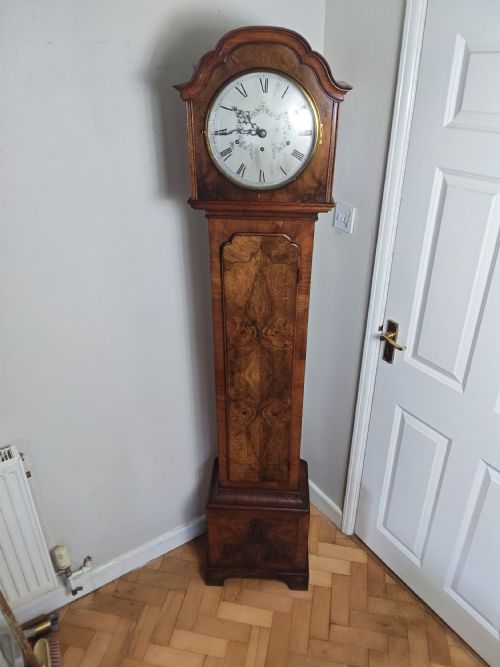
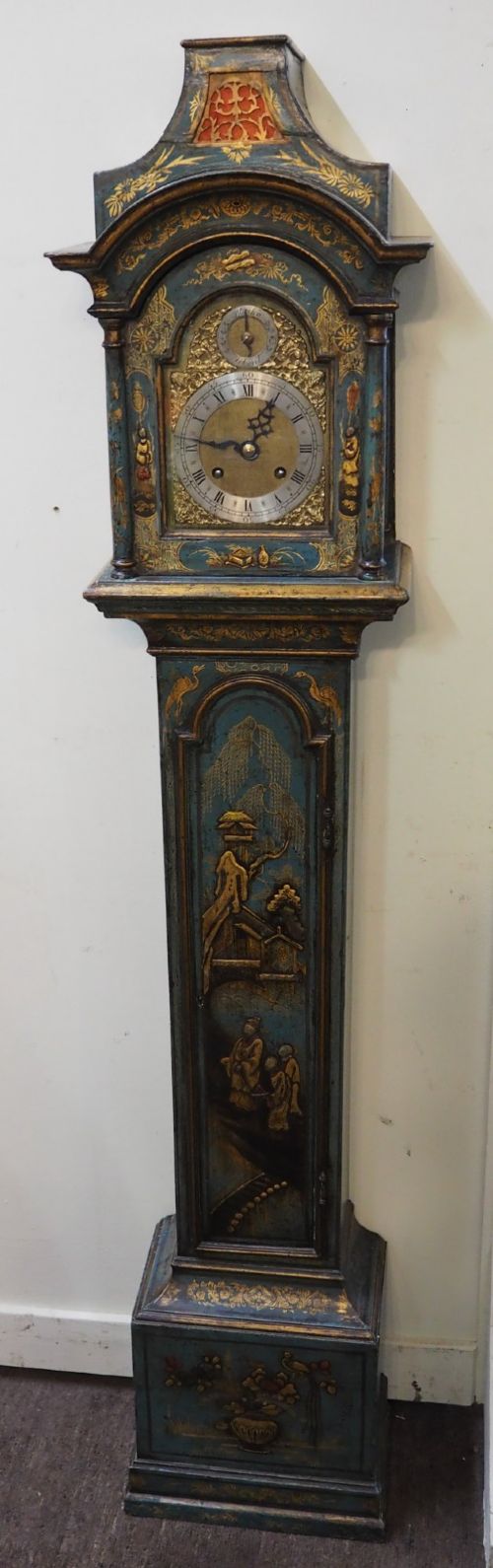
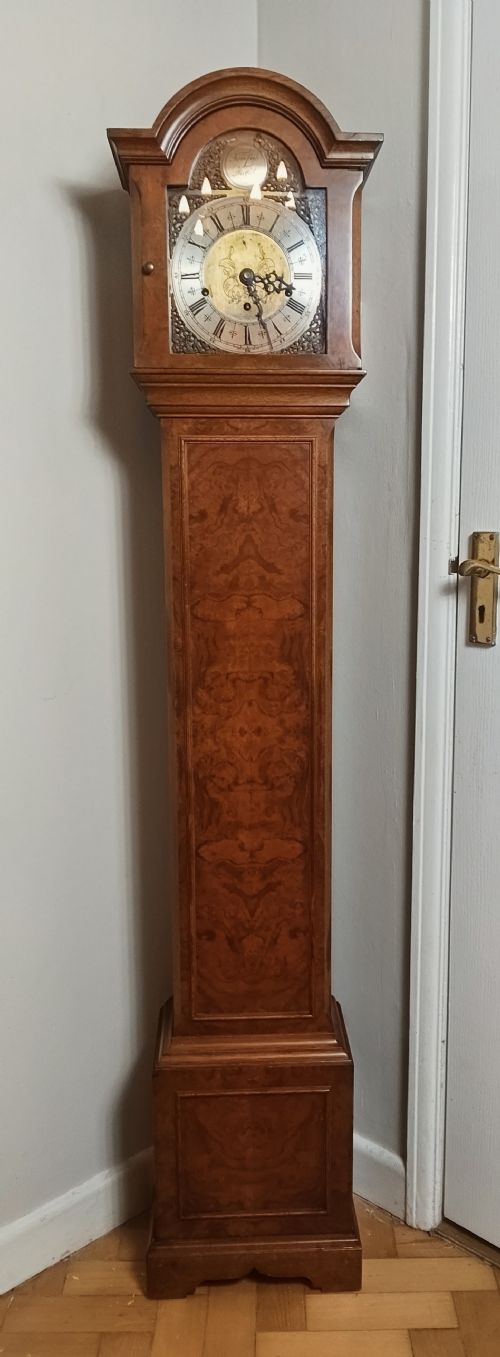

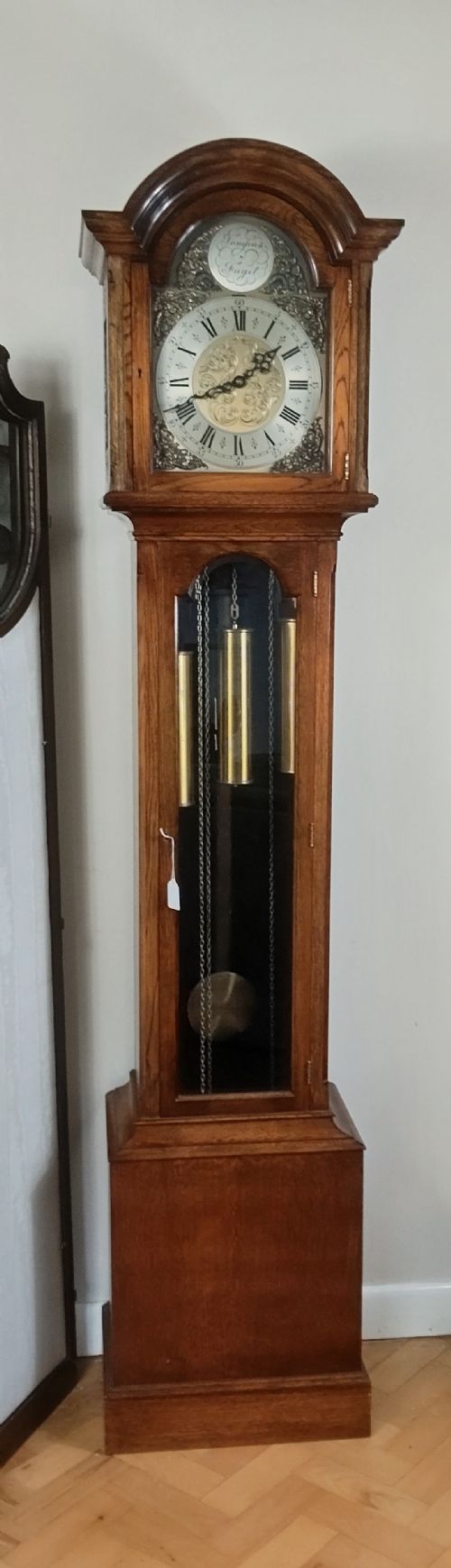
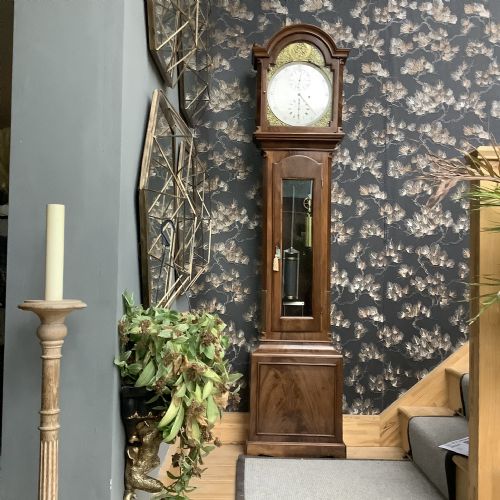

Arch Dial Floor Clock
An arch dial floor clock stands as a traditional tall timekeeper, bringing mechanical movement and period woodwork into a room.

Arch Dial Floor Clock
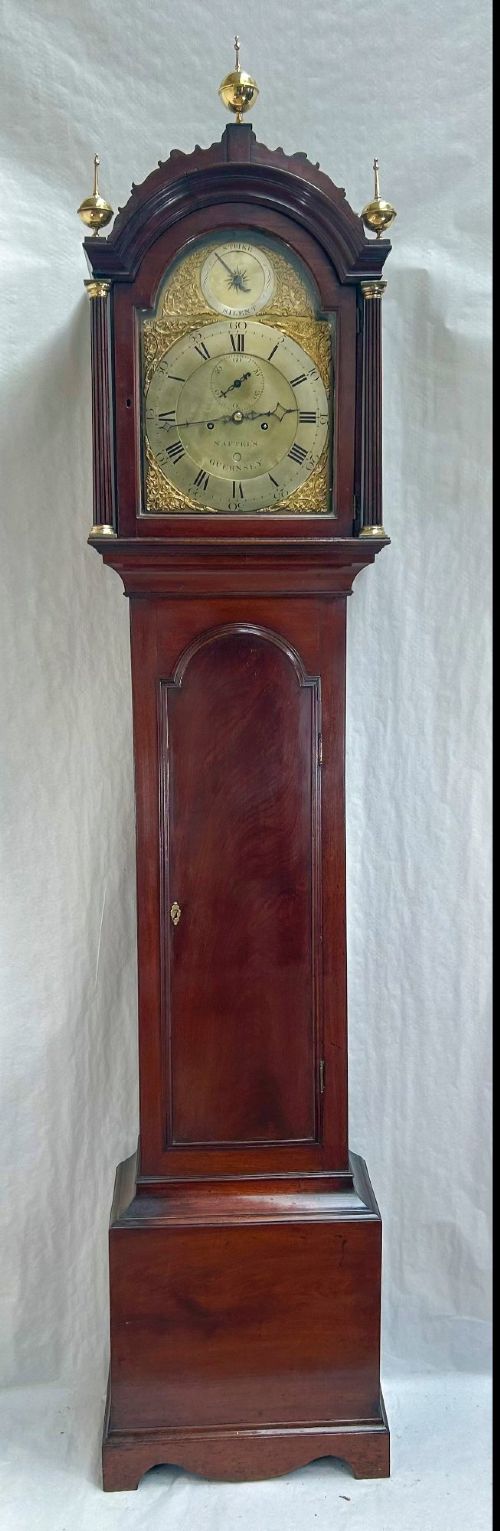
An arch dial floor clock brings together tall wooden cabinetry and brass or painted dial faces, with longcase and grandfather clocks forming the main body of the selection. These tall timekeepers appear across periods spanning the eighteenth century through the Georgian era, with smaller grandmother clock variants emerging in Edwardian and later twentieth-century styles.
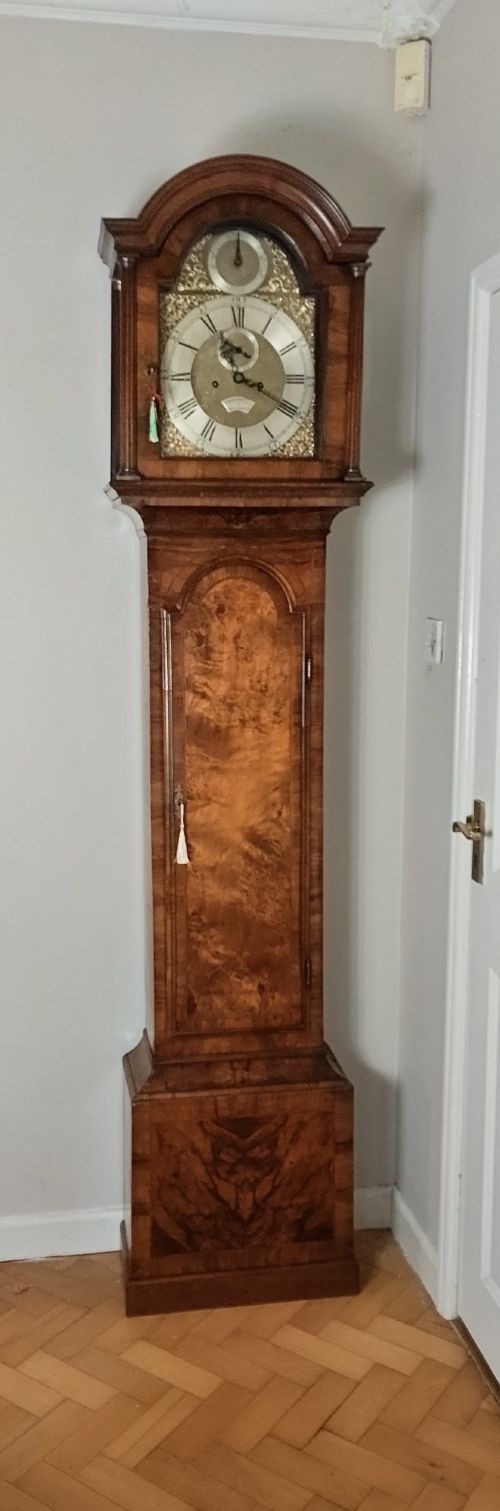
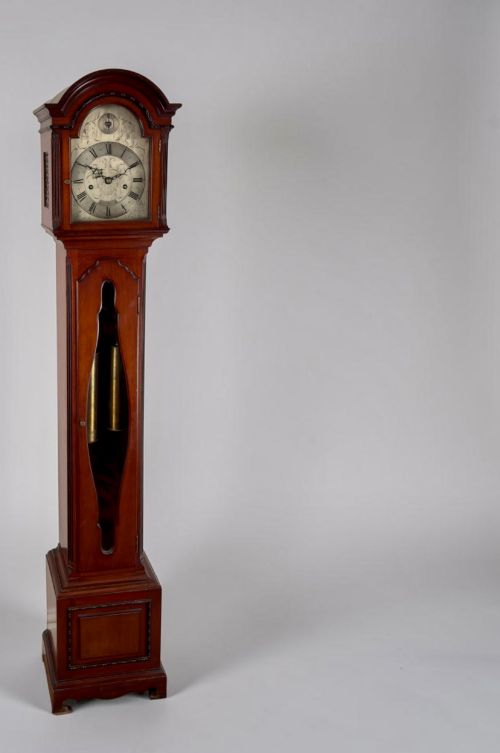
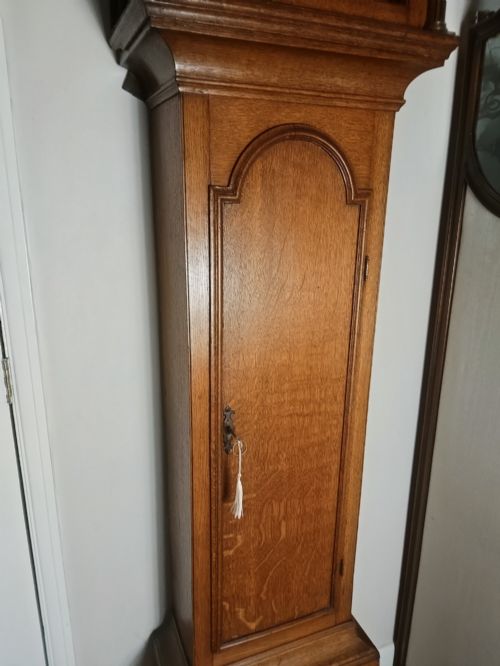
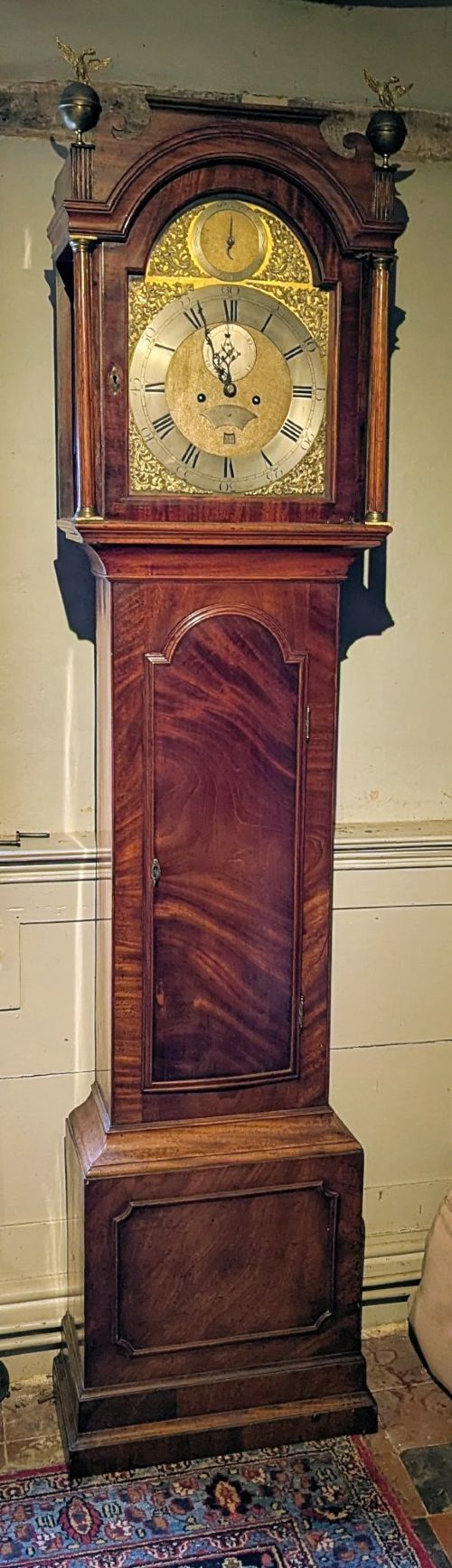
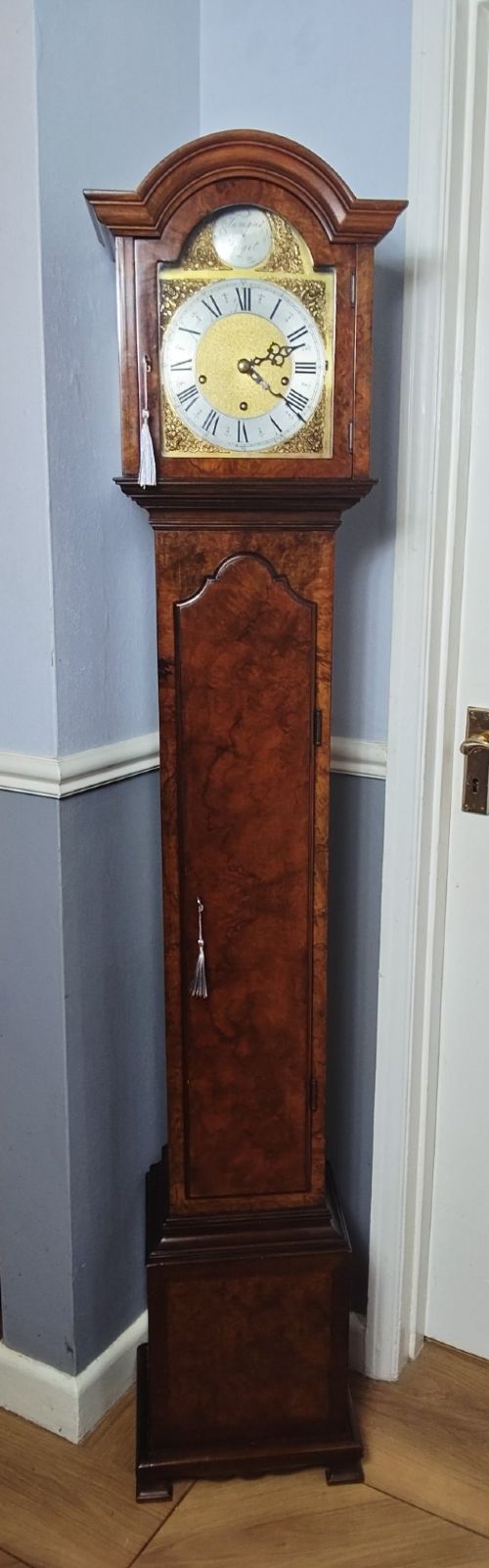
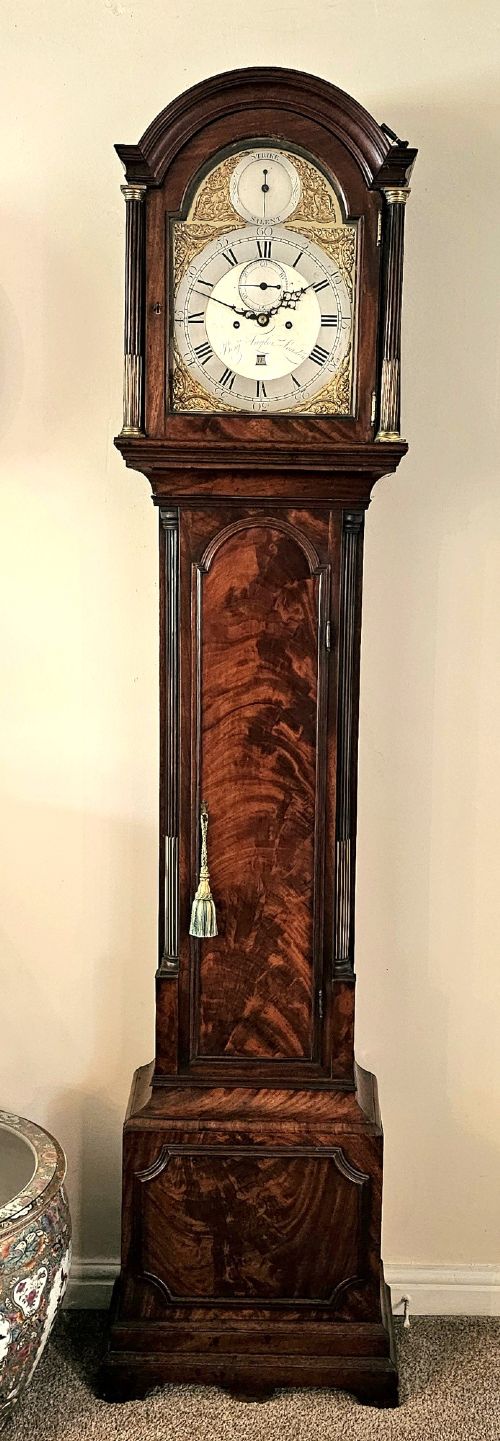
The pieces on this page range from early Georgian oak examples to George III mahogany items featuring arch dials and brass faces. Alongside full-sized London floor clocks, buyers encounter smaller musical and quarter-chiming formats housed in walnut and flame mahogany.
Makers and regional clockmakers signed their dials, with London names appearing frequently among eighteenth-century examples alongside provincial makers from Scotland and provincial towns. The overarching group includes eight-day movements, strike-silent mechanisms, and moon roller displays.
Materials and construction
Cabinetmakers constructed the tall cases using solid timbers and veneers of mahogany, oak, walnut, burr walnut, and flame mahogany. Selected wood is joined to form the long trunk, hood, and base, housing the heavy weights and pendulum.
Dial faces combine engraved brass plates, applied spandrels, and painted surfaces with subsidiary seconds and calendar rings. Glass panels protect the dial within the hood, while steel and brass components form the internal gear trains.
Several clocks carry tune-selection levers, allowing the household to choose which melody the brass chimes play as the hour arrives.
Distinctions in quality
The standard of a floor clock rests upon the crispness of the brass dial engraving, the selection of figured wood veneers such as burr walnut or flame mahogany, and the architectural proportions of the hood and trunk. Superior examples exhibit refined secondary woods, finely cast brass spandrels, and intricate mechanical movements capable of quarter chiming or playing multiple tunes.
Simpler regional pieces rely on plain oak or basic painted dials with standard eight-day striking movements. The distinction lies in whether the cabinetwork and movement were executed by a known master clockmaker or produced as a standard commercial workshop piece.
Gillett & Johnston of Croydon·James Field of Hempstead·Benjamin Taylor·ELLIOTT·Bravingtons·Handley & Moore Of London·William Allam·James Tregent of London·Thomas Goddard London·Edward Upjohn·Francis Perigal of Bond Street·William Wady of Twickenham
The Arch Dial Floor Clock Glossary
- Arch dial
- A clock face featuring a rounded upper section above the square dial plate. This arch often accommodates a moon roller, auxiliary calendar, or signature plaque.
- Longcase clock
- A tall pendulum clock enclosed in a wooden case standing directly on the floor. These pieces are frequently referred to as grandfather clocks.
- Grandmother clock
- A smaller version of the traditional longcase clock, typically produced during the Edwardian period and the early twentieth century. They share the tall proportions of their larger counterparts in a reduced scale.
- Quarter chiming
- A mechanical movement feature that sounds the time at quarter-hour intervals using multiple bells, gongs, or chimes. These movements often utilise three weights.
- Spandrel
- An ornamental corner piece attached to the dial face of a clock. These decorative brass castings sit in the four corners surrounding the chapter ring.
Arch Dial Floor Clock: Frequently Asked Questions
What is an arch dial floor clock?
An arch dial floor clock is a tall mechanical timekeeper housed in a wooden case that rests on the floor, featuring a rounded upper section above the main dial.
These pieces combine cabinetmaking with complex gear trains, weights, and pendulums to track hours, minutes, and often lunar phases or calendar dates.
How do grandfather and grandmother clocks differ?
Grandfather clocks are the standard full-sized longcase timekeepers, while grandmother clocks are scaled-down versions produced in smaller proportions.
Grandmother clocks generally date from later periods such as the Edwardian era and the twentieth century, fitting rooms with lower ceilings.
Where should I place a floor clock?
A floor clock requires a stable, level surface against a solid wall to ensure the pendulum swings evenly and the movement operates correctly.
Avoid placing tall wooden cases in areas subject to extreme temperature fluctuations or direct sunlight, which can affect the wood veneers and internal mechanics.
How do I identify the period of a longcase clock?
The period can be determined by examining the wood choice, dial style, case proportions, and the signature of the maker inscribed on the brass or painted face.
Early Georgian and eighteenth-century examples typically feature solid oak or mahogany with brass arch dials, whereas twentieth-century pieces often use burr walnut veneers and quarter-chiming mechanisms.