

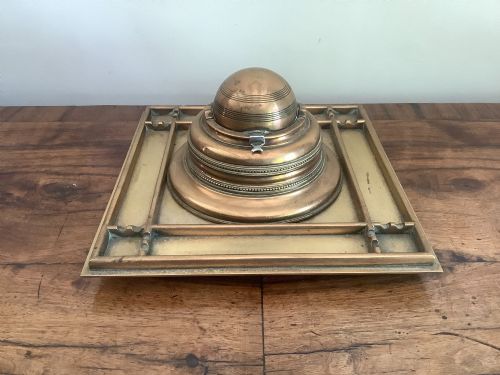


Antique Writing Desk Tidy
An antique writing desk tidy keeps correspondence ordered and ink at hand, bringing Victorian and Edwardian craftsmanship to the modern desk.
Antique Writing Desk Tidy
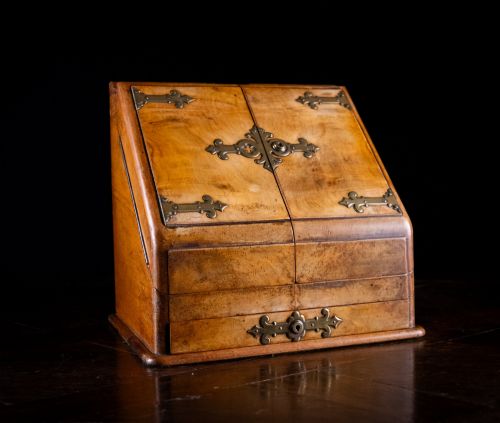
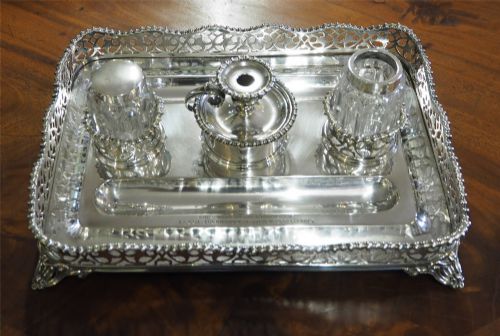
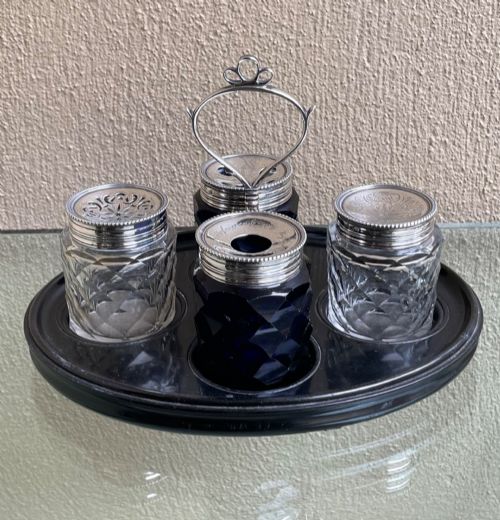
An antique writing desk tidy encompasses inkstands, stationery boxes, and inkwells designed to manage correspondence on the desktop. The pieces seen here span the Victorian and Edwardian eras, alongside earlier Georgian examples and diverse regional interpretations.
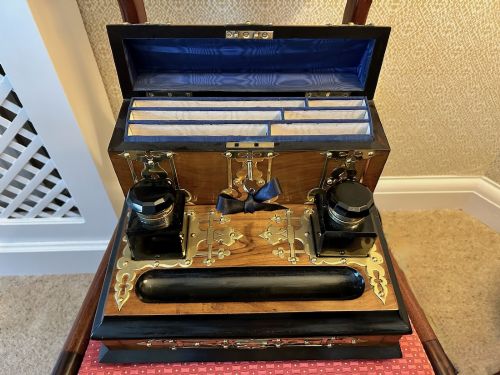
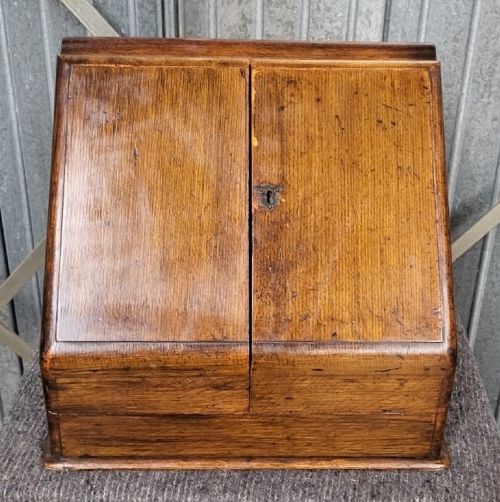
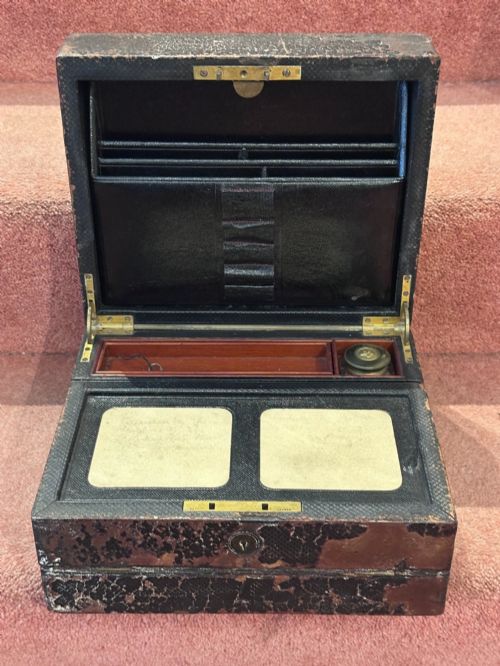
Most items on this page date from the nineteenth century and take the form of fitted boxes, slope desks, or open stands with pen rests. Oak, walnut, and mahogany form the structural core of these utilitarian objects, often enhanced with brass mounts and leather linings.
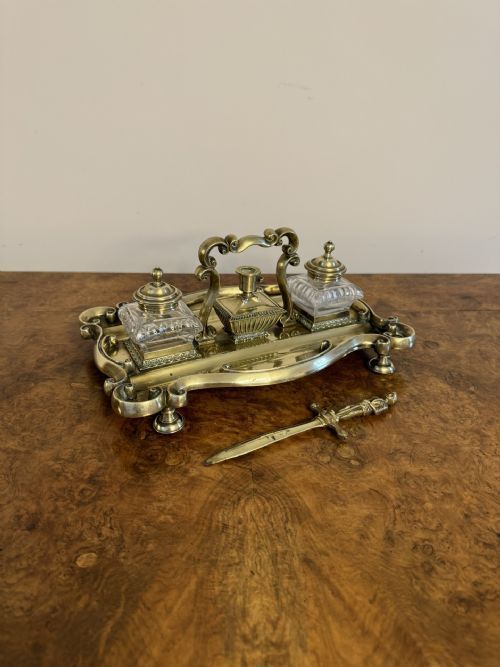
Makers ranged from large British silver-plating firms to specialist cabinet makers working in exotic woods. Buyers find everything from simple oak stationery cabinets to elaborate French ormolu desk sets equipped with cut glass inkwells.
Materials and Construction
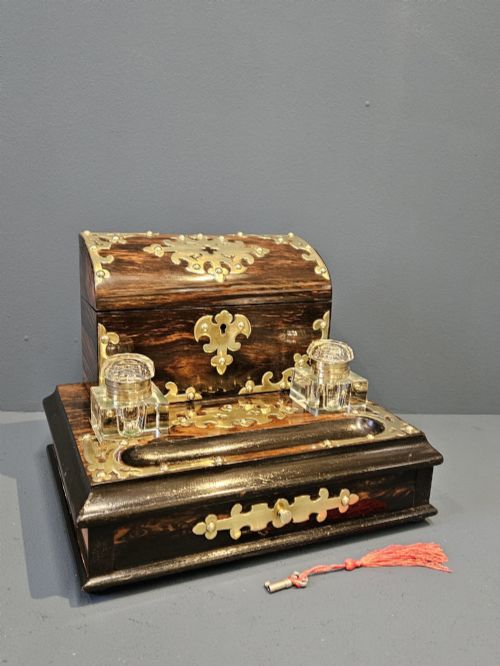
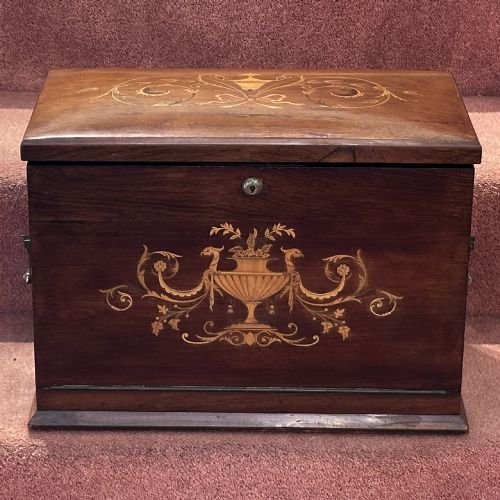
Cabinet makers utilised dense hardwoods such as walnut, rosewood, coromandel, and oak to build durable boxes and stationery cabinets. These timbers were frequently polished to a high sheen, occasionally inlaid with brass, satinwood, or bone.
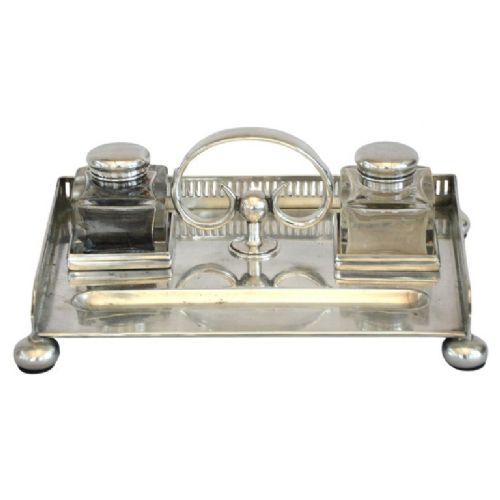
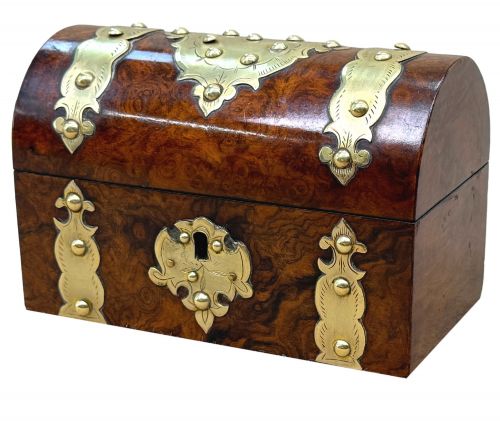
Metalwork played a structural and decorative role, with cast brass, bronze, ormolu, and silver plate forming inkwell collars, hinges, and pen rests. Heavy cut glass and sterling silver created the lidded vessels that held liquid ink safely on the desktop.
Leather, tortoiseshell, and papier-mâché added texture and colour to writing slopes and pen boxes. Skilled artisans applied tooled details, hand-painted finishes, and specialised joinery to house writing implements securely.
Evaluating the Pieces
Quality rests upon the selection of timbers and the precision of the brass or silver mounts. Finer examples employ solid burr walnut, coromandel, or mahogany with seamless mitred joints rather than thin veneers over secondary woods.
The integrity of the internal fittings defines the better items. Original cut glass inkwells with matching silver or brass lids, intact leather compartments, and fully functioning locks elevate a desk tidy above standard production.
Artistic execution distinguishes exceptional desk accessories from routine utility items. Finely cast bronze figures, intricate bone inlay, or hand-painted Kashmiri papier-mâché indicate superior workshop output.
Elkington·Walker And Hall·Harrods
The Antique Writing Desk Tidy Glossary
- Inkstand
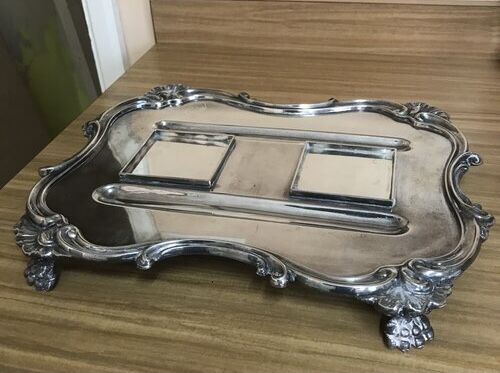
- A tray or stand holding one or more inkwells, a pen rest, and sometimes a sander or wafer box. These portable accessories protected the desk surface from ink spills.
- Stationery Box
- A desktop cabinet with a sloped or fall front designed to store writing paper and envelopes upright. They often feature tiered interior partitions.
- Standish
- An alternative term for an inkstand, frequently used for larger or more elaborate desk sets incorporating drawers or candlesticks.
- Ormolu
- Gilt bronze mounted onto decorative objects and furniture, popular in French and Victorian pieces for rich metallic enrichment.
- Coromandel
- A dense, heavily figured Southeast Asian timber resembling calamander, utilised for luxury Victorian boxes and desk accessories.
Antique Writing Desk Tidy: Frequently Asked Questions
What is an antique writing desk tidy?
A desk tidy is a collective term for Victorian and Edwardian desktop accessories designed to hold ink, pens, and paper.
These pieces range from simple wooden boxes to elaborate silver-plated stands with cut glass inkwells.
How were desk tidies used historically?
They kept correspondence organised and provided a secure place for liquid ink and nibs before the widespread use of fountain pens.
Users stored letter paper in upright stationery cabinets and dipped their pens into central inkwells mounted on fitted trays.
How do I tell Victorian from Edwardian pieces?
Victorian pieces often feature heavy, dark timbers like coromandel and walnut with ornate brass mounts and Gothic or classical revival details.
Edwardian items frequently lean towards lighter golden oak, simpler lines, and mass-produced silver plate from firms like Walker and Hall.
Are the inkwells usually original to the stand?
Many retain their matching cut glass or crystal inkwells, though replacements are common due to breakage over the decades.
Matching collars, matching crystal patterns, and correct sizing indicate that an inkwell has remained with its stand.